
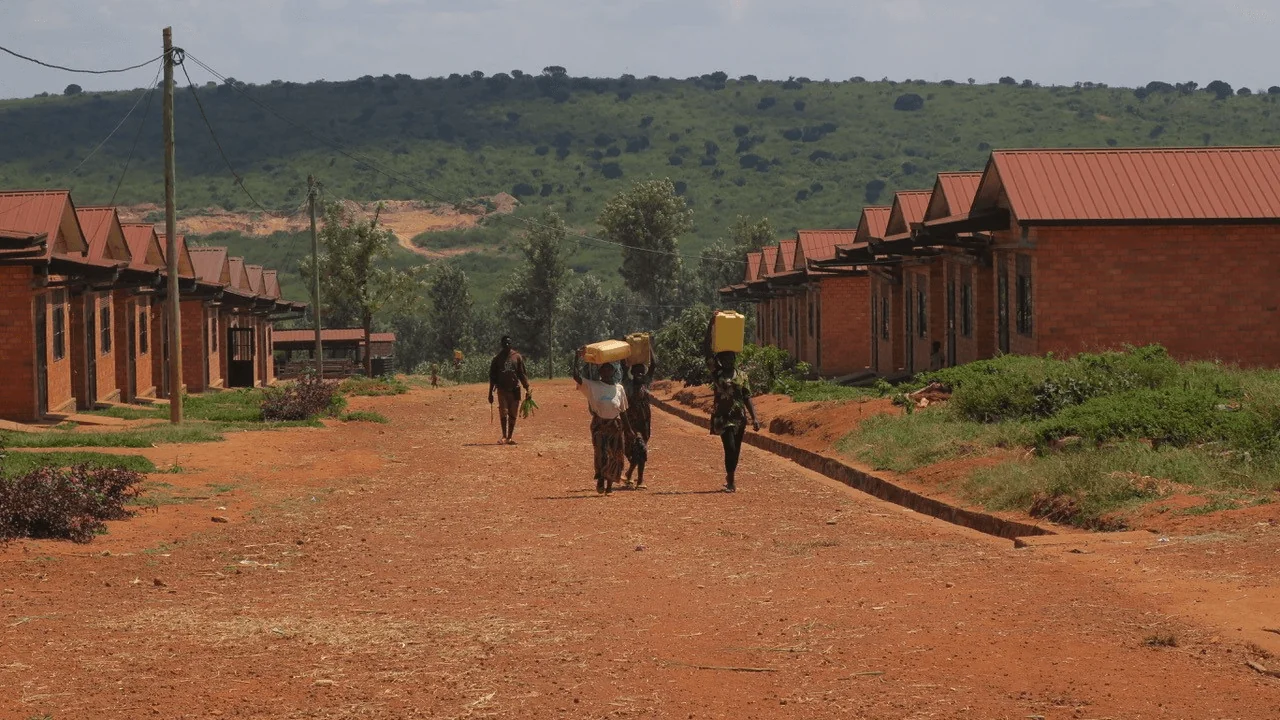
Climate change adaptation policies frequently aspire to improve the adaptive capacity of communities facing risk. Rwanda’s rural resettlement policies go even further, connecting economic growth, poverty reduction, climate change adaptation, and environmental protection objectives. Rweru Model Green Village in the Eastern Province embodies these mutually beneficial pillars of the Integrated Development Program. This pilot research sought to understand and evaluate the case of Rweru through qualitative social science methods, including semi-structured interviews with relocated households. Findings suggest that overall, Rweru has succeeded in relocating families away from high-risk locations, and the village offers a range of social protection and infrastructure advantages to residents. Persistent challenges include low agricultural productivity, inconsistent water availability, and difficulty securing and maintaining access to credit, land titles, and off-farm employment. Thus, the question of whether rural resettlement in Rwanda drives improvements in adaptive capacity remains murky, and further research is necessary.
KEYWORDS: Planned relocation; disaster risk reduction; capacity-building; climate change; Rwanda
Dr Lisa Dale is a Lecturer in Climate, Earth, and Society at the Columbia University Climate School in New York City. She has a secondary appointment with the Center of Excellence in Biodiversity and Natural Resource Management at the University of Rwanda. Her research on climate change adaptation policy explores sustainable development in rural Rwanda.
