Sexual, Reproductive and Menstrual Health of Internally Displaced Women and Girls in the Middle East: Gaps, Challenges and Recommendations

This paper reviews the grey and peer-reviewed literature to evaluate gaps, challenges and current responses relating to the sexual, reproductive and menstrual health needs of women and girls impacted by internal displacement in the Middle East
Published on November 14, 2022
Andisheh Jahangir | hidn, IDPs, Gender, Conflict, Health, Middle East, MENA Region
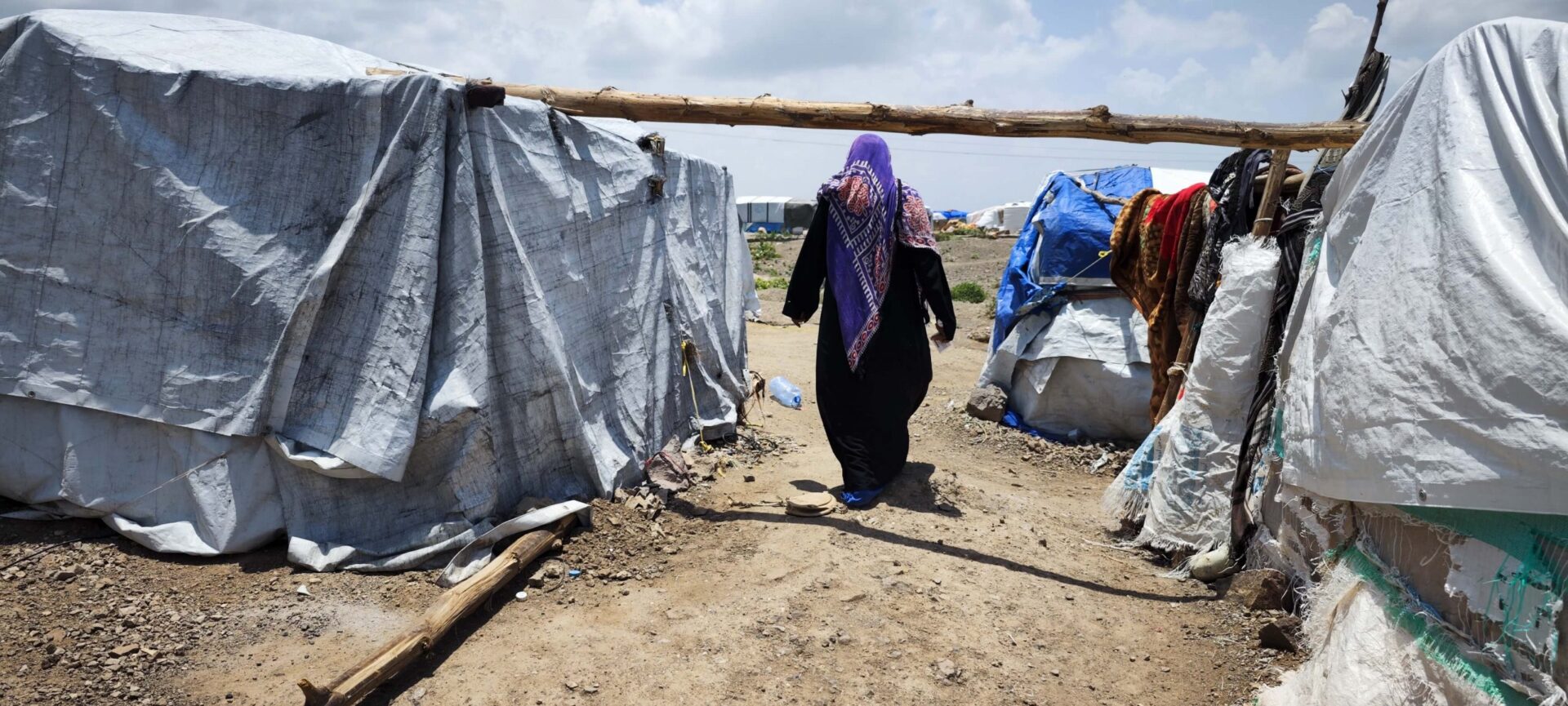
Yemen. A displaced woman walks to the AlSouda site for IDPs in AlDhalea. 2022 © UNHCR/Ahmed Al-Mayadeen

Yemen. A displaced woman walks to the AlSouda site for IDPs in AlDhalea. 2022 © UNHCR/Ahmed Al-Mayadeen

The Middle East, prone to conflict and disasters, is the host of the largest internally displaced populations in the world, with more than seventeen persons experiencing displacement in 2021. Therefore, providing practical, sustainable, culturally appropriate and acceptable sexual, reproductive and menstrual health services for women and girls should be integral to responses to internal displacement. This document identifies gaps, challenges and current responses in the Middle East and provides recommendations for improvement in the answers in the context of the Middle East.

Andisheh Jahangir holds a Master of International Public Health from the University of Sydney. She has worked with an NGO, WoMena, based in Denmark and Uganda, in Menstrual and Reproductive Health and with the WHO Country Office in Iran. Currently, she works with Relief International, an International Humanitarian NGO in Iran.

This paper was written by the author for the 2022 Summer School on Internal Displacement in the Middle East – “Crisis, Displacement and Protection” – run by the Middle East Research Network on Internal Displacement, the Lebanese American University Institute for Migration Studies and the Internal Displacement Research Programme at the Refugee Law Initiative.

HOW TO CONTRIBUTE

Researching Internal Displacement publishes engaging and insightful short pieces of writing, artistic and research outputs, policy briefings and think pieces on internal displacement.

We welcome contributions from academics, practitioners, researchers, officials, artists, poets, writers, musicians, dancers, postgraduate students and people affected by internal displacement.

By Tomy Ncube and Una Murray | Mar 12, 2026
As climate impacts intensify, planned relocation is increasingly deployed as an adaptation strategy, yet outcomes for relocated communities remain consistently adverse. This paper argues that these failures stem from the treatment of planned relocation as a short-term, projectised disaster response rather than as a long-term developmental intervention. Drawing on social protection theory, this paper reconceptualises planned relocation as a form of social assistance, capable of delivering durable solutions. It demonstrates that planned relocation inherently performs preventive, protective, promotive, and potentially transformative social protection functions by minimising future climate risks, providing non-contributory transfers such as land and housing, and enabling livelihood reconstruction. However, when implemented outside formal social protection systems, these functions may collapse, often resulting in impoverishment and protracted displacement.
By Steve Miron, Dyuti Tasnuva Rifat, Tanjib Islam | Feb 25, 2026
Researching Internal Displacement is pleased to make this case study available as a stand-alone publication. Excerpted from a recent research and advocacy report by the Refugee Law Initiative, this case study of an urban informal settlement in Tongi, Bangladesh, examines the lived experience of loss and damage among people displaced in the context of climate change and left behind in climate action. Encouragingly, the case study also highlights a promising 'good practice' development intervention by the SAJIDA Foundation. In the case study, programme participants describe how Sajida’s multifaceted approach, which empowers women and girls, encourages positive behaviour change and prioritises psychosocial wellbeing across multiple programme workstreams, has helped restore agency, self-sufficiency and hope. SAJIDA’s programme shows how protracted displacement and associated losses and damages can be addressed and are not inevitable.
By Steven Miron, Dyuti Tasnuva Rifat, Tanjib Islam | Oct 21, 2025
Foregrounding the voices of people living in three different communities of displacement in Bangladesh, this field research and advocacy report examines the nexus of climate change, loss and damage and displacement. This comprehensive report highlights promising interventions by Bangladeshi civil society organisations that have helped internally displaced people (IDPs) living in protracted displacement move toward durable solutions. It also examines positive developments on the policy front, including Bangladesh's fledgling National Strategy on Internal Displacement Management (NSIDM). At the same time, it calls attention to how Bangladesh's protracted displacement crisis remains under acknowledged and therefore under addressed in national policy and programming. The findings and recommendations in this report are intended to inform the UNFCCC's Loss and Damage mechanism – the Fund for Responding to Loss and Damage (FRLD), the Santiago Network for Loss and Damage (SNLD) and the Warsaw International Mechanism (WIM) ExCom, including its Taskforce on Displacement. Each must urgently demonstrate its commitment to addressing the growing displacement crisis and supporting durable solution programming. The report's findings and recommendations are also relevant to intergovernmental, governmental and civil society organisations working in and outside Bangladesh. Furthermore, the report suggests how conventional durable solutions approaches to displacement must evolve to remain relevant in a world of escalating losses and damages resulting from climate change.