
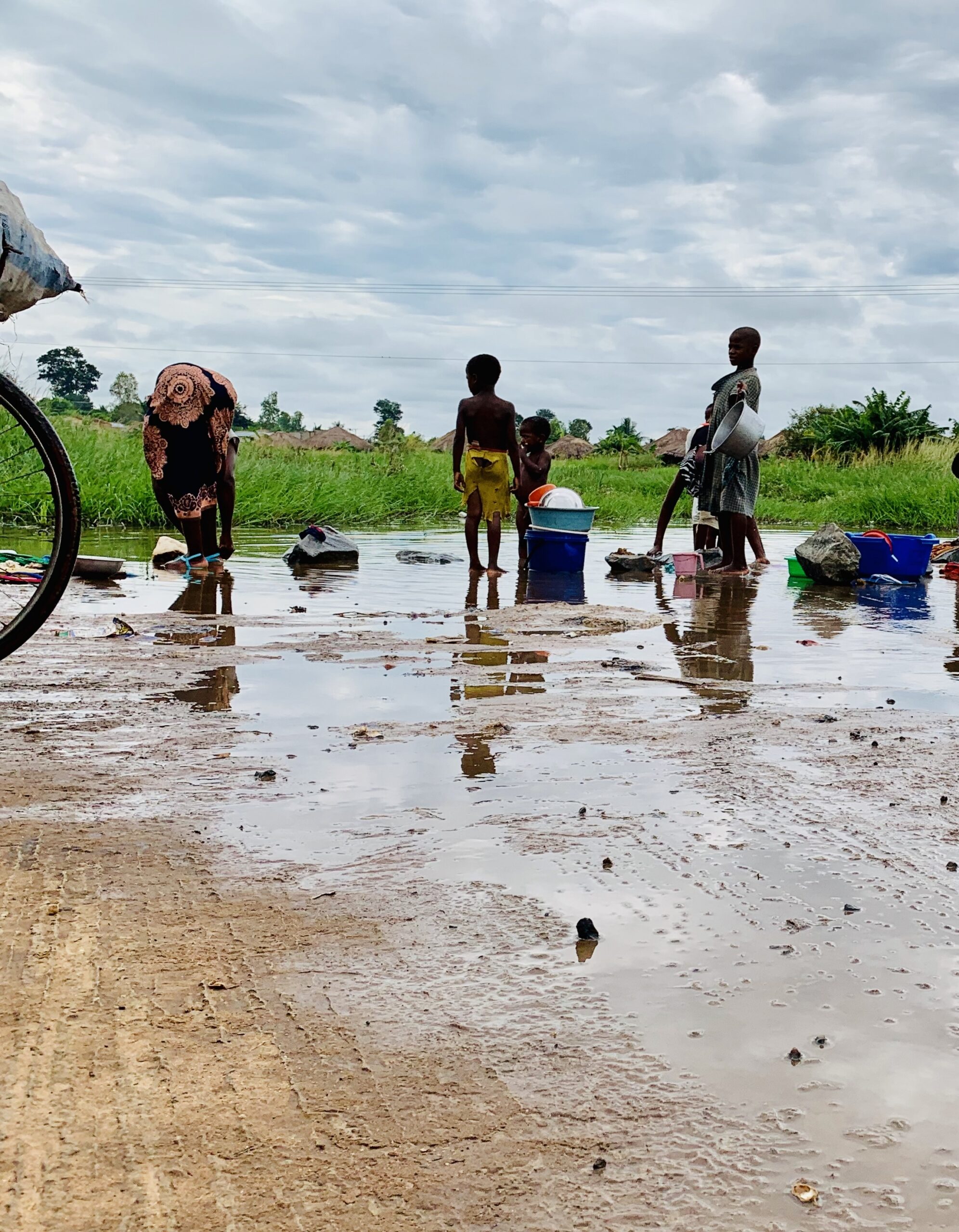
In March 2000, during what were then described as the most severe floods in Mozambique’s recent history, a baby girl named Rosita Mabuiango was born while her mother sought refuge in a tree, surrounded by floodwaters in the Limpopo and Save river valleys in southern Mozambique. The event became internationally visible following an air rescue operation that saved both mother and child and came to symbolise the effectiveness of emergency humanitarian response in extreme conditions. Rosita was subsequently widely regarded as a national symbol of survival and resilience in the aftermath of the disaster [1].
More than two decades later, Rosita died in the same region at the door of a healthcare facility, after years of living with anaemia related to a blood disorder. At 25 years old, she had completed secondary education and left behind an orphaned daughter. Her death reflects a failure of access to basic health system functions, including emergency and primary health care services. That Rosita remained exposed to the same vulnerabilities decades after becoming a symbol of humanitarian success highlights a fundamental policy gap: while emergency interventions were effective in preventing immediate mortality, they were not accompanied by sustained investments capable of transforming the conditions that shape health, well-being, and social protection. Her life trajectory illustrates how short-term humanitarian responses, when not embedded within long-term national systems, can leave patterns of vulnerability unchanged across generations.
Internal displacement has become a defining feature of Mozambique’s social and health landscape rather than a temporary humanitarian concern. Over the past five decades, armed conflict, climate-related hazards, and entrenched poverty have repeatedly displaced populations, often affecting the same communities multiple times. Despite this history, displacement continues to be addressed primarily through short-term humanitarian responses, framed as exceptional crises rather than as structural conditions shaping health equity and development outcomes [2]. This disconnect is becoming more pronounced as international conditions shift. Humanitarian funding is increasingly constrained, nationalist political agendas are reshaping international cooperation, and climate change is intensifying the frequency and severity of displacement events worldwide. In countries such as Mozambique—where displacement linked to both conflict and climate-related hazards is predictable rather than accidental—the limitations of emergency-driven approaches are increasingly evident [3]. While humanitarian assistance has been essential in saving lives during crises, it has rarely translated into sustained improvements in health systems, social protection, or living conditions for displaced populations [4].
Mozambique’s vulnerability to displacement is shaped by a convergence of demographic pressures, climate exposure, and constrained health system capacity. The country has an estimated population of 34 million, approximately 52% of whom are women, with more than 40% under 15 and nearly 65% residing in rural areas [5]. Mozambique ranks among the lowest countries globally on the Human Development Index, reflecting widespread poverty and persistent gender and geographic inequalities [6]. It is also among the most climate-exposed countries worldwide, facing recurrent floods, cyclones, and droughts that disproportionately affect rural livelihoods and fragile infrastructure [7]. At the same time, the health system operates under chronic constraints, including shortages of health workers, uneven service coverage, and limited readiness for emergency, maternal, and chronic care, particularly in rural and conflict-affected districts. These conditions mean that displacement interacts with pre-existing vulnerabilities, amplifying health risks and constraining recovery long after humanitarian responses have ended.
Using Mozambique as a central case, this paper argues that reclaiming health equity for internally displaced populations requires moving beyond a predominantly humanitarian logic toward resilient, nationally led approaches. It positions internal displacement as a structural determinant of health and introduces a broader analytical agenda focused on how health systems, social protection, climate adaptation, and governance can respond to displacement in a more durable and equitable manner.
Displacement in Mozambique: predictable and cumulative
Internal displacement in Mozambique reflects long-standing structural conditions rather than isolated or exceptional crises. Population movements have been shaped by the interaction of armed conflict, climate-related hazards, and entrenched socioeconomic vulnerability, particularly in the decades following independence in 1975. Although individual episodes have typically been treated as discrete emergencies, their cumulative effect has normalised displacement as a recurrent feature of life for large segments of the population.
From 2000 onwards, Mozambique has experienced repeated large-scale displacement associated with both climate-related hazards and armed conflict. Major floods and cyclones have affected the country with increasing frequency, with at least ten nationally significant events causing mass displacement, including the 2000 floods, cyclones Eline (2000), Favio (2007), Idai and Kenneth (2019), Eloise (2021), Freddy (2023), and Chido (2024) [8]. These events have generated millions of displacement movements, often concentrated in the same river basins and coastal districts. In parallel, renewed armed conflict linked to the insurgency in Cabo Delgado since 2017 has produced protracted and repeated displacement, with national estimates consistently reporting hundreds of thousands of internally displaced persons. Many affected households have experienced multiple displacements, partial returns, and renewed movements within the same regions.
Most displacement in Mozambique is short-term and cyclical, particularly in relation to climate-related hazards. Individuals and households displaced by floods or cyclones often return within weeks or months to areas where housing, water systems, livelihoods, and health services remain severely compromised. Once return occurs, these populations are no longer classified as displaced and often fall outside both humanitarian assistance and development programming [8]. This creates a significant policy blind spot. Short-term displacement is frequently treated as resolved once physical return occurs, despite the persistence of elevated health and social risks. Repeated short-term displacement accumulates harm over time, eroding household resilience and increasing susceptibility to future shocks—dynamics rarely captured in displacement statistics or routine planning processes [3].
Taken together, these patterns demonstrate that displacement in Mozambique is cumulative rather than episodic. Repeated exposure to conflict and climate-related shocks erodes household assets, social networks, and coping capacity, while rapid post-disaster recovery often occurs in the absence of meaningful recovery. Framing displacement primarily as an emergency phenomenon, therefore, obscures its long-term health and social consequences and reinforces a response model centred on short-term humanitarian action rather than on prevention, resilience, and structural risk reduction.
Humanitarian assistance and the social determinants of health
Humanitarian assistance has played a critical role in reducing mortality and alleviating acute suffering among internally displaced populations in Mozambique. Emergency food assistance, temporary shelter, water and sanitation services, vaccination campaigns, and mobile health interventions have been essential during acute crises. However, humanitarian action is structurally oriented toward short-term relief and the management of immediate risks, rather than toward the upstream social determinants of health that shape long-term outcomes [9].
The health impacts of displacement are unevenly distributed across the life course. Children and adolescents constitute a substantial proportion of displaced populations, exposing them to heightened risks of malnutrition, interrupted schooling, delayed vaccination, and long-term developmental harm. Displacement frequently disrupts access to education, particularly in rural and disaster-affected areas where schools are damaged or slow to reopen. For many children and adolescents, these disruptions become prolonged or permanent, limiting future employment opportunities, income potential, and social mobility. Over time, these educational losses translate into sustained socioeconomic disadvantage and poorer health outcomes in adulthood [3].
Women and girls face disproportionate displacement-related risks. Displacement often increases unpaid care burdens, restricts access to sexual and reproductive health services, and heightens exposure to gender-based violence, particularly in insecure or overcrowded settings [8]. Female-headed households frequently experience compounded economic insecurity following displacement. Older persons are similarly vulnerable, experiencing displacement through declining mobility, unmanaged chronic illness, and social isolation—needs rarely prioritised within short-term humanitarian programming.
Access to healthcare illustrates how these determinants intersect. While emergency services may be temporarily available during crises, continuity of care is often disrupted once humanitarian responses scale down. Persistent barriers to primary health care, referral systems, emergency services, and essential supplies, such as blood, medicines, and diagnostics, have lasting consequences for adolescents transitioning into adulthood, pregnant women, and people living with chronic conditions.
Together, these patterns expose a persistent policy paradox. Humanitarian responses effectively prevent excess mortality during acute crises but are not designed to interrupt the longer-term pathways through which displacement generates health inequities across generations.
Climate change, conflict, and the limits of emergency response
Mozambique’s exposure to climate change fundamentally challenges the sustainability of emergency-driven displacement responses, particularly when compounded by protracted conflict. Climate-related hazards are increasingly predictable and recurrent, especially in major river basins and coastal zones, while insecurity in northern regions continues to drive repeated and protracted displacement [7]. These overlapping risks are explicitly recognised in national disaster risk reduction and climate adaptation frameworks, which prioritise preparedness, resilience, and system strengthening over repeated crisis response. Yet political, institutional, and financing arrangements remain largely oriented toward reactive humanitarian action.
This misalignment is evident in humanitarian financing trends. According to the Global Humanitarian Overview 2025, Mozambique had an estimated 5.4 million people in need of humanitarian assistance, encompassing internally displaced populations, returnees, and host communities affected by conflict and climate-related hazards, with 3.6 million people targeted for assistance. Meeting these priority needs required approximately USD 413 million, of which less than 40% was funded at the time of publication, leaving a financing gap of over USD 250 million, with critical shortfalls in sectors such as health, protection, and early recovery [10].
Beyond funding shortfalls, repeated emergency responses also generate substantial economic costs. Global analyses estimate that the annual cost of internal displacement ranges from approximately USD 300 to over USD 2,000 per displaced person, depending on context and duration [10]. In contrast, evidence reviewed by Kelman and colleagues shows that investments in prevention, disaster risk reduction, and preparedness yield returns that substantially exceed their initial costs, reducing both human losses and long-term expenditure compared with post-disaster response [11]. Continued reliance on emergency assistance, therefore, represents not only a humanitarian limitation but a failure of economic rationality.
For Mozambique’s health system, these dynamics translate into clear opportunity costs: resources repeatedly mobilised for emergency response could instead support sustained investments in primary health care, blood supply systems, maternal and emergency care, and climate-resilient health infrastructure, strengthening system capacity and reducing the health impacts of future displacement [10].
Governance gaps in a shrinking humanitarian space
The dynamics described above point to a governance challenge rather than a lack of technical knowledge or evidence. In Mozambique, humanitarian action, development planning, and climate adaptation continue to operate through partially parallel systems, driven by different funding cycles, accountability frameworks, and institutional incentives. This fragmentation undermines continuity, weakens national ownership, and constrains the capacity to address displacement as a predictable and cumulative phenomenon.
Although national disaster risk reduction and climate adaptation frameworks increasingly prioritise preparedness, resilience, and system strengthening, implementation remains uneven. Short-term humanitarian financing and externally driven priorities frequently override longer-term national planning processes, particularly in the health and social sectors. As a result, government institutions are often positioned primarily as coordinators of emergency response rather than as strategic leaders of integrated displacement, health, and development agendas.
Reclaiming health equity for internally displaced populations, therefore, requires a shift from predominantly humanitarian approaches toward nationally led, systems-based responses. Internal displacement must be recognised as a structural determinant of health, with implications for the design, financing, and monitoring of health systems, social protection programmes, and climate adaptation strategies. Key priorities include integrating displacement-sensitive planning into primary health care and referral systems; strengthening social protection mechanisms that support displaced and returning households; aligning climate adaptation with health system resilience; and improving routine data systems to capture the cumulative health impacts of repeated displacement.
Within this framework, humanitarian assistance should serve as a time-bound, complementary instrument, supporting transitions toward sustainable national systems rather than substituting for them.
(Re)Forging displacement pathways in Mozambique: lessons from Rosita
Mozambique’s experience demonstrates that humanitarian action, while essential, is insufficient to address the cumulative and predictable nature of internal displacement. Without a strategic shift toward prevention, resilience, and system strengthening, displacement will continue to be managed as a recurring emergency rather than addressed as a structural determinant of health and development. Moving beyond humanitarianism does not imply abandoning emergency response, but embedding it within governance frameworks capable of delivering sustained health equity for internally displaced populations.
Igor Paulo Ubisse Capitine is a Senior Public Health Researcher at the National Institute of Health (INS) in Mozambique and coordinator of the Vulnerable Populations Technical and Scientific Programme. He has extensive experience in public health and health research. His work focuses on migration, internal displacement, and health equity among vulnerable populations in Mozambique.
Álvaro Marcela Manhiça is a sociologist engaged in public health research focusing on vulnerable populations, particularly internally displaced persons. He has participated in large-scale research projects, including preventive vaccine clinical trials and sociobehavioural studies, and has experience in mixed-methods analysis using software such as MAXQDA.
Will Susse de Jesus Monjane is trained in Geography and works with Geographic Information Systems (GIS) applied to public health. Her work focuses on spatial analysis and mapping of epidemiological data to support evidence-based decision-making. She collaborates with the Vulnerable Populations Technical and Scientific Programme to advance GIS-based research on vulnerable populations.
Ivan da Costa Tomás Jr is a sociologist with experience in social and public health research, including monitoring and evaluation. He works with mixed methods approaches, using KoboToolBox and ODK for quantitative data collection and MAXQDA for qualitative analysis, and is engaged in participatory research with internally displaced populations.
Paulo Salvador da Silva Tembe Jr is a sociologist working in sociobehavioural research in public health. He contributes to study implementation, data analysis, and scientific reporting, with experience in field supervision and community engagement. His work focuses on vulnerable populations, particularly internally displaced persons, and the related health challenges they face.
This topical paper is part of the special series on ‘Internal Displacement in a Changing World Order’, led by the Internal Displacement Research Programmeat the RLI. The experts contributing to this series assess how rapid shifts in contemporary politics, plummeting levels of humanitarian aid and escalating global crises are impacting displacement-affected communities. The series ties into the launch in April 2026 of a 45-chapter “Handbook of Internal Displacement” that comprehensively addresses this issue.
KEYWORDS: Internal Displacement, IDPs, health, services, Mozambique, humanitarian
Selected Bibliography
1. José Tembe, Miracle baby' born in a tree above Mozambique floodwaters dies aged 25, in BBC News. 2026, BBC News: London UK,.
2. International Committee of The Red Cross (ICRC), Mozambique: Over 40 Years of Humanitarian Work. 2021, ICRC: Geneva.
3. Internal Displacement Monitoring Centre (IDMC), Global report on internal displacement 2025. 2025: Geneva.
4. Walter Kälin and Peter de Clercq. The UN at 80: What lies ahead for internally displaced persons? 2024; Available from: https://researchinginternaldisplacement.org/short_pieces/the-un-at-80-what-lies-ahead-for-internally-displaced-persons/.
5. Instituto Nacional de Estatística (INE), Anuário Estatístico (Statistical Yearbook) - 2023. 2024, INE: Maputo.
6. United Nations (UN). Development Programme, Human Development Report 2025: A Matter of Choice -- People and Possibilities in the Age of Artificial Intelligence. 2025, United Nations Development Programme: New York.
7. Muleia, R., et al., Assessing the Vulnerability and Adaptation Needs of Mozambique's Health Sector to Climate: A Comprehensive Study. Int J Environ Res Public Health, 2024. 21(5).
8. International Organization for Migration (IOM), Assessment of Displacement Dynamics in Mozambique: Mobility Tracking Round 22. 2025, IOM: Maputo.
9. World Health Organization (WHO), Closing the gap in a generation: Health equity through action on the social determinants of health. 2008, WHO: Geneva, Switzerland.
10. United Nations Office for the Coordination of Humanitarian Affairs (OCHA), Global Humanitarian Overview. 2025: New York: United Nations.
11. Kelman, I., Disaster Mitigation Is Cost Effective. 2004, Center for International Climate and Environmental Research – Oslo (CICERO): Oslo, Norway.