
RID Spotlight
Resolving Climate-Related Internal Displacement at a Time of Crisis
By Walter Kälin
| February 12, 2026
This timely article by one of the world's leading experts on internal displacement highlights the growing crisis of climate-related internal displacement, which is unfolding against the backdrop of drastic funding cuts and humanity's apparent failure to adequately mitigate greenhouse gas emissions. Arguing that the world is ill-prepared to address the crisis, including the severe challenges faced by populations living in protracted displacement, the author outlines a bold strategy for change. The blog calls on all stakeholders to acknowledge the severity of loss and damage related to displacement and prioritise durable solutions programming. It also highlights the systemic and financial changes required, including the need to make the still-elusive 'humanitarian-development nexus' a reality. Ultimately, the author makes separate but related recommendations to the United Nations, country donors and affected countries on how, through collaborative multi-year programming, the process of loss associated with displacement can be reversed and deliver sustainable improvements for affected populations.
Read More
Researching Internal Displacement connects researchers, practitioners, policy-makers, students, artists and people from displacement-affected communities with cutting-edge research, analysis, creative materials and other resources on internal displacement.
The platform is hosted by the Refugee Law Initiative, a unique academic centre at the School of Advanced Study, University of London, promoting interdisciplinary research, teaching and exchange on law, policy and practice in refugee and displacement contexts.
LATEST RESOURCES
Age and Justice Considerations: Insights from Planned Relocation in Odisha, India
By Ranjan Panda and Dr. Sankalpa Satapathy
| October 22, 2026
This fourth article in RID's miniseries, Towards Dignified Climate Relocation: Community Perspectives from around the Globe, shines a light on the hardships faced by older people following planned relocation in the Indian coastal state of Odisha. The authors, researchers who have worked with these erosion-affected communities through the India-based network “Water Initiatives”, describe how older adults experience challenges to their cultural identity and traditional knowledge systems following planned relocation, including the fracturing of their relationship with nature, loss of sacred spaces, and ‘solastalgia’ – the acute distress and melancholia caused by the environmental degradation of one's home environment.
The paper also highlights the lessons learned from the lived realities of older persons undergoing planned relocation, including the need to pay more attention to the social, cultural, psychological, and care-related dimensions of climate vulnerability and, vitally, why approaches to planned relocations must be inclusive and age-sensitive.
The series is published in collaboration with the Coalition on Dignified Climate Relocation.
Read More
From Our Home in Gardi Sugdub and Isberyala: A Community Perspective on Planned Relocation in Panama
By Elliot Brown Rivera (Translated from Spanish by Sarah Koeltzow)
| October 15, 2026
This third article in the miniseries, Towards Dignified Climate Relocation: Community Perspectives from around the Globe, highlights the complexities of the planned relocation of the Guna island community in Panama, as they moved from their island of Gardi Sugdub to the mainland site of Isberyala. The author, an Indigenous leader, community member and trained biologist, played an important role in bridging government assessments and requirements with the Indigenous community’s distinctive worldview, spirituality, and ancestral knowledge—dimensions impossible to capture through externally conducted technical studies.
The Guna experience demonstrates that communities have the capacity to lead complex processes when they receive recognition, resources, and technical assistance. However, a truly successful planned relocation should not be measured by the completion or delivery of houses but by families' ability to adapt and live dignified and sustainable lives in their new homes. Outcomes at the new site must be evaluated over time and across generations.
The series is published in collaboration with the Coalition on Dignified Climate Relocation.
Read More
WHAT IS INTERNAL DISPLACEMENT?
Internally displaced persons (or IDPs) can be understood as:
"persons or groups of persons who have been forced or obliged to flee or to leave their homes or places of habitual residence, in particular as a result of or in order to avoid the effects of armed conflict, situations of generalized violence, violations of human rights or natural or human-made disasters, and who have not crossed an internationally recognized State border."
IDP TRAINING
Our free course in
‘Internal Displacement,
Conflict and Protection’
Find out more
ABOUT US
Connecting researchers,
practitioners, policy-makers,
students, artists and IDPs
Find out more
IDP TRAINING
Our free course in
‘Internal Displacement,
Conflict and Protection’
Find out more
ABOUT US
Connecting researchers,
practitioners, policy-makers,
students, artists and IDPs
Find out more
CALL FOR PAPERS

NEWS AND EVENTS
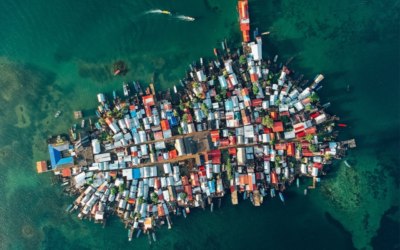
New RID Series: “Towards Dignified Climate Relocation: Community Perspectives from around the Globe”
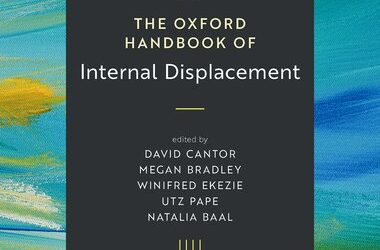
Researching Internal Displacement offers a platform for publishing insightful and engaging short pieces of writing, artistic productions and other research outputs, policy briefings and think pieces on internal displacement from our networks and others in a conversational and informal setting.
HOW TO CONTRIBUTE
Researching Internal Displacement publishes engaging and insightful short pieces of writing, artistic and research outputs, policy briefings and think pieces on internal displacement.
We welcome contributions from academics, practitioners, researchers, officials, artists, poets, writers, musicians, dancers, postgraduate students and people affected by internal displacement.