WHAT IS INTERNAL DISPLACEMENT?
Internally displaced persons (or IDPs) can be understood as:
 persons or groups of persons who have been forced or obliged to flee or to leave their homes or places of habitual residence, in particular as a result of or in order to avoid the effects of armed conflict, situations of generalized violence, violations of human rights or natural or human-made disasters, and who have not crossed an internationally recognized State border.

Sudan. Internally displaced in Um Rakuba 2023 © UNHCR/Ala Kheir
This description of IDPs is taken from the main global framework on IDP assistance and protection: the Guiding Principles on Internal Displacement, which were created within the United Nations system. The 30 guiding principles on how IDPs must be treated that are contained in this document set out the pertinent standards that States, governments, humanitarian organisations, armed groups and other entities should follow.
But tens of millions of people remain internally displaced in today’s world, with numbers reaching historic highs. Internal displacement is thus a major humanitarian, development and social justice challenge. The varied and intersecting nature of the drivers of internal displacement – including conflict, generalised violence, disasters, climate change, development projects and governance failures – can make internal displacement a complex challenge that is difficult to surmout.
Internal displacement takes place within countries, which differentiates it from refugee movements that take place across borders. Disaster displacement is documented all across the world. Conflict-driven internal displacement, by contrast, occurs mainly in the developing countries where conflict or generalised violence now cluster. Globally, attention to IDPs is minimal in comparison with that accorded to refugees and international migrants.
LATEST RESOURCES
More Than a Roof: Promises, Practices, and the Realities of Project HARSHAM in Wayanad, India
By Rahmath Beevi Kunnummal and Mohammed Firoz C
| October 8, 2026
This second article in RID's miniseries, Towards Dignified Climate Relocation: Community Perspectives from around the Globe, is an insightful analysis of the challenges faced by community members involved in a planned relocation initiated after the Puthumala landslide of 2019 in Wayanad, Kerala, India. Written by researchers who have worked with this community, the article details the challenges the community faced both during relocation and five years after moving to their new site, including promises made, implementation problems and the difficult realities of everyday life after relocation. Through the account, the authors spotlight important lessons for governments, non-governmental actors, and communities themselves about prioritising a community's shared infrastructure during development, livelihoods and access to employment, and access to grievance and feedback mechanisms. Above all, this article shows that planned relocation processes do not end when a new house is constructed; they require long-term support and monitoring for many years to come.
The series is published in collaboration with the Coalition on Dignified Climate Relocation.
Read More
More than Just Housing: Human-rights-based Planned Relocation Lessons from El Bosque, Mexico
By Silvia Cantú Bautista, María Maldonado Antillón, Daniela Chapuz Osorio, Juan Manuel Orozco Moreno
| October 1, 2026
This first article in RID's miniseries, Towards Dignified Climate Relocation: Community Perspectives from around the Globe, is a moving account of the challenges faced by community members of El Bosque, Tabasco, Mexico, who began to plan relocation in 2022 due to severe coastal erosion. Written by members of two organisations that have advocated for the community, the article recounts the successful legal and communications campaign that persuaded the Government of Mexico to support relocation, as well as the challenges faced during a planned relocation process that did not fully prioritise a participatory, rights-based approach.
The article calls on the Mexican government to remedy the harms to the community while ensuring better future programming through policy changes. It also offers vital lessons for governments, communities and development actors around the globe on community participation, transparent and constant communication, focus on economic and non-economic loss and damage and the need for continuous access to livelihoods, education and health services.
Read More
SOLUTIONS
‘Solutions’ to internal displacement are said to be achieved only when IDPs overcome the negative effects of their displacement.
This can happen in the context of a voluntary return to their original homes, local integration in the site where they are now living or resettlement/relocation to some other place in the country. Although in some countries IDPs live in camps, the majority live self-settled in host communities in urban and rural areas.
IDP TRAINING
Our free course in ‘Internal Displacement, Conflict and Protection’
Find out more
IDRP
Internal Displacement Research Programme
Find out more
HIDN
Health and Internal Displacement Network
Find out more
GENIDA
Global Engagement
Network on Internal Displacement in Africa
Find out more
LANID
Latin American Network on Internal Displacement
Find out more
MERNID
Middle East Research Network on Internal Displacement
Find out more
IDP TRAINING
Our free course in ‘Internal Displacement, Conflict and Protection’
Find out more
IDRP
Internal Displacement Research Programme
Find out more
HIDN
Health and Internal Displacement Network
Find out more
GENIDA
Global Engagement
Network on Internal Displacement in Africa
Find out more
LANID
Latin American Network on Internal Displacement
Find out more
MERNID
Middle East Research Network on Internal Displacement
Find out more
LATEST NEWS

EVENTS
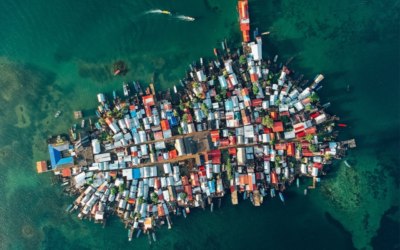
New RID Series: “Towards Dignified Climate Relocation: Community Perspectives from around the Globe”