
In 1948, the Universal Declaration of Human Rights set out a vision of a world in which human dignity and equal rights would be protected for all. More than seventy-five years later, these rights are recognised in international and domestic law, yet the structures required to turn these ideals into lived realities remain underfunded and fragile.
At the end of 2024, more than 83.4 million people were living in internal displacement globally due to conflict, violence, and disasters, and many depend on humanitarian assistance to meet their basic needs and realise their fundamental rights. According to the World Bank, forced displacement is both a development challenge and a humanitarian concern. Most displaced people live in low- and middle-income countries where national systems are already under pressure. Internally displaced persons (IDPs) make up 58% of the world’s forcibly displaced population, and many remain displaced for years or even decades in highly vulnerable conditions. In these contexts, governments retain primary responsibility but are not always able to meet all needs, and humanitarian assistance fills the gap.
Although international law recognises the protection needs of internally displaced persons and establishes a framework of shared responsibility between States and the international community, they are not formally recognised as a distinct category of rights-holders under binding international treaties, and their rights often fall through the cracks. Under international law, the primary responsibility for the protection of internally displaced persons lies with national authorities under international human rights law, international humanitarian law, and customary international law. However, in many displacement contexts, the response operates through a collaborative system involving multiple humanitarian, human rights, and development actors, and assistance has become the mechanism through which these obligations are implemented in practice. It is within this gap between rights in law and rights in practice that humanitarian assistance operates, helping to meet the “monumental task” of protecting people forcibly uprooted within their own countries.
As recent aid cuts widen funding gaps, humanitarian actors are forced into increasingly difficult trade-offs: who receives assistance, which programmes are suspended, and which needs and rights remain unmet. These decisions, often made in donor capitals and international institutions, are frequently shaped by short-term political or foreign policy priorities and reactive funding cycles that fail to account for the protracted nature of displacement crises. They translate into decisions on the ground about which programmes continue, which services are reduced, and which people can still access food, healthcare, and protection.
Because these funding decisions are rarely guided by a clear rights-based framework, displaced populations who fall outside priority categories risk being left without support even when their needs are real. The consequences of funding contraction are clearly visible in Haiti and South Sudan.
In Haiti, escalating violence and institutional instability displaced 1.4 million people by October 2025, the highest level of internal displacement ever recorded in the country. Humanitarian assistance helped sustain minimum living conditions, but funding shortfalls forced agencies to cut food rations and suspend hot-meal programmes, while insecurity and funding gaps disrupted health services and limited access to medical care, particularly in displacement sites where mobile clinics were often the primary mode of healthcare delivery. As a result, displaced households faced worsening hunger and lost access to essential maternal and child health services.
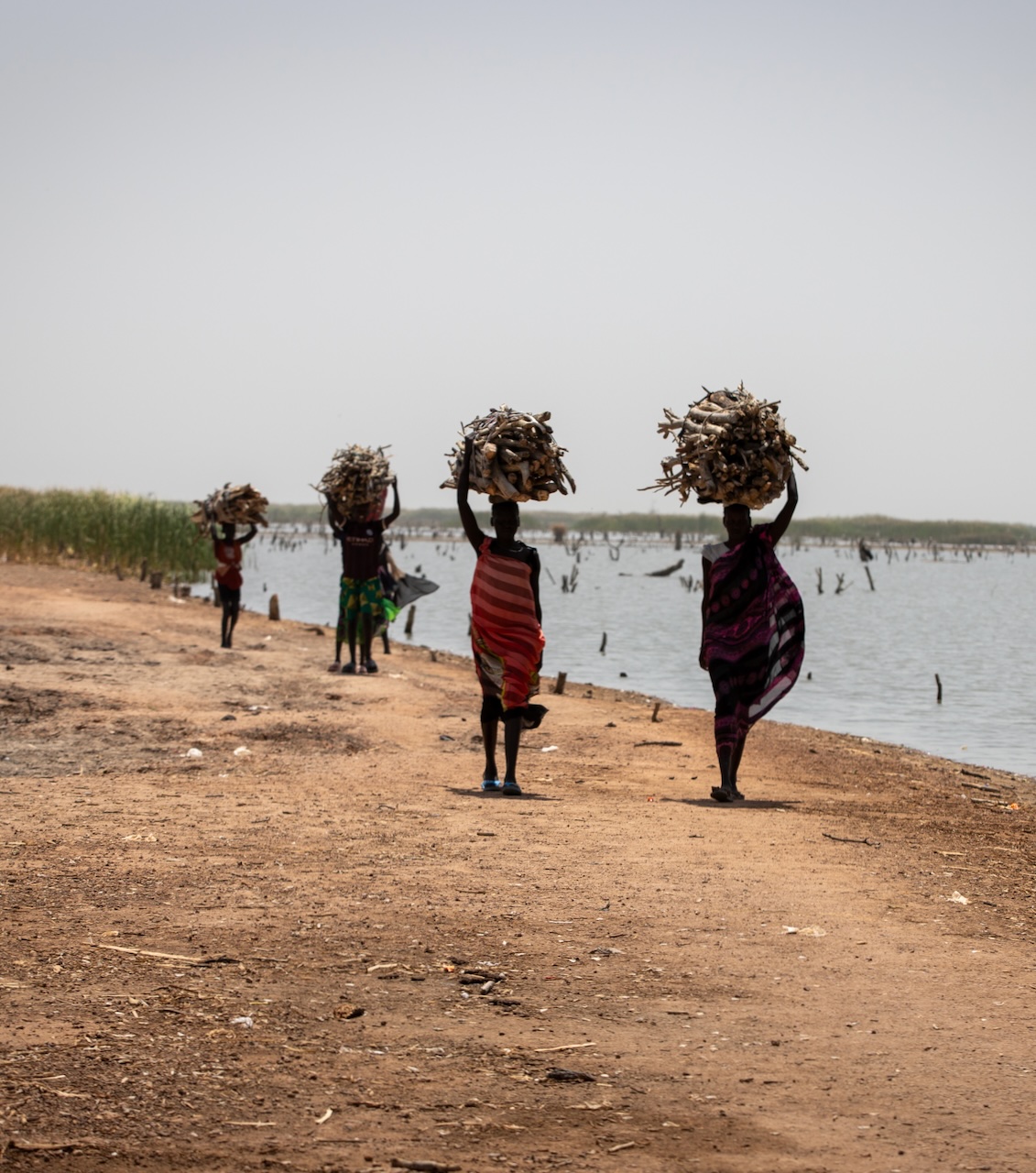
In South Sudan, widespread displacement and food insecurity were compounded by funding shortfalls that led to ration reductions during one of the country’s most severe cholera outbreaks. Humanitarian organisations closed therapeutic feeding centres, faced medicine shortages, and interrupted referral transport, significantly reducing access to life-saving treatment during the epidemic. By late 2024, displacement monitoring data indicated that almost 2 million individuals remained internally displaced in South Sudan, a situation shaped by persistent conflict, food insecurity, and climate shocks.
These services safeguard and sustain the right to adequate food and the highest attainable standard of health through food distributions, nutrition programmes, mobile clinics, maternal health services, and protection initiatives. They constitute the operational backbone on which women, children, older persons, and persons with disabilities rely, and are often the first to be impacted when funding declines.
Beyond the immediate human consequences, these financial shifts undermine the principles of equality and non-discrimination, as already at-risk groups are pushed toward negative coping strategies. Evidence shows that internally displaced persons face significant barriers to the enjoyment of fundamental rights, including the rights to food, health, housing, and livelihoods. Displacement frequently results in the loss of homes, assets, documentation, and sources of income, increasing poverty, food insecurity, and exposure to protection risks. Living conditions are often precarious and overcrowded, with limited basic services that directly affect health, safety, and dignity.
When assistance is withdrawn, affected populations are often forced to move again in search of sustenance and dignity, as mobility becomes a key survival strategy in contexts where livelihoods and services are insufficient. This secondary displacement frequently triggers cross-border movements that States later attempt to manage at far greater human, political, and financial cost.
The withdrawal of support weakens public legitimacy and creates conditions for instability, as displacement left unaddressed places sustained pressure on institutions and social cohesion. These funding constraints undermine the realisation of human rights and can reshape the conditions for peace and security.
In displacement contexts, humanitarian assistance sits at the intersection of the three pillars identified by Kofi Annan in In Larger Freedom: development, security, and human rights. Annan emphasised that these pillars are inextricably linked and that progress in one depends on progress in the others. In displacement settings, humanitarian assistance enables access to basic rights, supports social and institutional stability, and helps create the conditions for recovery and development. Underinvestment in IDP communities, therefore, has consequences far beyond humanitarian need; it weakens public health systems, undermines livelihoods, erodes social stability, and ultimately affects the prospects for sustainable peace.
Ultimately, the realisation of human rights depends on how States mobilise their maximum available resources to meet minimum core obligations, complemented by donor contributions. This is particularly true for social and economic rights, such as education, health, housing, and food, which depend on proactive state action, public systems, and budget allocation. When aid is cut, rights are cut: the rights of internally displaced persons become contingent on political choices about which rights are prioritised in practice. In displacement contexts, humanitarian assistance has become the primary infrastructure of survival, a lifeline to essential services.
When a cruel arithmetic forces a shift from needs-based responses (who needs help?) to ever-narrower prioritisation (who is most likely to survive with the little available?), assistance becomes a form of triage, determining whose rights are upheld and whose survival is deferred. This exposes the tension between the principle of universality and indivisibility of human rights and the reality of conditionality imposed by resource allocation.
In contexts where national capacity is limited, the protection of fundamental rights becomes a shared responsibility between States and the international community, without diminishing the primary obligations of States under international law. A rights-based approach to humanitarian financing therefore, requires both States and donors to prioritise and protect funding for internal displacement, and to ensure that allocation decisions are not driven by short-term, reactive political support.
As humanitarian assistance is progressively restricted to the most acute cases, particular concern must be given to those who fall outside the narrowing boundaries of prioritised coverage, yet remain profoundly dependent on international support for food, healthcare, and protection.
The first impacts of funding cuts rarely make headlines; they emerge at the intersection of vulnerabilities in displacement, where women, children, and marginalised groups bear the hidden costs of decisions made far from the realities they shape. René Cassin’s warning remains strikingly relevant: legal recognition alone is not sufficient. Without sustained financing and functioning systems, rights remain promises rather than realities.
Kadidjatou Sawadogo is an Online Volunteer with the United Nations Volunteers (UNV), contributing to translation and research. She holds a Master’s degree in International Human Rights Law. She is currently finalising a Master’s in Gender, Peace and Security at the Kofi Annan International Peacekeeping Training Centre (KAIPTC) in Accra.
Paula Gaviria Betancur is the UN Special Rapporteur on the human rights of internally displaced persons.
Davina Saïd is Head of Forced Displacement at the International Council of Voluntary Agencies. With guidance and support from Issie Basile, Policy Officer, Forced Displacement at the International Council of Volunteer Agencies, and Nadine Walicki, Senior Policy Advisor to the UN Special Rapporteur on the human rights of IDPs..
The research and analysis undertaken for this policy paper was published in Researching Internal DIsplacement’s Working Paper series on 30 June 2026, titled “The Impact Of Funding Cuts on the Human Rights of Internally Displaced Persons in Haiti and South Sudan” The conceptualization, substantive framing and messaging were shaped under the guidance of Paula Gaviria Betancur, UN Special Rapporteur on the human rights of IDPs, and Davina Saïd, Head of Forced Displacement at ICVA.
This topical paper is part of the special series on ‘Internal Displacement in a Changing World Order’, led by the Internal Displacement Research Programme at the RLI. The experts contributing to this series assess how rapid shifts in contemporary politics, plummeting levels of humanitarian aid and escalating global crises are impacting displacement-affected communities. The series ties into the launch in April 2026 of a 45-chapter “Handbook of Internal Displacement” that comprehensively addresses this issue.
KEYWORDS: Internal Displacement, IDPs, humanitarian funding, protection, human rights, Haiti, South Sudan
Selected Bibliography
Internal Displacement Monitoring Centre. Global Report on Internal Displacement 2025. https://www.internal-displacement.org/global-report/grid2025
Kofi Annan, In Larger Freedom (2005). https://unis.unvienna.org/pdf/freedom_annan.pdf
United Nations. Universal Declaration of Human Rights (1948). https://www.un.org/en/about-us/universal-declaration-of-human-rights
United Nations High Commissioner for Refugees. Guiding Principles on Internal Displacement (1998). https://www.unhcr.org/media/guiding-principles-internal-displacement
World Bank. Forced Displacement and Fragility, Conflict and Violence (2024). https://www.worldbank.org/ext/en/topic/fragility-conflict-and-violence/forced-displacement