DAÑOS Y PÉRDIDAS Y DESPLAZAMIENTO: MENSAJES CLAVE PARA AVANZAR HACIA LA COP 28

Este informe de promoción reclama la transversalización del desplazamiento poblacional y otros tipos de movilidad humana en las políticas y prácticas destinadas a abordar las pérdidas y daños asociados al cambio climático.
Published on October 16, 2023
Loss and Damage and Challenges of Human Mobility and Displacement Working Group | idrp, IDPs, Disaster, Climate, United Nations
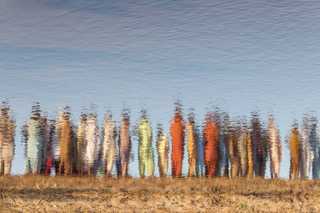
Pakistan. Drowning in despair. 2022 © Jamil Akhtar CC-BY-NC-SA 2.0

Pakistan. Drowning in despair. 2022 © Jamil Akhtar CC-BY-NC-SA 2.0

El desplazamiento, la migración forzosa y otras formas de movilidad humana involuntaria deben ser una de las piezas clave en la gestión de las pérdidas y los daños relacionados con el cambio climático. El desplazamiento por motivos climáticos socava los derechos humanos, el bienestar y el desarrollo, lo que provoca todo tipo de efectos adversos en las personas, las comunidades, las sociedades y los Estados y plantea preguntas y dudas serias sobre la justicia climática. Cualquier enfoque para afrontar las pérdidas y los daños vinculados al cambio climático que pretenda ser completo debe tratar de evitar y minimizar las repercusiones negativas del desplazamiento y aportar soluciones justas y equitativas.

KEYWORDS: pérdidas y daños; cambio climático; COP 28; desplazamiento; climate justice

DESCARGAR EL INFORME

This advocacy brief is co-published by the Loss and Damage Collaboration and Researching Internal Displacement. It can be found also on the Loss and Damage Collaboration webpage.


The Loss and Damage and the Challenges of Human Mobility and Displacement working group is a coalition of practitioners, researchers, lawyers and activists working on human mobility at local, national and global levels. Representing a broad cross-section of voices, perspectives and interests, participants in the working group share the common conviction that climate change-related displacement must be central to efforts to assess and address loss and damage impacts, including cascading and intergenerational impacts on individuals, communities, societies and ecosystems.

Image Credits

1. Cover image: Drowning in Despair, by Jamil Akhtar via the World Meteorological Organization (7289), licensed under CC BY-NC-SA 2.0. Description: Residents of a village in District Sanghar in Sindh Province of Pakistan, gather to collect some emergency ration supplies after the devastating flood of 2022. This year has also had its share of floods, albeit slightly less than the previous year. Experts warn that this will probably become an annual occurrence. Pakistan has one of the smallest carbon footprints in the world while suffering from the worst effects of climate change and almost no disaster preparedness.

2. Loss and Damage Collaboration logo: Sundarbans web, by the European Space Agency, Contains modified Copernicus Sentinel data (2016), processed by ESA, licensed under CC BY-SA 3.0 IGO

HOW TO CONTRIBUTE

Researching Internal Displacement publishes engaging and insightful short pieces of writing, artistic and research outputs, policy briefings and think pieces on internal displacement.

We welcome contributions from academics, practitioners, researchers, officials, artists, poets, writers, musicians, dancers, postgraduate students and people affected by internal displacement.

By Adam Lichtenheld and Abbey Steele | Mar 26, 2026
This is the fourth volume in our series on ‘Internal Displacement in a Changing World Order’. It examines how state policies addressing internal displacement have evolved since the Cold War, analysing 588 policies across 86 countries adopted between 1989 and 2022. The authors find that policy adoption surged during the peak of the liberal international order, particularly in the 2000s and 2010s, driven by major displacement crises, international advocacy, and normative frameworks like the 1998 UN Guiding Principles on Internal Displacement, the 2006 Kampala Convention, and the IASC Durable Solutions Framework. While most countries address displacement through broader vulnerable population frameworks, the content of IDP-specific policies has shifted over time. Provisions establishing camps and granting formal IDP status have declined since 2018, whereas service provision guarantees expanded dramatically between 2003 and 2018, likely reflecting state-building efforts in conflict-affected nations. As the liberal international order weakens, the authors question whether policy adoption will slow without international pressure and normative consensus, while suggesting that existing policies may serve as valuable tools for domestic advocates to hold governments accountable.
By Deborah Casalin | Mar 23, 2026
This is the third volume in our series on ‘Internal Displacement in a Changing World Order’. It argues that in the face of escalating pressures on international cooperation, resources and norms – which in turn aggravate the situation of IDPs and their societies – it is crucial to keep consolidating the internal displacement legal regime, as well as strengthening and building on it further to address the growing and evolving challenges of internal displacement situations. The first part outlines some features of the internal displacement legal regime which may be leveraged to safeguard existing progress. These include its foundations in international human rights law and international humanitarian law; its multi-level anchoring; and its broad contextual relevance. The second part indicates some ways in which this legal regime can be reinforced and developed in the longer term: in particular, by consolidating existing protections at different levels; clarifying and further elaborating norms where needed; and gathering and analysing relevant legal data to track evolution and application of the internal displacement legal regime, as well as how this may still need to develop.
By Geoff Gilbert | Mar 19, 2026
This second volume in our series on ‘Internal Displacement in a Changing World Order’ considers whether the global policy framework of the 2018 Global Compact on Refugees (GCR) adequately addresses the situation of internally displaced persons (IDPs). The GCR was designed by states participating in the Formal Consultations hosted by UNHCR to be limited to 1951 Convention refugees. Nevertheless, there are some express references in the GCR to internally displaced persons and forced internal displacement. Furthermore, the nature of acute crises globally is that in many instances there is both cross-border and internal displacement within one state with mixed populations, such that the GCR’s explicit inclusion of ‘host communities’ incorporates IDPs in the GCR. This means that both expressly and implicitly, IDPs need also to be factored into GCR work ‘to operationalize the principles of burden- and responsibility-sharing to better protect and assist refugees and support host countries and communities’.