
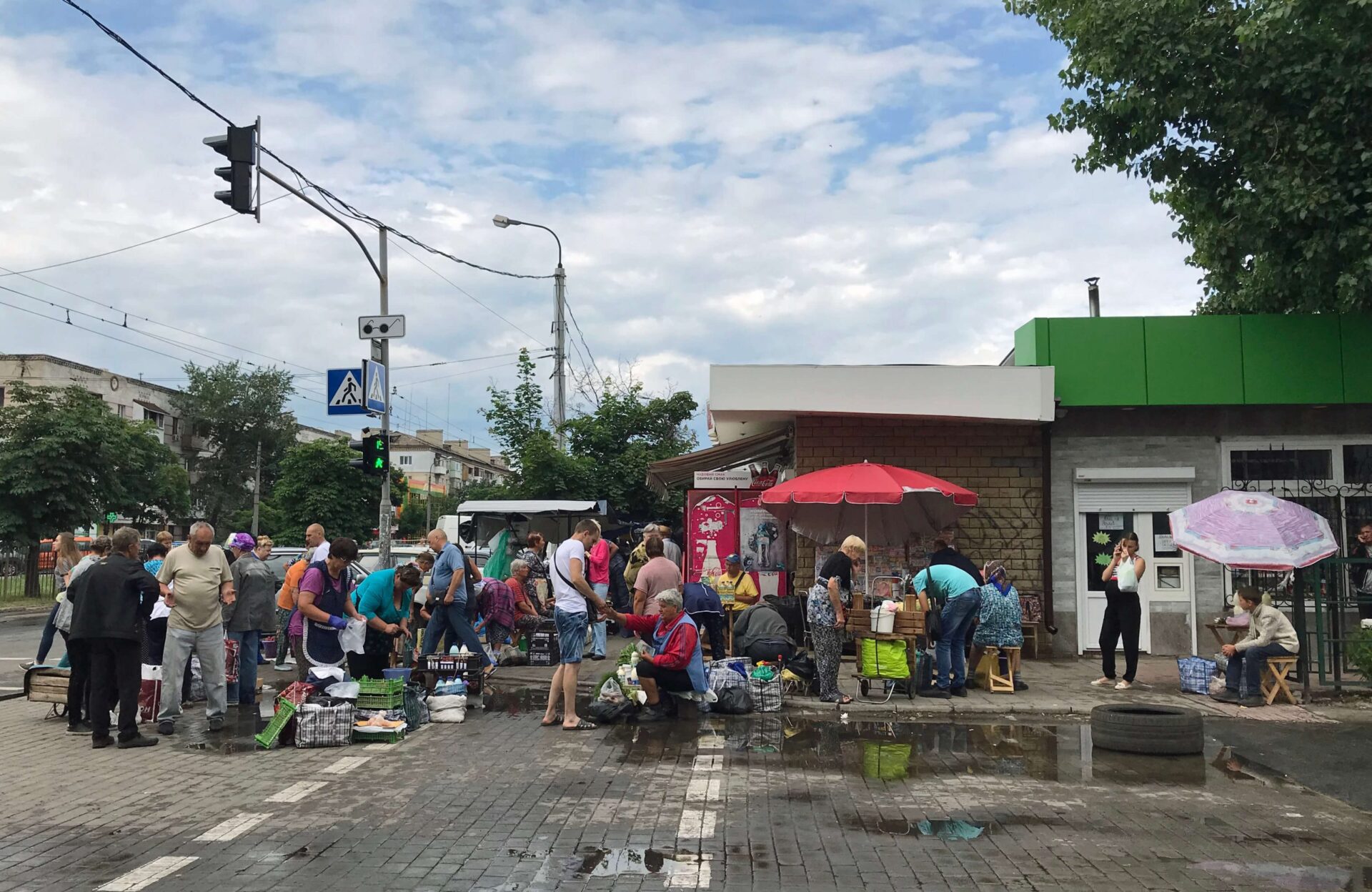
Data needs to be front and center of any renewed strategy on internal displacement. This is because it is key to: predicting and preventing displacement, informing humanitarian and development responses, enhancing capacity and political will, and finding, implementing, and monitoring progress towards durable solutions. While displacement data can help to give an overview of rapidly changing conflicts such as this update on figures in Ukraine, it is just as important for helping displaced people regain dignity and reestablish normal lives after years stuck in displacement limbo.
We expected the High Level Panel’s 2021 report, Shining a Light on Internal Displacement: A Vision for the Future, to capture the centrality of data on internally displaced persons (IDPs). Recommendation #7 proposes some important solutions to improve the availability and use of such data (p. 67). But it does not go far enough. Only three of the report’s eighty pages specifically discuss ways to strengthen the use of internal displacement data. This does not reflect the political sensitivity of IDP data, many of the contributions submitted to the panel by experts, or the nuance of the background discussions. A follow-up Action Agenda from the United Nations Secretary-General will determine the UN’s commitments to carry these recommendations forward. With the Action Agenda still under consultation, we urge academia to resume its key role to inform next steps.
The draft Action Agenda risks carrying forward a number of blind spots that we outline below. It explicitly calls on States to “put in place internal displacement data systems” and on the international community to improve the coordination of data initiatives. Though welcome developments, this call ignores the richness of other types of data and knowledge production. It also opens up the possibility that the “internal displacement data” mentioned in the Action Agenda’s UN Commitment #12 becomes almost exclusively synonymous with quantitative data.
What the High Level Panel Report gets right
The High Level Panel gets many things right. Its report emphasizes the importance of leadership by national governments in data collection processes. Towards this, it supports the important work and recommendations issued by the Expert Group on Refugee, IDP and Statelessness Statistics (EGRISS) to standardize data collection methodologies and definitions, promoting interoperability and greater rigor. These recommendations were endorsed by the UN Statistical Commission in 2020. The report also calls for an increase for financial support to build country-level expertise and capacity.
Critically, the report proposes the creation of country-level internal displacement data working groups that bring together all relevant parties (government, international, and civil society organizations). We welcome this initiative to promote greater transparency and cooperation, recognizing that the very process of collecting data on IDPs can promote dialogue, ownership, build capacity and most importantly, political will. As the operational details are ironed out, the UN Secretary General needs to carefully consider how the working groups will complement existing country-level coordination structures (e.g. cluster system, national reference groups linked to the Grand Bargain), engage actors across the humanitarian-development nexus, and the long-term viability of funding.
The High Level Panel report also calls for the articulation of country-specific data strategies. We support this, recognizing that different displacement contexts have different information needs and that data collection should be aligned with other relevant government and UN processes.
All too often, generic calls for more and better data miss the mark. Data collection is a means to an end and should not become an end in itself. Drawing from critical insights gained through consultations with IDPs and host communities, the report reminds us that collaborative and transparent data collection processes are not just important for high-level coordination mechanisms, but for displaced people themselves. Hence the report promotes the inclusion of IDPs in all stages of data collection processes. We now have techniques for doing this in practice in protracted displacement contexts such as Darfur, Sudan.
What’s missing from the High Level Panel Report
The report focuses heavily on how data should be collected and not enough on what data should be collected, other than a brief note encouraging the expansion of “big data” research. This is a mistake.
So far, too much emphasis is being placed on quantitative data and counting at the expense of more nuanced and context-specific qualitative data. This type of data is urgently needed to understand the realities of IDP’s heterogenous lived experiences – including children and the elderly – and to guide progress towards durable solutions, taking into account individuals’ talents, preferences, and aspirations.
An exclusive focus on quantitative data hampers a full understanding of the “socioeconomic dynamics and associated trends” that the UN argues is critical for strengthening collective action on solutions (p. 11). Where quantitative data is collected, it must be disaggregated at least by age, gender, and disability. Adopting a whole-of-displacement lens emphasizes the need for data on host communities too, enabling comparative analysis of inequalities, risks, and opportunities. All of this must be done with high ethical and safeguarding standards.
Data collection efforts also need to adapt both its processes and its content to contend with urban internal displacement. The vast majority of IDPs seek refuge in urban environments (p. 27), a point which is meaningfully acknowledged for the first time in the High Level Panel Report. As a result of consultations with mayors and city stakeholders, the High Level Panel reinforces the critical role of local authorities in coordinating responses (p. 15). This recognizes their responsibility to represent and serve the interests of all residents, including IDPs.
However, because data and urban discussions are generally kept separate in the report, the implications of urban internal displacement for data get lost. First, processes of data collection should include not only a close collaboration with local authorities, but also urban planning practitioners as key data users. Second, informing responses in cities requires greater attention to existing systems of governance and service provision. This is because existing systems arguably have a greater effect on long-term IDP wellbeing and integration than short-term humanitarian programmes.
Therefore, a strong understanding of the complex urban context should foreground any analysis of the challenges faced by IDPs. In addition to a comparative analysis with host communities, comparing specific areas affected by displacement can illuminate how different parts of the city are affected differently. When bringing in this added dimension, this profiling of urban displacement situations, or ‘urban profiling’, has shown promise and impact. However, it still requires significant development. Flagging it as good practice within the draft Action Agenda (p. 18) is welcome but perhaps underestimates the challenges of its implementation.
Finally, although the High Level Panel’s recommendations made clear that governments should be ultimately responsible for setting out data collection, management, and analysis processes, these cannot be narrowed down to official government IDP registries (i.e. Colombia’s Single Registry of Victims) alone. Such registries certainly serve a useful public administration purpose, but they can also be subject to problems of selection due to bureaucratic barriers and IDP reluctance to identify themselves to government authorities, as well as to various forms of political manipulation. Government IDP registration systems therefore should not serve as the sole arbiter of a person’s entitlements and rights after displacement. That said, we applaud the High Level Panel’s call for greater national ownership of the data collection process provided it is transparent, collaborative, and supported to meet minimum standards.
Do we need a new taskforce?
The High Level Panel’s recommendation on strengthening the effective use of internal displacement data represents an important step forward. Some gaps, however, remain. The draft Action Agenda (p. 11) proposes that this be carried out by a new taskforce on data. This group would devise concrete ways to implement the High Level Panel’s recommendations, including the creation of country specific working groups and data strategies.
Given that its remit remains unclear, we take this opportunity to advise that it convene not only UN agencies to incentivize collaboration around data initiatives across the UN, but that it also maintain a strong link to governments working on these issues at different levels. For example, it could build on the work of the multi-stakeholder Plan of Action launched at the 20th anniversary of the Guiding Principles on Internal Displacement. Otherwise, this taskforce risks creating new silos as it seeks to address others. It can also play a key role in engaging with academic research on internal displacement to encourage policy-relevant work.
Conclusions
In short, initiatives to improve IDP data need to move beyond just counting IDPs. We also need to encourage the pursuit of more in-depth, critical, and policy-relevant analysis of internal displacement data and its systems. Internal displacement was a central theme for economists at the recent Joint Data Centre Conference on Forced Displacement. In a poignant keynote, George Okoth-Obbo, Secretary of the Secretary-General’s High Level Panel, reminds us that “internal displacement still remains very much in what I would call a discovery stage”. Perhaps greater attention to qualitative data and reflexive methodologies – alongside numbers – is critical to move beyond this.
Melissa Weihmayer is a PhD Candidate in Regional and Urban Planning Studies at the London School of Economics and Political Science. She has been working on issues of migration and displacement in the legal, policy, and humanitarian sectors since 2010, most recently as an Information Management Officer at the Joint IDP Profiling Service in Geneva. Her current research explores how local governments respond to situations of urban internal displacement.
Rosanna Le Voir is a Demography PhD student at the London School of Economics and Political Science, funded by the Economic and Social Research Council. Her mixed-methods research focuses on issues of measurement in the sexual and reproductive health of displaced people. Rosanna’s professional background spans technical and management roles in humanitarian action and international development, most recently as Director of Programme Development and Quality with Save the Children in Iraq.
Dr Gabriel Cardona-Fox is an Associate Fellow at the Bologna Institute for Policy Research at the Johns Hopkins University School of Advanced International Studies and a Senior Research Affiliate at the Internal Displacement Research Programme (IDRP). He has been researching and advocating on issues of internal forced displacement for over a decade. He previously served as Senior Monitoring Expert with the Internal Displacement Monitoring Centre in Geneva.