
Introduction
Around one billion children - nearly half of the world’s child population - live in countries at extremely high risk from climate change (UNICEF, 2021). Through interactions with broader social, economic, demographic, political, and environmental conditions, climate change is increasingly undermining traditional ways of life for children and their families. In doing so, it is reshaping existing mobility patterns, triggering new forms of movement, and, in some cases, leading to involuntary immobility (Cissé et al., 2022; Save the Children, 2021).
Children affected by climate-related (im)mobility - used here as an umbrella term encompassing migration, displacement, planned relocation, and both voluntary and involuntary immobility (Szaboova and Colón, 2020) - face a wide range of interconnected economic and non-economic losses and damages (van Schie et al., 2024). They include disruptions to education, food insecurity, deteriorating mental and physical health, increased risks of child labour and child marriage, heightened exposure to violence, abuse, and exploitation, as well as loss of cultural heritage (UNICEF Innocenti et al., 2023; IDAC, 2024). These losses and damages undermine rights enshrined in the UN Convention on the Rights of the Child (UN CRC, 1990), including the right to education, family life, and a healthy environment (General Comment No. 26, 2023), with profound implications for children’s wellbeing, long-term development, and future resilience.
While the losses and damages experienced by children on the move - as well as those who remain in climate-affected places - represent a profound injustice for current and future generations, persistent gaps and inadequacies in policy, practice, and funding continue to hinder efforts to avert, minimise, and address these harms (CERI, 2023; UNICEF Innocenti et al., 2023; UNICEF Innocenti et al., 2025). Key challenges include a limited evidence base on how climate change, (im)mobility, and loss and damage intersect in shaping children’s lives; insufficient inclusion of children’s needs, perspectives, and participation in relevant climate and development policies; and weak coordination between mobility governance and climate action.
Building on our earlier work at UNICEF, we first outline the relationship between children’s climate-related (im)mobilities and loss and damage before identifying key opportunities for addressing existing gaps and challenges. In doing so, we draw particularly on insights from a collection of materials – a loss and damage report (UNICEF Innocenti et al., 2025), a publication of case studies (UNICEF Innocenti et al., 2025) and a forthcoming book chapter on children’s experiences of climate-related (im)mobility (Szaboova and Colón, Forthcoming). We also highlight concrete examples of emerging promising practices.
Children’s experiences of loss and damage in the context of climate-related (im)mobility
Children are affected by losses and damages related to (im)mobilities in the context of climate change in distinct and often more profound ways than adults. This difference is rooted in their developmental stage, dependence on caregivers and support services, as well as limited agency in decision-making processes regarding moving or staying.
While mobility and immobility can both represent responses to climate change impacts, they can also generate additional economic and non-economic losses and damages for children, with far-reaching implications across child-critical sectors such as education, health, nutrition, child protection, social protection, and water, sanitation and hygiene (WASH) (IDAC, 2024).
(Im)mobility as a response to loss and damage
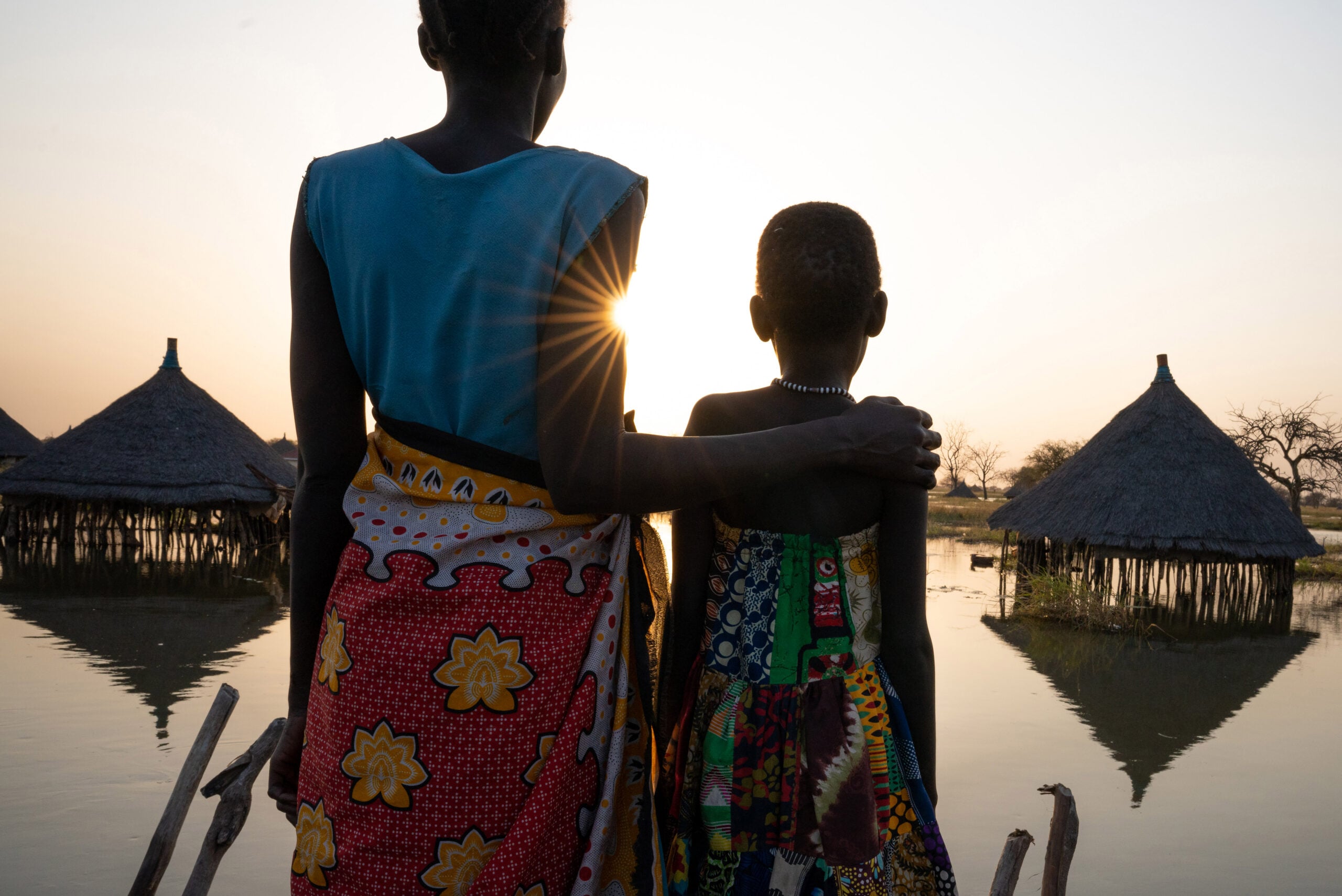
In many instances, children’s climate-related mobility is triggered by the accumulation of economic and non-economic losses and damages. These include loss of family livelihoods, destruction of housing, damage to essential infrastructure, as well as the disruption of or loss of access to basic services such as healthcare and education. For example, children and their families are often forcibly displaced when their homes, schools or entire villages are abruptly destroyed by extreme weather events, such as tropical cyclones, flooding and landslides, or when prolonged or recurring droughts gradually erode family livelihoods and assets (UNICEF 2023; Save the Children, 2021). This was observed in a variety of climatic and geographic contexts – from Peru, South Sudan, Kenya, and Pakistan to the Lao People’s Democratic Republic (Lao PDR) – where loss of incomes, housing and key infrastructure prompted the displacement of children and their families (UNICEF Innocenti et al., 2025).
Children are also affected by migration undertaken as a coping or adaptation strategy to mounting pressures posed by slow-onset changes – including land and forest degradation, desertification, rising temperatures, and sea-level rise – often compounded by extreme weather events. They may migrate with their parents in search of work and opportunities elsewhere – most often amidst highly precarious circumstances – or may remain in their places of origin while one or both parents move (Vigil et al., 2024). Children might also be affected by planned relocation and experience permanent dislocation from their ancestral land, culture and socio-linguistic heritage, without the hope of ever returning (Szaboova and Colón, Forthcoming).
While economic losses and damages often act as the initial driving force behind children’s climate-related mobility, both economic and non-economic losses are central to their experiences of immobility. Just as economic losses can prompt movement, they can also erode the capacity of children and their families to move away from climate-affected places. For example, when livelihoods fail over successive years or are subject to unexpected shocks, families are often forced to sell off their assets and descend deeper into poverty, making migration out of reach for many, leading to involuntary immobility (Zickgraf, 2023; Benveniste, Oppenheimer and Fleurbaey, 2022). At the same time, anticipated non-economic losses influence whether children and their families are willing to move. This is particularly the case for adaptive or anticipatory forms of mobility such as migration, planned relocation or evacuation. For instance, girls and women are often reluctant to go to evacuation shelters due to the fear of assault, either during the journey or once at the shelter (Ayeb-Karlsson, Chandra and McNamara, 2021; Ayeb-Karlsson, 2020). This, in turn, undermines the potential protective role of evacuation, leaving girls at risk of serious harm, including loss of life.
As a response to climate-related losses and damages, mobility that is a choice, well planned, and supported by consent-based policies and interventions that safeguard the rights of those who move can act as an important form of adaptation. For example, migration or planned relocation can mitigate the adverse effects of climate change on children and can help prevent future harm. Remittances sent home by migrant parents can potentially allow children to stay in school, afford vital healthcare, or achieve better nutritional and developmental outcomes (IOM, 2026). Timely relocation from areas frequently experiencing devastating storms or slowly becoming submerged due to sea-level rise can prevent future displacement and associated losses and damages (Desai et al., 2021). Evacuation as a proactive disaster risk management strategy can also be instrumental for saving the lives of children and their families (McAdam and Mulder 2026). At the same time, immobility – whether voluntary or involuntary – need not translate into harm. If the capability of children and their families is supported to adapt locally and continue leading dignified lives, while meeting their needs and achieving their wellbeing aspirations (Schewel, 2026).
(Im)mobility as a cause of loss and damage
Mobility and immobility often generate new and cascading forms of economic and non-economic loss and damage for children during and following movement. They include the loss of economic and food security, loss of home and sense of place and belonging, disruption or loss of learning, separation from family members and social networks, loss of continuity in healthcare, nutrition, and protection services, as well as psychological distress and trauma. While many losses and damages are shared across different forms of (im)mobility, the ways in which they unfold can vary, depending on factors such as the degree of agency involved and the duration or permanence of movement - or the lack of movement.
As is true for all adaptations, migration involves some losses that require difficult choices – or trade-offs – which impact equity, wellbeing and sustainability outcomes for children and their families (Szaboova et al., 2023). Families who migrate often lose land, livelihoods, social networks and access to essential services, while climate stress and economic insecurity may compel children to migrate independently or alongside their families in search of work. In countries such as India, Nepal and Cambodia, the collapse of climate-dependent livelihoods has contributed to distress labour migration into informal and exploitative sectors, including brick kilns and agricultural labour, where children face heightened risks of hazardous work, trafficking, debt bondage, and school withdrawal (Daly et al., 2020; Brickell et al., 2018). Families who move to informal urban settlements may also face overcrowding, extreme heat, inadequate water and sanitation services, insecure housing, and heightened risks of violence and exploitation (UNICEF and IOM, 2021; UNICEF, 2022). These conditions can lead to interrupted education, deteriorating physical and mental health, exclusion from social protection, and increased risks of gender-based violence, including child marriage, particularly for girls. The resulting non-economic losses - such as diminished wellbeing, safety, dignity, and social belonging - often persist across generations. Migration under these conditions cannot be understood as adaptation; rather, it highlights that climate-related losses and damages can accumulate, cascade and exacerbate vulnerability across time, place and generations.
Climate-related displacement generates cascading economic and non-economic harms for children that often persist long after an extreme weather event has passed. Storms, floods, droughts and wildfires increasingly force children and their families to flee their homes (UNICEF, 2021). The resulting economic losses - including the destruction of homes, interrupted livelihoods, rising food and healthcare costs, coupled with inadequate child-responsive support systems - are closely intertwined with non-economic harms such as trauma, insecurity, family separation, loss of education, cultural belonging and the erosion of social networks and childhood wellbeing. In overcrowded camps or informal settlements, where services and child protection are often limited, displaced children have heightened exposure to violence, exploitation, trafficking, child marriage and hazardous labour (IOM, 2023). In Burkina Faso, for example, only 51 per cent of school-aged internally displaced children attended formal school during the 2023–2024 school year, compared to 76 per cent of non-displaced children (Cazabat, Livingood and Linke, 2025). Similarly, in Kenya, following the flooding of the River Nyando, overcrowded shelters forced unrelated men, women, children and older persons to share limited space, significantly increasing protection risks (UNICEF Innocenti et al., 2025). Such harms are often most acute for girls, unaccompanied children, children with disabilities, and those living in poverty.
Planned relocation can lead to significant economic and non-economic losses and damages for children, particularly when child rights, gender-responsive planning, and long-term livelihood support are absent (Bower et al., 2023; Link et al., 2025). Relocation frequently disrupts livelihoods, schooling, healthcare, WASH services, and social networks, while families may lose connections to ancestral lands and cultural practices. For children, this can result in food insecurity, interrupted education, heightened insecurity, and long-lasting psychosocial harms, including grief, anxiety, and loss of identity and belonging (McMichael and Powell, 2021). These impacts are often especially severe for Indigenous and minority families, whose culture is closely tied to land and place (Yates et al., 2021). Therefore, planned relocation can simultaneously reduce physical exposure to climate risks while creating new and potentially lasting developmental, cultural and psychosocial losses and damages for children, particularly in the absence of meaningful participation, investment in the preservation of cultural heritage, and adequate support systems.
Immobility disproportionately affects children, women, persons with disabilities, older people, and poorer households who often lack the necessary capabilities to move away from climate risks (Sengupta, 2025; Upadhyay, 2024). As droughts, environmental degradation, and disasters intensify, families unable to migrate face declining livelihoods, food insecurity, disrupted schooling, and reduced access to healthcare and social protection, while children may take on increased caregiving responsibilities or hazardous work (Szaboova and Colón, Forthcoming). When parents migrate, children left behind often experience emotional distress, social isolation, and heightened exposure to violence and exploitation, with girls particularly vulnerable to sexual and gender-based violence and boys more likely to engage in physically demanding labour (Vigil et al., 2025). Over time, these pressures can drive harmful coping strategies such as child marriage and school withdrawals. For example, in Lao PDR, severe flooding in Attapeu Province exacerbated economic hardship and protection risks among vulnerable communities, including child marriage and dropping out of school among adolescents (UNICEF Innocenti et al., 2025). Children may also become “trapped” in high-risk rural or urban environments following migration or displacement, unable to return home or move onward to escape worsening climate impacts, placing them at heightened risk of losses and damages (Ayeb-Karlsson, 2020). A less discussed aspect of climate-related loss and damage is when children who are members of traditionally mobile communities lose the ability to move. For example, members of an Indigenous Inuit community in the Canadian Arctic expressed sorrow over what climate-induced loss of mobility will mean for their children (Ayeb-Karlsson, 2024).
These insights across different (im)mobility contexts highlight that some of the most acute losses and damages experienced by children are non-economic harms. They are often the cascading (i.e., secondary or subsequent) impacts of erosive coping strategiestriggered by economic losses (van Schie et al., 2024). Such outcomes are more likely when climate-related stress overwhelms the coping capacity of families and adequate child-responsive support is absent. Affecting both children who move and those who remain behind - particularly in conditions of poverty and precarity - these strategies may include school withdrawal, child labour, increased caregiving burdens, reduced food intake, and child marriage. Many erosive coping strategies disproportionately impact girls, who are more likely to experience child marriage, associated sexual and gender-based violence, early pregnancy and long-term health consequences. Boys, meanwhile, may be required to engage in hazardous income-generating activities and become subject to other forms of abuse and exploitation. Although triggered by economic stress, these coping mechanisms produce profound and long-lasting non-economic losses and damages, including disrupted childhoods, diminished wellbeing, psychological distress, loss of education, and reduced future opportunities over children’s entire life course.
Cascading loss and damage in children’s evolving (im)mobilities
Many losses and damages affecting children are experienced through the dynamic and evolving relationshipbetween different forms of mobility and immobility. Similar to adults, children’s mobility trajectories are not fixed but change over time, in tandem with changing socio-economic, environmental and political relations and conditions that surround their (im)mobility (Zickgraf, 2021; Szaboova et al., 2025). Children who initially migrate may later become displaced or become stranded in climate-vulnerable destination areas without adequate protection or resources. These dynamic mobility pathways can intensify both economic and non-economic losses, leading to cascading impacts. Moreover, the lives of families are translocally connected through their mobile and immobile members who are spread across multiple locations (Sakdapolrak et al., 2024). This has further implications for children’s experiences of loss and damage. While translocal linkages, such as remittances, can improve the situation of children who remain in places of origin, the absence of parents can also lead to non-economic losses and damages – such as the loss of parental guidance and care - that cannot be compensated for through remittances. Therefore, many losses and damages affecting children who remain while parents migrate are borne at the intersection of mobility and immobility (Szaboova et al., 2025).
Loss and damage impacts are often intensified when children’s (im)mobility is forced rather than voluntary, occurs suddenly, becomes prolonged, or when return is not an option. In these contexts, disruptions to child-critical systems and services, such as education, healthcare, immunisation, and child protection, can cause immediate harm while also setting the foundations for long-term developmental inequalities that undermine children’s wellbeing and resilience across the life course and across generations. When adequate child-responsive support, planning and protection systems are absent, these impacts often cascade over time, resulting in lasting harms such as psychological trauma, disrupted development, and diminished future opportunities.
For example, in protracted displacement contexts, where durable solutions are not achieved, children may experience extended periods of limbo (Fransen and Hunns, 2026) and ongoing exposure to climate-related hazards (Fransen et al., 2022). This can result in cumulative developmental deficits, as access to stable education, healthcare, and protection services remains constrained. Following the devastating flooding in 2022, Pakistan experienced widespread destruction, leading to nearly 8 million people becoming displaced and 9.6 million children needing humanitarian assistance (UNICEF Humanitarian Situation Report, 2022). Prolonged displacement and instability led to many children suffering from trauma, anxiety and grief, affecting their ability to concentrate and reducing their motivation to return to school (UNICEF Innocenti et al., 2025). Importantly, the direct economic impacts of ongoing displacement situations – such as the loss of family incomes and food insecurity – can have indirect non-economic implications that may only become apparent over time. For example, poor nutritional outcomes among children have been linked to lower educational attainment (Zerga et al., 2022; UNICEF, 2024), which in turn can undermine children’s future life opportunities.
Similarly, in situations of repeated or multiple displacements – characteristic of areas affected by frequent climate-related hazards, or where conflict and climate change intersect – children may experience cascading loss and damage over time (Miron et al. 2025). These repeated disruptions increase vulnerability and reduce the ability of households and systems to recover between events, elevating the risk of families employing erosive coping strategies, including erosive forms of mobility such as distress migration.
Children’s experiences outlined here illustrate the intricate links between different forms of evolving mobility and immobility and interconnected economic and non-economic losses and damages. A key insight relates to the cross-temporal dynamics of both (im)mobility and loss and damage, pointing to cascading impacts that shape children’s outcomes across the life course. In what follows, we explore the challenges and opportunities around responding to children’s unique experiences of loss and damage in the context of climate-related (im)mobilities.
Challenges of responding to losses and damages affecting children in the context of climate-related (im)mobilities
Despite growing global recognition of loss and damage and the increasing visibility of climate-related mobility, significant gaps remain in how these frameworks respond to the realities faced by children on the move, as well as those who remain in climate-affected areas. Building on our previous work, we highlight key gaps that pose a challenge to averting, minimizing and addressing loss and damage experienced by children in the context of climate-related (im)mobility.
Limited evidence on child-specific experiences of (im)mobility and loss and damage: The existing evidence gap is twofold. First, it concerns the lack of adequate and consistent data on the number of children experiencing different forms of climate-related mobility. Although there are an estimated 35.5 million international child migrants worldwide (IDAC, 2024), there is little data on how many of these movements are linked, even partially, to climate-related factors. Similarly, data on children affected by planned relocation remains scarce, reflecting a broader lack of child-focused research and age-disaggregated data on children’s climate-related (im)mobility (Szaboova and Colón, Forthcoming). Secondly, there is an incomplete understanding of how both economic and non-economic losses and damages linked to climate-related mobility affect children’s lives. These gaps arise in part because children are rarely the direct focus of research on climate-related (im)mobility (Pegram and Oakes, 2017), and their experiences are often inferred from the testimonies of their adult caregivers. Where children are included in empirical research, studies tend to focus on older adolescents rather than younger children, further limiting understanding of child-specific impacts.
Fragmented policy landscapes and limited child-responsive commitments: Climate policy, mobility governance, and emerging loss and damage frameworks continue to evolve largely in isolation from one another, with children remaining insufficiently visible across these processes. Although references to children and youth are increasing within the United Nations Framework Convention on Climate Change (UNFCCC) and related policy spaces, they are rarely translated into explicit, operational, or adequately funded commitments. As a result, children are often treated as a general ‘category of vulnerability’ rather than as rights-holders requiring targeted support and meaningful participation (UNICEF Innocenti et al., 2023). This gap is particularly evident in discussions on climate-related mobility and loss and damage, where children’s experiences remain largely overlooked, despite growing recognition of human mobility within climate policy. For example, only a limited number of National Adaptation Plans (NAPs) and Nationally Determined Contributions (NDCs) meaningfully integrate child-sensitive approaches (Pegram and Colón, 2020), though some progress can be observed, such as the increasing number of NDCs with child-sensitive considerations (UNICEF, n.d.). Nonetheless, the limited integration of children in climate action plans has contributed to continued underinvestment in child-responsive policies, financing and interventions needed to avert, minimise and address the losses and damages children experience in the context of climate-related (im)mobility.
The invisibility of children in post-disaster damage and loss assessments: Existing post-disaster assessment frameworks, including Post-Disaster Needs Assessments (PDNAs) and Damage and Loss Assessments (DALAs), do not consistently capture the breadth of loss and damage impacts experienced by children (UNICEF Innocenti et al., 2025). These tools tend to prioritise economic losses and infrastructure damage, overlooking how climate shocks disrupt children’s development, protection, and wellbeing. Moreover, they include all disasters - not only climate-related events - making it even more difficult to understand children’s experiences of loss and damage specifically associated with climate change.
This gap is particularly evident in the context of climate-related mobility. When families are displaced due to floods, storms, or slow-onset environmental degradation, assessments may record damage to housing or livelihoods but fail to intentionally and consistently capture associated child-specific harms - such as school discontinuation, family separation, psychosocial distress, and increased exposure to exploitation. Without this information, responses remain incomplete, allowing avoidable and cascading losses and damages to unfold over time.
Participation without power: Children are increasingly visible in climate discussions, including at global forums such as the Subsidiary Bodies and Conferences of the Parties (COPs). However, this visibility has not yet translated into meaningful influence over policy, financing, or programme design. Participation is often consultative rather than decision-based, and typically limited to older adolescents, leaving younger children - who face distinct risks - largely excluded.
Under-recognition of non-economic losses and damages: As we have demonstrated, for children, the most profound impacts of climate-related (im)mobility are often non-economic: disruptions to education, adverse impacts on mental health, loss of social networks and cultural identity and heightened protection risks, including family separation, child labour, and child marriage. Yet these dimensions remain insufficiently captured in assessments and inadequately addressed in responses related to climate action, disaster risk reduction, and mobility governance.
In humanitarian settings, where many climate-related mobility events are managed, limited funding and short implementation timeframes prioritise immediate needs such as food, shelter, and WASH. While essential, this often comes at the expense of addressing longer-term and less visible child-specific harms (UNICEF Innocenti et al., 2023). Yet, such intangible losses – which often unfold over time, manifesting well after the initial impacts of a climate event and associated (im)mobility response – can be the most consequential in the lives of children. Children’s capacity to respond to non-economic losses and damages linked to (im)mobility is further challenged by limited evidence and operational guidance on how interconnected and cascading pathways of loss and damage unfold for children in dynamic and multiple interconnected (im)mobility contexts.
Opportunities and promising practices
Addressing these challenges requires a fundamental shift in how children are positioned within loss and damage frameworks and responses – from being seen as passive beneficiaries to central actors in shaping effective solutions. Children and their families - both those who move and those who remain - hold critical knowledge grounded in lived experiences. These experiences include both the immediate impacts of climate-related (im)mobility and also its long-term consequences for children’s development, wellbeing and future resilience.
The following promising practice examples – spanning evidence, programming, interventions and policy – highlight concrete opportunities for addressing some of the existing gaps and can help avert, minimize and address losses and damages affecting children who move or remain in climate-affected places.
(1) EVIDENCE: Forward-looking analysis - making child displacement visible to anticipate and minimise loss and damage
Between 2016 and 2023 alone, an estimated 62 million internal displacements of children were associated with weather-related disasters - equivalent to nearly 21,000 children displaced each day(IDAC, 2024). Floods and storms accounted for approximately 95 per cent of these displacements, underscoring the strong link between intensifying climate hazards and child mobility patterns.
To address remaining gaps in evidence, UNICEF, in partnership with the Internal Displacement Monitoring Centre (IDMC), has developed one of the first globally comparable forward-looking analyses to quantify child displacement and project future risks linked to climate and weather-related hazards.
By integrating disaster displacement data with demographic datasets, this work makes visible a previously overlooked dimension of loss and damage: how climate shocks translate into large-scale and repeated displacement of children, with long-term consequences for their development and wellbeing.
Beyond historical analysis, forward-looking modelling identifies displacement “hotspots,” – places where large child populations coincide with high hazard exposure and limited coping capacity. Regional applications of future risk modelling in Eastern and Southern Africa (UNICEF, 2025) and South Asia (UNICEF, 2025) paint a stark picture. For example, even under the most optimistic scenario, on average 3.9 million children could be displaced each year by floods, droughts and cyclones across Eastern and Southern Africa (UNICEF, 2025). These regional applications of forward-looking modelling have helped translate insights from data into national planning, informing costed action plans and strengthening policy dialogue on anticipatory action and child-sensitive disaster risk reduction.
This approach demonstrates how improved data and foresight can support efforts to avert and minimise loss and damage before it occurs, by enabling more targeted investments in preparedness, child protection systems, climate resilient services, and safe mobility planning. At the same time, it underscores the need for continued investment in national data systems to better capture slow-onset hazards, repeated displacement, evolving mobilities, and cross-border movements. Strengthening these data systems is important because forward-looking analyses can enable child-responsive action early in the risk cycle, helping reduce the risk of forced or erosive forms of (im)mobilities (UNICEF Innocenti et al., 2025).
(2) PROGRAMMING AND INTERVENTIONS: Child-centred planned relocation in Fiji – addressing loss and damage in practice
While improved data can support anticipatory action, many communities are already experiencing irreversible loss and damage requiring concrete responses. In Fiji, planned relocation is increasingly being implemented as communities are compelled to move due to sea-level rise, flooding and environmental degradation.
The Government of Fiji has developed comprehensive Standard Operating Procedures (SOPs) for Planned Relocation (Government of Fiji, 2023). Building on this, UNICEF Pacific - working with the Climate Change Division and the national Planned Relocation Taskforce - has developed a practical child-centred checklist to ensure that children’s rights are protected throughout the relocation process.
Designed for frontline workers, the checklist translates policy into practice by embedding child protection considerations into relocation planning and implementation. It ensures that children’s participation is prioritised, continuity of essential services such as education and healthcare is maintained, and protection risks - including family separation, violence and psychosocial harm - are anticipated and mitigated.
Importantly, the development of the tool has been informed by consultations with affected communities, including those that have been relocated, ensuring that it reflects lived realities and practical challenges. It is now being refined and will be tested and scaled as part of national relocation approaches.
This initiative demonstrates how planned relocation can move beyond managing displacement to actively addressing loss and damage, preventing further harm and supporting more sustainable outcomes for children. Lessons from Fiji are already informing similar efforts across the Pacific, including in Vanuatu, the Solomon Islands and Kiribati.
(3) POLICY: Guiding Principles for Children on the Move in the Context of Climate Change – protecting children from loss and damage in the context of climate-related (im)mobilities
A key challenge in protecting children from harm in the context of climate-related (im)mobility has been the absence of a comprehensive global policy framework that specifically addresses their rights, needs and vulnerabilities. To help close this gap, UNICEF, together with the International Organization for Migration, Georgetown University Institute for the Study of International Migration and United Nations University Centre for Policy Research, developed the Guiding Principles for Children on the Move in the Context of Climate Change (Ferris, Colón and Szaboova, 2022). The nine ‘Guiding Principles’ provide an important rights-based framework to support governments, international organizations and civil society actors working with children affected by climate-related migration, displacement, relocation, and immobility. Rather than creating new legal obligations, these Guiding Principles reaffirm how existing international child rights standards apply in contexts of climate-related (im)mobility, helping to translate established legal commitments into more child-responsive policy and practice.
These Guiding Principles recognize that children experience climate-related harm differently, depending on factors such as age, gender, disability, family status and mobility pathway, and therefore require tailored forms of protection and support. They also highlight critical issues, including family unity, access to services, participation, accountability, and child protection. Importantly, the framework acknowledges that safeguarding children requires action across all governance and operational levels: for example, by integrating child-sensitive approaches into national climate and mobility policies to ensure that children and families receive context-specific support. As such, the Guiding Principles for Children on the Move in the Context of Climate Change represents an important tool for advancing more coherent, rights-based and child-responsive approaches to climate-related loss and damage in contexts of mobility and immobility.
Conclusions
As climate impacts intensify, climate-related mobility and immobility will increasingly shape losses and damages experienced by children globally. Across contexts of migration, displacement, planned relocation and immobility, children experience interconnected economic and non-economic harms that undermine their rights, wellbeing and future resilience. These harms often cascade over time, adversely affecting child-critical systems and services such as education, healthcare, nutrition, child protection, social protection, and WASH, determining children’s developmental trajectories across the course of life and even across generations. Failing to respond adequately risks entrenching intergenerational cycles of poverty, vulnerability, inequality, and human capital loss.
Advancing child-responsive data systems, policy frameworks and participation mechanisms is particularly important for decisions related to movement, relocation, and other adaptation interventions, where children’s perspectives are often overlooked despite the profound implications these have for their lives and futures. Strengthening children’s inclusion is therefore critical not only for improving governance and interventions, but also for advancing intergenerational justice.
This is a critical moment for bridging persistent divides between climate action, mobility governance, and child rights frameworks. Mobility is increasingly being recognized within the evolving Loss and Damage architecture under the UNFCCC through the Fund for Responding to Loss and Damage (FRLD), the Santiago Network, and the Warsaw International Mechanism Executive Committee (WIM ExCom), including through their growing attention to displacement, relocation, and migration in the context of climate impacts. At the same time, there are encouraging signs of stronger integration of child-responsive approaches across Loss and Damage processes. For example, the Santiago Network has begun integrating child-sensitive considerations into its operational processes, including through technical assistance approaches that recognize the needs of children and youth (Santiago Network, 2024). These developments provide important entry points for embedding child-responsive approaches across Loss and Damage governance, financing, technical assistance, and programming through the lens of climate-related (im)mobilities.
At the same time, much more work is required - both within and outside of Loss and Damage mechanisms - before these developments lead to tangible improvements in children’s everyday lives. In particular, further progress is needed to ensure that child-responsive approaches are consistently and systematically integrated in funding, programming, and decision-making processes related to both loss and damage and climate-related mobility.
Lucy Szaboova is a researcher and consultant with expertise in climate-related mobility and loss and damage. She is a Marie Sklodowska-Curie Fellow at the University of Vienna and an Associate Research Fellow at the University of Exeter. With UNICEF, she co-authored the Guiding Principles for Children on the Move in the Context of Climate Change and co-led work on child-responsive loss and damage policy, finance, and action. At FAO, her work has been centred on climate mobility and loss and damage in agrifood systems, including developing tools and guidance to support climate action plans and policies.
Laura Healy is a human rights lawyer currently leading UNICEF’s programming, policy and partnerships on child protection, migration and climate change in the Global Programme Division. Her career in human rights and international development spans more than 17 years, working across non-governmental organizations, legal aid and the United Nations focusing on child rights, migration and climate resilience.
Cristina Colón is a policy manager in UNICEF’s Global Office of Strategy and Evidence, focusing on climate, energy, and environment impacts on children’s rights and wellbeing. She leads analysis, tracks emerging environmental trends, and helps shape UNICEF’s global approach, including on climate mobility, finance and loss and damage.
The statements in this publication are the views of the authors and do not necessarily reflect the policies or the views of UNICEF.
KEYWORDS: Children, UNICEF, Displacement, Mobility, Immobility, Adaptation, Loss and Damage
Selected bibliography
Ferris, B., Colón, C, and Szaboova, L. Guiding Principles for Children on the Move in the Context of Climate Change. Florence: UNICEF Innocenti – Global Office of Research and Foresight, 2022.
International Data Alliance for Children on the Move (IDAC). Climate Mobility and Childhood: Examining the Risks, Closing the Data and Evidence Gaps for Children on the Move. New York: UNICEF, 2024.
Save the Children International. Walking into the Eye of the Storm: How the Climate Crisis Is Driving Child Migration and Displacement. London: Save the Children International, 2021.
Szaboova, L. and Colón, C. Safeguarding children’s rights and wellbeing: gendered experiences of climate-related mobility and immobility, in Climate Change, Migration, Gender, and the Law (Alice H. Farmer, Emma Dunn, Karen S. Baker eds., forthcoming 2026).
Szaboova, L., and Colón, C. Concepts, Contexts and Categorizations of Climate Mobility. Florence: UNICEF Innocenti - Global Office of Research and Foresight, 2021.
United Nations Children’s Fund (UNICEF). Children Displaced in a Changing Climate: Preparing for a Future Already Underway. New York: UNICEF, 2023.
United Nations Children’s Fund (UNICEF) Innocenti, Save the Children, Plan International, International Centre for Climate Change and Development, and Loss and Damage Youth Coalition. Climate Justice: Loss and Damage Finance for Children. Florence: UNICEF Innocenti - Global Office of Research and Foresight, 2023.
United Nations Children’s Fund (UNICEF) Innocenti, Save the Children, and Loss and Damage Youth Coalition. Child-Responsive Loss and Damage Policies, Finance and Action: Insights from Case Studies. Florence: UNICEF Innocenti - Global Office of Research and Foresight, 2025.
United Nations Children’s Fund (UNICEF) Innocenti, Save the Children, and Loss and Damage Youth Coalition. Loss and Damage Case Studies. Florence: UNICEF Innocenti - Global Office of Research and Foresight, 2025.
Vigil, S., Steiner, C., Kim, D., Flores, D., and Davis, M. Climate Change, Vulnerability and Migration: Impacts on Children and Youth in Southeast Asia. Bangkok: Stockholm Environment Institute (SEI) and World Vision International, 2024.