
Introduction
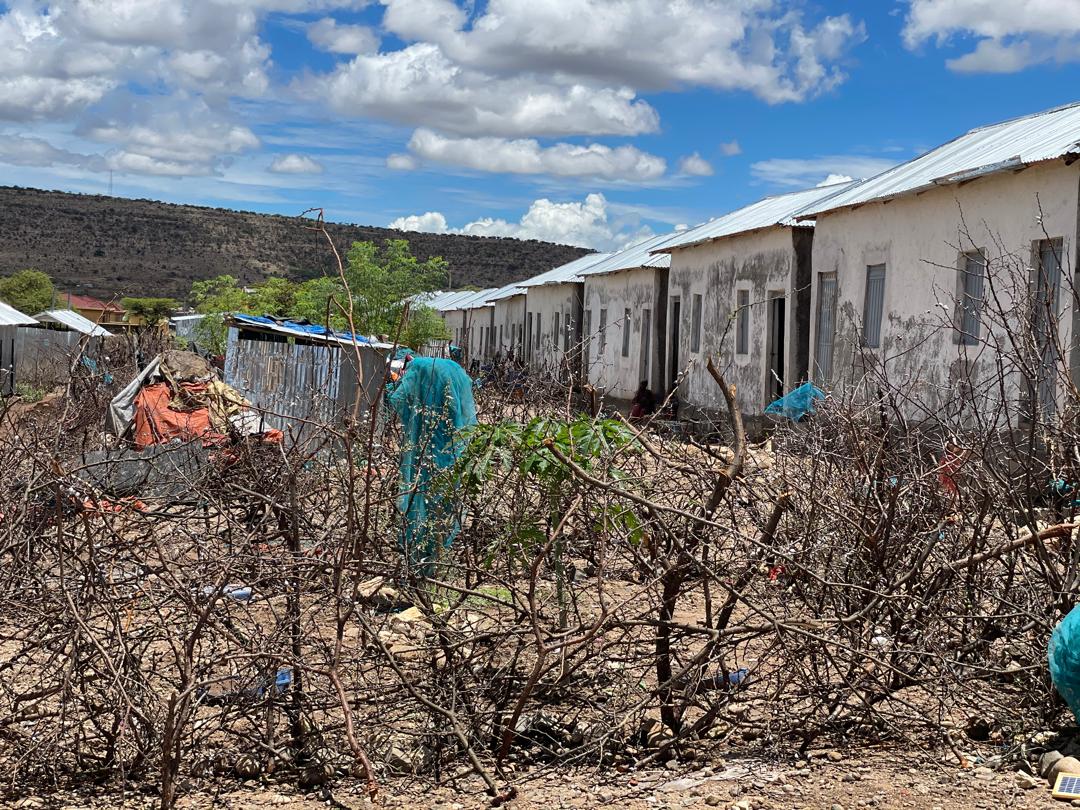
The Somali Region of Ethiopia has long been at the epicenter of displacement driven by a convergence of drought, conflict, floods, and disease outbreaks. These recurrent crises have compounded existing vulnerabilities in a region already characterized by fragile livelihoods and limited public services.
According to the International Organization for Migration’s (IOM) Displacement Tracking Matrix (Round 36), more than one million (1,093,745) internally displaced persons (IDPs) live across 558 sites, alongside nearly half a million refugees who have fled instability in neighboring Somalia. The magnitude and protracted nature of displacement have underscored the need for long-term, sustainable solutions.
Over the past decade, the Somali Regional Government, supported by humanitarian and development partners, has made deliberate efforts to address displacement not only as an emergency issue but as a developmental challenge. The establishment of the Durable Solutions Working Group in 2014, followed by regional strategies for 2017–2020 and 2022–2025, laid the foundation for a coordinated and structured approach. Complemented by the Technical Advisory Group and a high-level Steering Committee, these mechanisms have enabled dialogue and joint planning among local authorities, donors, and implementing partners.
A pivotal shift in recent years has been the region’s move toward local integration as a preferred solution for protracted displacement. While clan affiliations historically played a crucial role in facilitating relocation, particularly by easing the acceptance of IDPs in areas aligned with their kinship ties, local integration represents a fundamentally different approach. Instead of focusing on relocating IDPs to new areas, the shift aims to support them in settling and rebuilding their lives in their current locations, which are often near urban centers.
Evidence-Driven Policy Shift
To fortify its stance on local integration, the Somali Regional Government relied on empirical evidence, referencing intention surveys conducted by IOM in October 2022 and October 2024. Both surveys demonstrated that an overwhelming majority of IDPs prefer local integration as their primary solution pathway over return or further relocation. This alignment between government policy and the aspirations of displaced communities strengthened the legitimacy and credibility of the new approach, providing a sound basis for mobilizing partners and resources.
One of the government’s most significant innovations has been its plan to incentivize host communities by upgrading the status of Qoloji, the region’s largest IDP site, from a lower-level local administration (kebele) to a city administration or district-level governance unit. This shift aims to transform Qoloji into a more service-ready urban hub, with improved infrastructure, governance, and economic opportunities for both IDPs and long-standing residents. By doing so, the government seeks to promote social cohesion and build a more equitable foundation for integration.
Opportunities for Advancing Local Integration
The Somali Region’s approach presents several opportunities with relevance for other contexts in Ethiopia and beyond.
First, local integration is generally more cost-effective than large-scale return or relocation programs, as it leverages existing settlements and minimizes logistical and financial burdens.
Second, many IDP sites are near urban centers, which provides better access to informal jobs, markets, and social services. These are key factors in promoting self-reliance and reducing long-term aid dependency.
Third, the presence of policy frameworks and institutional coordination mechanisms, including the Durable Solutions Working Group, ensures that interventions are not ad hoc but integrated into broader development agendas.
Importantly, by grounding policy directions in the expressed preferences of IDPs, the Somali Regional Government has enhanced the legitimacy and sustainability of its interventions. This participatory approach marks a departure from top-down solutions and helps build trust among displaced communities.
Persistent Challenges to Sustainable Integration
Despite these promising opportunities, significant challenges remain. Foremost among them is insecure land tenure. Many IDPs lack legal or permanent access to land for housing and livelihoods, which undermines their ability to build stable futures. In parallel, gaps in basic services such as health care, education, water, and sanitation continue to strain both IDPs and host communities, heightening the risk of tensions in areas of shared vulnerability.
Persistent livelihood insecurity, driven by high unemployment and limited opportunities for sustainable income, reinforces dependency on humanitarian assistance. Youth face additional barriers, particularly limited access to documentation needed for mobility and formal employment, exacerbating their marginalization.
Compounding these socioeconomic challenges are institutional capacity constraints. Regional authorities often lack the technical expertise and resources necessary for effective planning, coordination, and advocacy, leaving crucial roles to be filled by international actors. Moreover, risks to social cohesion arise when host communities perceive imbalances in the distribution of aid and development resources. Finally, the region’s ongoing reliance on food assistance delays the transition toward self-reliance and can inadvertently disincentivize longer-term development solutions.
Policy Lessons for Ethiopia and Beyond
The Somali Region’s experience offers several important policy lessons for other regions grappling with protracted displacement.
First, it highlights the need for area-based approaches that address the needs of both IDPs and host communities. Without equitable service provision and livelihood opportunities, integration efforts risk generating resentment and social divisions.
Second, while locally innovated solutions, including clan-based systems, have historically eased relocation processes, successful local integration requires different tools. Incentivizing host communities, such as through administrative upgrades like the one planned for Qoloji, can foster shared development and collective buy-in.
Third, prioritizing urban-linked integration enables displaced populations to tap into markets, services, and job opportunities, reducing aid dependency over time.
Fourth, institutionalizing coordination mechanisms with clear mandates ensures more coherent and harmonized interventions across humanitarian, development, and government actors.
Equally important is placing IDPs at the center of decision-making. Regular intention surveys and participatory consultations can guide policies that reflect the priorities and aspirations of displaced communities themselves.
Finally, integrating displacement solutions into national development frameworks and the Sustainable Development Goals (SDGs) enhances sustainability and strengthens partnerships with donors and development agencies.
Conclusion: Toward Inclusive and Sustainable Solutions
The Somali Region’s experience demonstrates that local integration can serve as a viable and preferred solution for protracted displacement when it is evidence-based, participatory, and linked to broader development strategies. The combination of political will, institutional coordination, and incentives for host communities, exemplified by the planned administrative upgrade of Qoloji, offers a pragmatic model for balancing humanitarian needs with long-term development goals.
However, realizing the full potential of this approach will require addressing persistent structural challenges. Strengthening land tenure security, expanding access to basic services, creating sustainable livelihood opportunities, and building the capacity of regional institutions are critical steps.
For Ethiopia as a whole, the Somali Region’s policy shift provides a valuable blueprint for integrating displacement responses into national development strategies. By adapting these lessons to their specific social and economic contexts, other regions can advance durable, equitable, and development-oriented solutions to the challenge of internal displacement.
Guled Ali (MA, Disaster Management) is the Durable Solutions Specialist for ReDSS in Jigjiga, Ethiopia’s Somali Region, with over a decade of experience in forced displacement and humanitarian response. He brings field-based expertise to advancing sustainable solutions for displaced communities across East Africa and the Great Lakes. His insights have been recognized internationally through presentations at global migration conferences and publications on leading platforms. (This article is written in the author's independent capacity. The views expressed in this article belong to the author and not the author’s employer or employees.)
KEYWORDS: Displacement, Conflict, Climate Change, IDPs, Durable Solutions, Ethiopia
References
Government of Ethiopia and IOM, 2017. "Somali Region Durable Solutions Strategy 2017-2020," ReliefWeb. https://reliefweb.int/report/ethiopia/somali-region-durable-solutions-strategy-2017-2020
IOM, 2023. "DTM Ethiopia - Durable Solutions for Drought-affected IDPs in Somali Region, Ethiopia - Household-Level Intention Survey (HLIS) (October 2022)," ReliefWeb. https://reliefweb.int/report/ethiopia/dtm-ethiopia-durable-solutions-drought-affected-idps-somali-region-ethiopia-household-level-intention-survey-hlis-october-2022
IOM, 2024. "Measuring Parity and Progress towards Durable Solutions: IDPs and Non-displaced Residents Household-Level Survey (HLS) - Somali Region, Ethiopia (February 2024)," ReliefWeb. https://reliefweb.int/report/ethiopia/measuring-parity-and-progress-towards-durable-solutions-idps-and-non-displaced-residents-household-level-survey-hls-somali-region-ethiopia-february-2024
Somali Regional Disaster Prevention and Preparedness Bureau and IOM, 2014. "Somali Region Durable Solutions Working Group Terms of Reference," IOM Ethiopia. https://ethiopia.iom.int/sites/g/files/tmzbdl996/files/documents/somali-region-dswg_endorsed-tor.pdf
United Nations in Ethiopia, 2022. "Somali Regional State Durable Solutions Strategy 2022-2025," United Nations in Ethiopia. https://ethiopia.un.org/en/195587-somali-regional-state-durable-solutions-strategy-2022-2025
UNHCR, 2025. "Ethiopia: Refugees and Internally Displaced Persons (As of 31 January 2025)," ReliefWeb. https://reliefweb.int/report/ethiopia/ethiopia-refugees-and-internally-displaced-persons-31-january-2025