
Prior to 2014, Muslims in Ukraine had formed a vibrant and diverse community, deeply interwoven with the nation’s history and culture. The presence of Islam in Ukraine dates back centuries, with the Crimean Tatars being the most prominent group associated with this heritage. As an essential element of Ukraine’s multicultural landscape, the Muslim population represented a rich mosaic of ethnicities, traditions, and communities, contributing significantly to the nation’s cultural and social fabric.
According to Ukraine’s last general census in 2001, the number of Muslims by origin, commonly identified as ethnic Muslims, was 436,000, representing approximately 0.9% of the total population. This group encompassed various ethnicities, highlighting the diversity within Ukraine’s Muslim communities. The Crimean Tatars constituted the largest group, numbering around 248,000. Indigenous to the Crimean Peninsula, they have played a pivotal role in shaping the region’s Islamic culture. Other notable ethnic Muslim groups included the Volga Tatars (73,000), Azerbaijanis (45,000), members of North Caucasian ethnic groups (14,000), Uzbeks (12,000), and Meskhetian/Ahiska Turks (approximately 10,000) (Brylov, 2023, p.505).
Geographically, the pre-2014 distribution of Muslims in Ukraine reflected historical settlement and migration patterns. Crimea housed the largest Muslim community, with the Crimean Tatars comprising the majority. This region served as the spiritual and cultural heart of Ukrainian Islam, hosting the highest density of mosques and Islamic institutions. Beyond Crimea, the Donetsk region held the second-largest Muslim population, followed by Kharkiv, Luhansk, Dnipro, Kherson, Odesa, and Zaporizhzhia, as well as the capital, Kyiv. These regions were home to a mix of long-established Muslim communities and newer migrants who infused local Islamic traditions with fresh perspectives and energy.
Muslim communities significantly enriched Ukraine’s religious and cultural diversity, establishing mosques and cultural centres that acted as focal points for religious and social activities. The events of 2014, including Crimea’s annexation and the conflict in Eastern Ukraine, marked a decisive moment for Muslim populations. Internal displacement and migration reshaped the demographic composition of these communities. For instance, the number of Muslims in Western Ukraine, particularly in Lviv, increased as individuals sought refuge and resettlement. This demographic shift not only altered the geographic distribution of Muslims in Ukraine but also introduced new challenges and opportunities for these communities as they adjusted to evolving circumstances.
By 2013, Ukraine’s Muslim population was estimated at around 600,000, with over half residing in Crimea and Donbas. Following the events of 2014, many Muslims found themselves in Russian-controlled territories or within the self-proclaimed Donetsk and Luhansk republics. Forced migration from these areas resulted in a growth of Muslim populations in Central and Western Ukraine, with approximately 30,000 Crimean Tatars relocating to safer regions. Ukraine’s Muslim demographic also includes Arabs, Azerbaijanis, Uzbeks, Chechens, Turks, and a small number of Ukrainian and Russian converts. Recent trends suggest that labour and educational migration have increasingly influenced the composition of Ukraine’s Muslim population (Yarosh, 2024, p.135–136).
One significant development involved the Ahiska (Meskhetian) Turks, a minority displaced and resettled as a result of the war. Most of this group had lived in the Donetsk and Kherson regions. Between 2014 and 2022, around 2,600 Ahiska Turks were forced to leave the conflict-affected Donetsk region for Turkey. Following the 2014 conflict, the Turkish government admitted 677 families for resettlement. By the end of 2016, an additional 300 families had relocated. From 2015 to 2017, Ahiska Turks evacuated from Donbas were settled in the Turkish provinces of Erzincan and Bingöl (Homanyuk & Bülbül, 2024, p.248, p.255). Those who opted not to flee to Turkey either relocated to Russia, where they faced discrimination linked to their Ukrainian citizenship, or moved to the Kherson and Mykolaiv regions of Ukraine, joining existing Ahiska Turkish communities (Homanyuk & Bülbül, 2024, p.240).
The war also affected Ukraine’s Shia Muslim communities, many of whom were based in the east of the country. Before 2014, the largest Shia communities were centred in major cities, with Donetsk and Luhansk hosting three Shia religious centres. However, the conflict caused many of these centres to close or relocate, displacing their congregations. Donetsk had both an Arab and an Azerbaijani Shia centre, while Luhansk housed another Arab Shia centre. These centres were shuttered during the conflict, and religious books and items from local libraries were transferred to other regions for safekeeping (Tahiiev, 2024, p.118).
The challenges faced by Muslims in Ukraine since 2014 have reshaped the community in various ways. Internal displacement has significantly altered the geographic distribution of Muslims, with Central and Western Ukraine now accommodating larger Muslim populations. For instance, the influx of displaced Crimean Tatars and other Muslim groups into these regions has fostered the development of new community networks and cultural initiatives.
After 2022
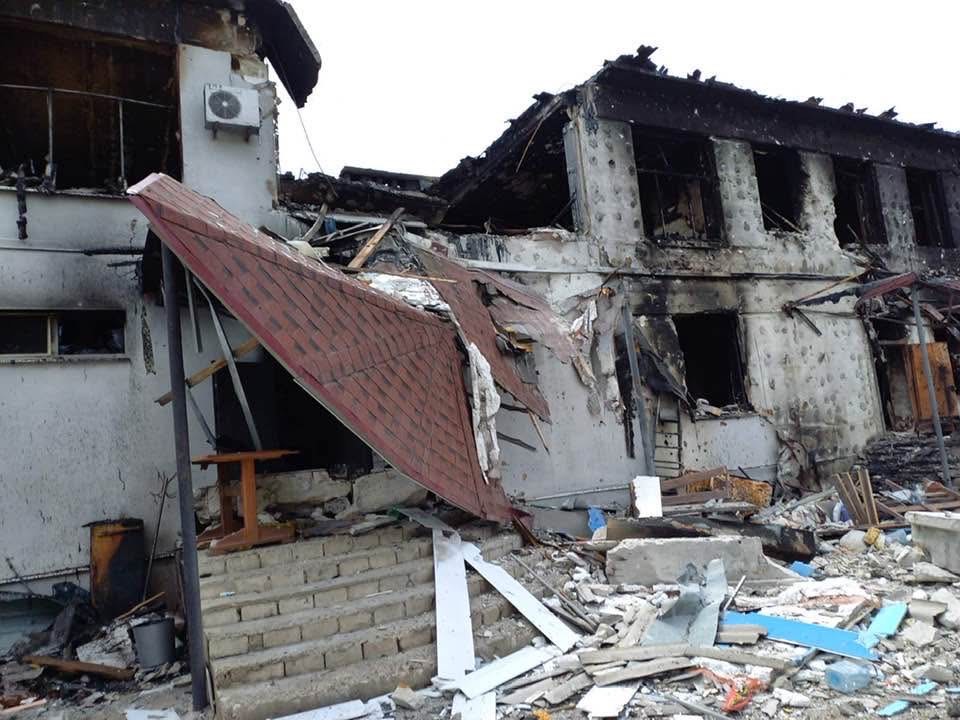
The events following 24 February 2022 even more profoundly affected Ukraine’s Muslim population, posing significant challenges for the country’s key Islamic organisations. As previously mentioned, over half of Ukraine’s Muslim population resided in Crimea, around 30% in Kyiv and Eastern Ukraine (notably Kharkiv, Donetsk, and Luhansk), with the remaining 20% scattered across other regions. The intense fighting in these areas caused substantial damage to religious buildings, with eight mosques and Islamic Cultural Centres destroyed or heavily damaged (Yarosh, 2024, p.138; Brylov, 2023, p.512–513). Although Shia mosques in Ukraine were not directly hit, surrounding areas in Kyiv and Kharkiv suffered some damage. For example, on the morning of 27 February 2022, a Russian attack on a residential area in Kyiv’s Troyeshchina district caused damage to nearby residential buildings and the courtyard of the Fatimiya mosque (Tahiiev, 2024, p.119). This destruction severely hindered the Muslim community’s ability to practise their faith, highlighting the broader physical and emotional toll of the war.
The outbreak of hostilities in Southern and Eastern Ukraine further displaced Muslims, as many lived in heavily impacted regions such as Kharkiv, Donetsk, Luhansk, Mykolaiv, and Kherson. With the escalation of the conflict in February 2022, thousands more were forced to flee abroad, some for the second time already. Populations from frontline regions and occupied territories, including Muslims, sought refuge in other regions, particularly safer areas of Western Ukraine. While precise numbers of Muslims as internally displaced persons remain unavailable, Murat Suleymanov, Mufti (head) of the Religious Administration of Muslims of Ukraine (Umma), initially estimated the figure at around 50,000. However, he pointed out that as conditions improved in certain areas, some individuals returned home (Yarosh, 2024, p.139).
The Muslim population in Ukraine, which had included a substantial number of foreign nationals, also declined significantly as many of these individuals fled the war and returned to their home countries. In response to the conflict, embassies from various nations rapidly initiated evacuation efforts, arranging flights, buses, and trains to neighbouring countries, providing temporary shelters and assisting with travel documentation. The Azerbaijani embassy, along with those of Central Asian countries such as Kazakhstan, Uzbekistan, and Kyrgyzstan, orchestrated evacuation efforts for their citizens, including students and migrant workers, using trains, buses, and chartered flights. Other Muslim-majority countries, including Pakistan, Turkey, and nations from the Middle East, conducted similar operations. These efforts included arranging safe travel, delivering humanitarian aid, and coordinating return flights. Temporary refugee camps were established in neighbouring countries to ensure the safety of evacuees during transit. The Turkish government also extended assistance to remaining Ukrainian Ahiska Turks, deciding to resettle 1,000 Ahiska Turk families. By August 2022, Turkey had “offered a helping hand to 4,296 people of Turkish origin affected by the war.” Consequently, the once sizeable Ahiska Turk community in Ukraine, which numbered over ten thousand, has dwindled to a few hundred individuals (Homanyuk & Bülbül, 2024, p.248).
Despite these adversities, Muslims, like many Ukrainians, have actively engaged in patriotic activities, including enlisting in the Ukrainian military, volunteering, and converting mosques and religious centres into humanitarian hubs to distribute food and medicine. The Religious Administration of Muslims of Ukraine has provided aid to affected civilians, particularly in Odesa, Poltava, and Kyiv. During the conflict’s early months, the Kyiv Mosque Ar-Rakhma served as a refuge for local residents and sheltered Muslim fleeing from affected regions (approximately half of the muftiat’s member communities are located in occupied areas of the Kherson region) (Brylov, 2023, p.516). Many Ukrainian Muslims joined the armed forces. In November 2022, Said Ismagilov, a long-standing leader of the Religious Administration of Muslims of Ukraine (Umma), resigned as Mufti to enlist in the Ukrainian military (Yarosh, 2024, p.147). The war has claimed the lives of numerous Muslims who fought for Ukraine, including Artur Yakubov, the imam of one of the Kharkiv mosques (Klischuk, 2024).
Redrawing the “Muslim Map” of Ukraine
The ongoing conflict in Ukraine has had a significant impact on the Muslim population, particularly through internal displacement. As people fled conflict zones and sought refuge in safer areas, the composition of the Muslim population in Ukraine has shifted, especially in the western regions.
A substantial number of displaced Muslims in these regions are Crimean Tatars, many of whom were compelled to leave Crimea due to the conflict and security concerns. Since 2014, approximately 20,000 Crimean Tatars have left Crimea for mainland Ukraine, with an additional 10,000 fleeing after 2022. They have sought refuge not only in mainland Ukraine but also in the European Union, Turkey, the USA, and Kazakhstan (Muratova, 2024, p.77). Around 2,500 displaced Crimean Tatars now live in the Lviv region, primarily in Lviv, the village of Bryukhovychi, and the city of Drohobych (Ukrinform, 2023).
The movement of displaced people through Western Ukraine, particularly Lviv and Chernivtsi, has been driven by several factors. Proximity to the border eased the path for families heading towards Europe while local Islamic cultural centres provided essential support. These centres served as temporary shelters and were crucial during the initial months of displacement when accommodation in the cities was limited, with most hotels fully occupied by people fleeing the war (Boychenko, 2022). The availability of Islamic spaces allowed displaced Muslims to be sheltered and remain connected to their culture and faith during a period of upheaval. This internal migration has increased the Muslim population in these regions, leading to a heightened demand for religious and cultural facilities. In response, new mosques and prayer spaces have been established to cater to the growing needs of the displaced Muslim communities. For example, in 2023, a new mosque opened in Lviv, reflecting the shift in the region’s Muslim demographic and the importance of meeting these needs (Ukrinform, 2023). The new mosque is managed by Crimean Tatars, who also constitute the majority of its parishioners.
The influx of displaced Crimean Tatars and other Muslims has also underscored the necessity for expanded religious and cultural infrastructure, such as halal butchers, markets, and food products,[i] alongside prayer spaces. This rising demand stems from the increasing Muslim population in central and western regions, requiring communities and local authorities to adapt to these evolving needs.
This internal displacement has, in many ways, reshaped Ukraine’s Muslim map. The adaptation to these challenges showcases the resilience of Muslim communities in Ukraine, enabling them to preserve their religious practices and cultural traditions despite the disruptions. The establishment of new prayer spaces and halal services represents a positive response to the shifting demographic, fostering integration and solidarity within Ukrainian society. In this way, Ukraine’s Muslim population is adjusting to its new reality, creating a more diverse and interconnected community that navigates both the challenges and opportunities brought about by the conflict.
Photo: Sievierodonetsk, Ukraine. Islamic cultural centre destroyed by Russian forces. 2022 © Tiemur Beridze
Akif Tahiiev holds a PhD from Yaroslav Mudryi National Law University. He is a Postdoctoral Research Fellow at the Goethe University Frankfurt and previously served as a research and teaching assistant in the Department of Human Rights and Legal Methodology at Yaroslav Mudryi National Law University (Kharkiv, Ukraine), and held research positions at the Max Planck Institute for the Study of Religious and Ethnic Diversity (Göttingen, Germany), the University of Vienna, and the IWM (Vienna, Austria). His research interests include Islam in Eastern Europe and post-Soviet countries, Shia Islam, Digital Religion, Minorities, and Islamic Law.
KEYWORDS: IDPs, Muslims, Ukraine, Conflict, Religion, Europe
References
BOYCHENKO, A. 2022. “About the Head of the Muslim Community in Severodonetsk, Temur Beridze.” #ShoTam, Available at: https://shotam.info/imam-sievierodonetska-tiemur-beridze-islam-zaboroniaie-buty-rabom-tomu-my-boremos-na-botsi-ukrainy/.
BRYLOV, D. 2023. Ukrainian Muslims in the Context of the Russo-Ukrainian Conflict. Review of Ecumenical Studies 15 (3): 505–525.
HOMANUYK, M. and BÜLBÜL, H.B. 2024. “Meskhetian/Ahiska Turks in Time of Uncertainty: Changes in Civic, Ethnic, and Religious Identification” in E. Muratova and N. Zasanska (editors), Minorities at War: Cultural Identity and Resilience in Ukraine (Routledge, pp.239-261).
KLISCHUK, L. 2024. “Imam of One of the Kharkiv Mosques, Artur Yakubov, Died in the Battle for Ukraine.” Novynarnia, Available at: https://novynarnia.com/2024/05/16/u-boyu-za-ukrayinu-zagynuv-3/
MURATOVA, E. 2024. “Collective Memory, Islam, and Coping Strategies of Crimean Tatars in Occupied Crimea” in E. Muratova and N. Zasanska (editors), Minorities at War: Cultural Identity and Resilience in Ukraine (Routledge, pp. 7-97).
TAHIIEV, A. 2024. “Shia Muslims of Ukraine during the Russian Invasion” in E. Muratova and N. Zasanska (editors), Minorities at War: Cultural Identity and Resilience in Ukraine (Routledge, pp. 115-131).
UKRINFORM. 2023. “An Islamic Religious and Cultural Centre with a Mosque and a Minaret Was Opened in Lviv,” Available at: https://www.ukrinform.ua/rubric-regions/3687071-u-lvovi-vidkrili-islamskij-religijnokulturnij-centr-z-mecettu-ta-minaretom.html.
YAROSH, O. 2024. “Muslim Organisations in Ukraine and the Challenges of Wartime: Moderation, Mobilisation, and Resilience” in E. Muratova and N. Zasanska (editors), Minorities at War: Cultural Identity and Resilience in Ukraine (Routledge, pp. 135-153).
[i] This issue is particularly acute in military settings, where the feeding of soldiers offers limited halal food options, forcing observant Muslim soldiers to rely primarily on vegetarian dishes and fish.