
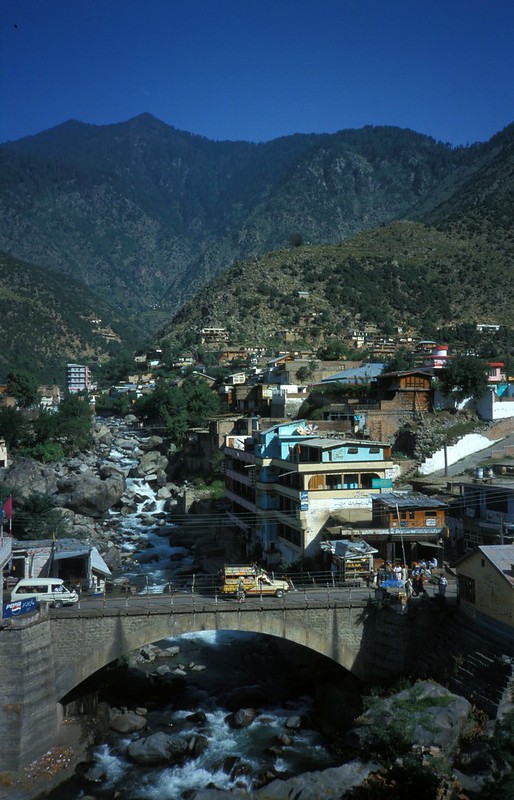
This qualitative investigation, by keeping the Swat Military Operation of 2009 at the center, seeks to examine how internally displaced children, negotiate their aspiration and access to primary and secondary education. ‘Internally displaced children’ in the context of this research will include unaccompanied minors and all other children attending primary and secondary educational institutions. The available scholarship on internal displacement has sought to examine the overlapping socio-political dimensions that lead to the displacement crisis in the first place. By acknowledging that Pakistan has rather been an under-researched region, this paper adds necessary academic value to the present literature through a comprehensive discussion on the access and aspiration to education for IDP children.
Two major questions contextualize the debate around the events of Swat Military Operation 2009. Firstly, how was learning negotiated at the time of displacement, followed by examining the efforts to re-institutionalize the educational system in Swat after the eventual return of the IDPs? Through a series of semi-structured interviews, the research gives conclusive evidence to argue that owing to ‘uncertainty’ of return, criticality of survival amidst the circumstances and a lack of a formal setup impeded the provision of education. Secondly, how can rehabilitation efforts help to re-institutionalize the education setup? Following the return to Swat, the rehabilitation efforts are noticeable examples of community building and collateral investment towards a unified cause. Thus, the analysis leaves important policy implication in re-imagining education during internal displacement, and ways to re-adapt post the crisis.
Muhammad Saif Imtiaz is an independent researcher based in Pakistan. He holds a BSc from Lahore University of Management Sciences with a double-major in Anthropology and Sociology. Currently, he is working as a Public Health Consultant for the Government of Punjab at the Primary and Secondary Healthcare Department, Punjab.
This paper was written by the author during his Summer Fellowship on Internal Displacement at the Internal Displacement Research Programme at the Refugee Law Initiative. The Fellowship was supported by the Arts and Humanities Research Council, on behalf of the UKRI Global Challenge Research Fund, as part of the funded project “Interdisciplinary Network on Internal Displacement, Conflict and Protection” (AH/T005351/1).
