Experiencias de desplazamiento forzado interno y reubicación de mujeres en contexto de eventos hidrometeorológicos en comunidades del Corredor Seco de Guatemala

Este documento de trabajo muestra que las experiencias de desplazamiento forzado interno de mujeres en el Corredor Seco de Guatemala evidencian cómo los eventos hidrometeorológicos, como huracanes y sequías, agravan las desigualdades estructurales entre esas, la de género.
Published on July 3, 2025
Ana Paredes Marín y Alejandra Barrios Ariano | lanid, IDPs, Disaster, Climate, Americas (inc Caribbean)
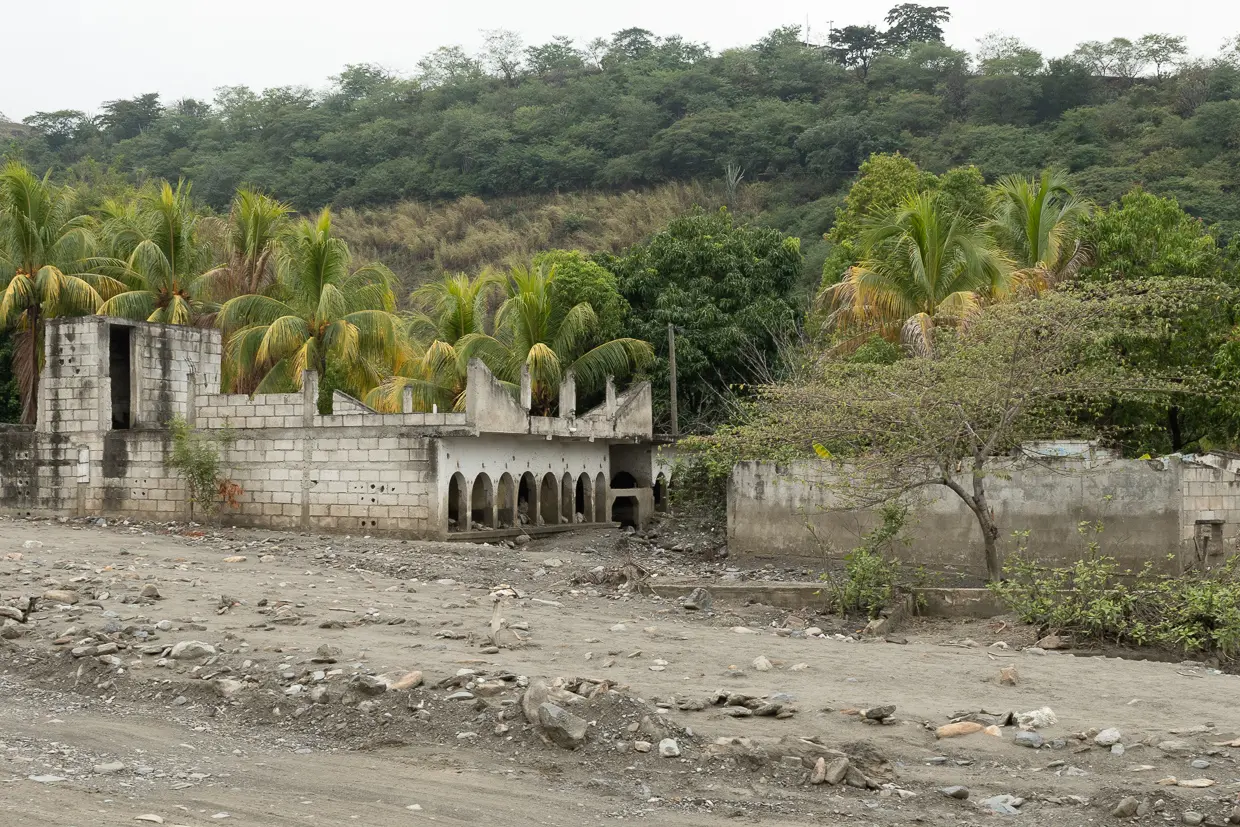
El Arenal, Guatemala. Houses destroyed by landslide. 2022 © Department of Global and Territorial Dynamics Studies, Rafael Landívar University

El Arenal, Guatemala. Houses destroyed by landslide. 2022 © Department of Global and Territorial Dynamics Studies, Rafael Landívar University

A partir de los casos de El Arenal, Agua Zarca y Miramundo, se examinan las causas y consecuencias del desplazamiento forzado interno, destacando las vulnerabilidades estructurales, la degradación ambiental y la falta de planificación territorial que amplifican los riesgos en esta región. El enfoque de este artículo es evidenciar que, en el contexto de procesos de relocalización y ante el limitado apoyo institucional, las comunidades y sobre todo las mujeres impactadas por desastres socioambientales asociados a eventos hidrometeorológicos (lluvias y sequías), recurren a redes familiares y comunitarias para financiar los traslados y enfrentar los efectos del desplazamiento y de los desastres. Las mujeres, como figuras centrales en la sostenibilidad familiar y comunitaria, enfrentan una carga desproporcionada debido a su rol en la reconstitución de las condiciones de vida y la gestión de los recursos en entornos de alta precariedad impactados por los eventos climáticos recurrentes en sus comunidades.

PALABRAS CLAVE: Corredor Seco, desplazamiento forzado interno, eventos hidrometeorológicos, mujeres desplazadas, reubicación

Ana Paredes Marin es Maestra en Sociología Política con experiencia de investigación en desplazamiento forzado interno, acción colectiva, política informal, ordenamiento territorial y medio ambiente. Investigadora II, por el Instituto de Investigación en Ciencias Socio Humanistas (Icesh) de la Universidad Rafael Landívar, Guatemala.

Alejandra Barrios Ariano es Antropóloga con experiencia de investigación en movilidad humana, cambio climático, género y educación. Asistente de investigación del proyecto “Conocimiento e incidencia sobre causas, efectos y gestión para la transformación del desplazamiento forzado interno en Guatemala” por el Instituto de Investigación en Ciencias Socio Humanistas (Icesh) de la Universidad Rafael Landívar, Guatemala.

HOW TO CONTRIBUTE

Researching Internal Displacement publishes engaging and insightful short pieces of writing, artistic and research outputs, policy briefings and think pieces on internal displacement.

We welcome contributions from academics, practitioners, researchers, officials, artists, poets, writers, musicians, dancers, postgraduate students and people affected by internal displacement.

By Kadidjatou Sawadogo | Jun 30, 2026
The working paper examines the impact of humanitarian funding contractions on the realisation of economic and social rights of internally displaced persons (IDPs) in Haiti and South Sudan. Drawing on a human rights-based framework, documentary analysis, and key informant interviews, it analyses how reductions in humanitarian assistance affected access to adequate food and healthcare in contexts of protracted displacement, institutional fragility, and humanitarian dependence. The findings show that funding cuts reduced food assistance, disrupted health services, suspended mobile clinics, and weakened nutrition coverage for displaced populations. Humanitarian actors adopted hyper-prioritisation approaches that focused on life‑saving interventions but left significant protection and socio‑economic needs unaddressed.
By German Kim, Ekaterina Pesegova (transl.) | Jun 4, 2026
This working paper highlights the relatively unknown deportation of Soviet Koreans, the first of several state deportations based on ethnicity carried out by the Soviet Union. The forced displacement, mainly to Central Asian republics of the former Soviet Union, was highly classified during Soviet times, leading to misunderstandings and subsequent misrepresentations of the event by Western scholars and the creation of multiple inaccurate narratives, including that of ethnic cleansing. By conducting an interdisciplinary study, the author critically analyses widespread misconceptions about the deportation of the Soviet Koreans and provides objective data on the issue and its long-lasting effects on the Soviet Koreans who survived deportation and their descendants.
By Tomy Ncube and Una Murray | Mar 12, 2026
As climate impacts intensify, planned relocation is increasingly deployed as an adaptation strategy, yet outcomes for relocated communities remain consistently adverse. This paper argues that these failures stem from the treatment of planned relocation as a short-term, projectised disaster response rather than as a long-term developmental intervention. Drawing on social protection theory, this paper reconceptualises planned relocation as a form of social assistance, capable of delivering durable solutions. It demonstrates that planned relocation inherently performs preventive, protective, promotive, and potentially transformative social protection functions by minimising future climate risks, providing non-contributory transfers such as land and housing, and enabling livelihood reconstruction. However, when implemented outside formal social protection systems, these functions may collapse, often resulting in impoverishment and protracted displacement.