Internal and international displacements in the framework of global dynamics

This paper reviews internal and international forced displacement figures over the last three decades in order to propose new explanatory hypotheses that seek to go beyond existing views.
Published on December 12, 2022
Fabio Lozano | lanid, IDPs, Refugees, International migration, Violence, Humanities, International, Americas (inc Caribbean)
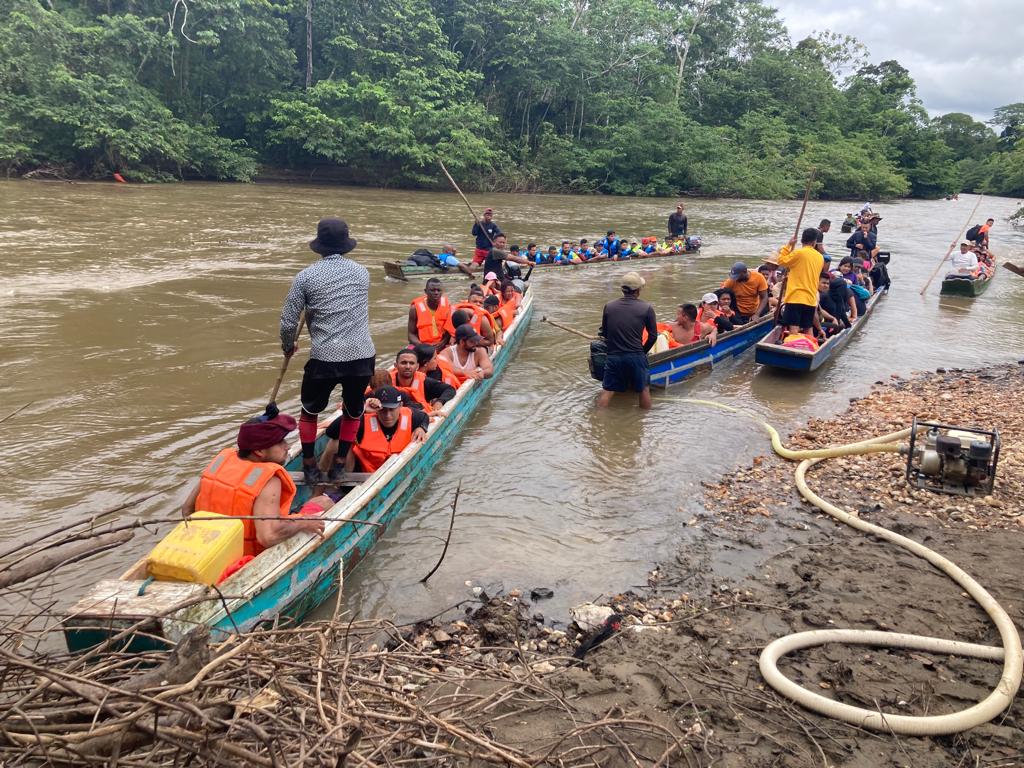
Panama. Refugees and migrants crossing the Darien Gap in search for safety, protection, and better opportunities. 2022 © UNHCR/Viola E. Bruttomesso

Panama. Refugees and migrants crossing the Darien Gap in search for safety, protection, and better opportunities. 2022 © UNHCR/Viola E. Bruttomesso

It analyses the global dynamics that lead to such forced migration and interrogates the reach of explanations based solely on local approaches that link such migration to internal disputes of an ethnic, racial, economic, political or multifactorial nature, and which are used in a hegemonic way by renowned authors and global institutions.

It argues that the great wave of internal and international forced migration comprises a violent attack against unarmed populations, carried out by local or international regular and irregular armies, that is aimed at their expulsion or territorial subjugation for the sake of colonial extractive looting. Towards this end, alternative analytical categories and guidelines for action are proposed.

Fabio Lozano Velásquez is a philosopher and theologian, with a Master’s degree in rural development and doctoral degre in Latin American studies. He is the founder of the Consultancy for Human Rights and Displacement (CODHES) and a professor at the Universidad San Buenaventura. He is also part of the Latin American Network on Internal Displacement (LANID).

LANID Special Issue: “Critical Approaches to Internal Displacement”

The Latin America Network on Internal Displacement (LANID) brings together academics, activists, artists, and practitioners with the aim of reflecting critically on internal displacement. This LANID Special Issue aims to extend knowledge and promote debate on this phenomenon. Although each Paper has been written from a different perspective, they all share the key feature that they delve into the multidimensional nature, diverse causes and complex dynamics of this kind of forced migration, as well as into the search for new ways to achieve durable solutions that allow those affected by internal displacement to overcome their vulnerability.

HOW TO CONTRIBUTE

Researching Internal Displacement publishes engaging and insightful short pieces of writing, artistic and research outputs, policy briefings and think pieces on internal displacement.

We welcome contributions from academics, practitioners, researchers, officials, artists, poets, writers, musicians, dancers, postgraduate students and people affected by internal displacement.

By Steven Miron, Dyuti Tasnuva Rifat, Tanjib Islam | Oct 21, 2025
Foregrounding the voices of people living in three different communities of displacement in Bangladesh, this field research and advocacy report examines the nexus of climate change, loss and damage and displacement. This comprehensive report highlights promising interventions by Bangladeshi civil society organisations that have helped internally displaced people (IDPs) living in protracted displacement move toward durable solutions. It also examines positive developments on the policy front, including Bangladesh's fledgling National Strategy on Internal Displacement Management (NSIDM). At the same time, it calls attention to how Bangladesh's protracted displacement crisis remains under acknowledged and therefore under addressed in national policy and programming. The findings and recommendations in this report are intended to inform the UNFCCC's Loss and Damage mechanism – the Fund for Responding to Loss and Damage (FRLD), the Santiago Network for Loss and Damage (SNLD) and the Warsaw International Mechanism (WIM) ExCom, including its Taskforce on Displacement. Each must urgently demonstrate its commitment to addressing the growing displacement crisis and supporting durable solution programming. The report's findings and recommendations are also relevant to intergovernmental, governmental and civil society organisations working in and outside Bangladesh. Furthermore, the report suggests how conventional durable solutions approaches to displacement must evolve to remain relevant in a world of escalating losses and damages resulting from climate change.
By Ana Paredes Marín y Alejandra Barrios Ariano | Jul 3, 2025
Este documento de trabajo muestra que las experiencias de desplazamiento forzado interno de mujeres en el Corredor Seco de Guatemala evidencian cómo los eventos hidrometeorológicos, como huracanes y sequías, agravan las desigualdades estructurales entre esas, la de género.