Turbulent Borders, Displaced Lives: The Christian Narrative in South Lebanon’s Geopolitical Landscape

This working paper contextualizes the internal displacement of more than 94,000 individuals from South Lebanon amid the ongoing conflict between Hezbollah and Israel following Hamas's "Al-Aqsa Deluge" operation in October 2023. It investigates the causes of displacement, particularly within the Christian community, by analyzing various push factors deriving from the activities of the Israeli military, Hezbollah and the Lebanese government.
Published on October 8, 2024
Guita G. Hourani | mernid, IDPs, Internal migration, Ethnicity, Conflict

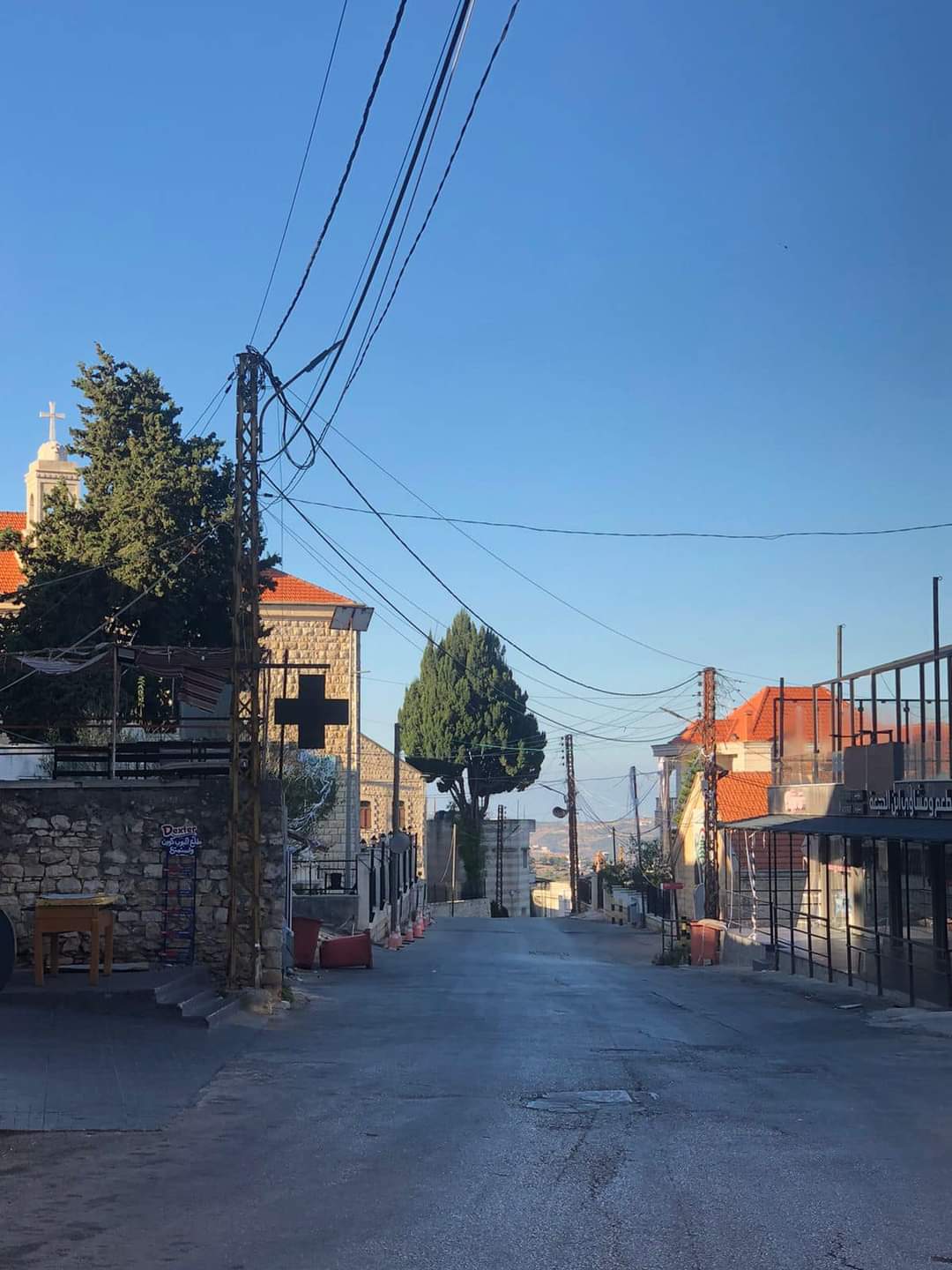
Lebanon Ain Ebel village.2024 © M. Barakat.

Drawing on these factors, the article ascertains a seven-fold survival narrative among South Lebanon’s Christians: unwavering faith, coping resilience, distancing from Christian partisan rhetoric, avoiding confrontation, rejecting the war, advocating for coexistence as a fundamental social covenant and reaffirming allegiance to Lebanon and its Armed Forces. The article concludes by emphasizing the need to cease the conflict; hold the perpetrators accountable and ensure reparation for the civilians affected by the war; ensure the right to assisted return; guarantee the rights of individuals not to be displaced; and replace Hezbollah’s power formula –  the Army, the People, and the Resistance equation.

Editor’s Note: The research in this article predates the 2024 September entry of Israeli forces into Lebanon, but remains relevant as the violence between Hezbollah, the Israeli military and Lebanese forces escalates. The border communities discussed in this paper face even greater challenges, and the article’s themes of survival and resolution are even more critical today.

KEYWORDS: Lebanon, Hezbollah, Israel, internal displacement, IDPs, Christian communities, border communities

Dr. Guita Hourani holds a PhD in Global Studies from Tokyo University of Foreign Studies in Japan and is a distinguished scholar in migration, refugees, and citizenship. She founded the Lebanese Center for Migration and Diaspora Studies at Notre Dame University. Dr. Hourani currently serves as an expert on citizenship at the European Union Democracy Observatory on Citizenship (EUDO) and holds senior research fellow positions at Ukraine Catholic University, Tokyo University of Foreign Studies, Japan, and the Holy Spirit University, Lebanon.

HOW TO CONTRIBUTE

Researching Internal Displacement publishes engaging and insightful short pieces of writing, artistic and research outputs, policy briefings and think pieces on internal displacement.

We welcome contributions from academics, practitioners, researchers, officials, artists, poets, writers, musicians, dancers, postgraduate students and people affected by internal displacement.

By German Kim, Ekaterina Pesegova (transl.) | Jun 4, 2026
This working paper highlights the relatively unknown deportation of Soviet Koreans, the first of several state deportations based on ethnicity carried out by the Soviet Union. The forced displacement, mainly to Central Asian republics of the former Soviet Union, was highly classified during Soviet times, leading to misunderstandings and subsequent misrepresentations of the event by Western scholars and the creation of multiple inaccurate narratives, including that of ethnic cleansing. By conducting an interdisciplinary study, the author critically analyses widespread misconceptions about the deportation of the Soviet Koreans and provides objective data on the issue and its long-lasting effects on the Soviet Koreans who survived deportation and their descendants.
By Tomy Ncube and Una Murray | Mar 12, 2026
As climate impacts intensify, planned relocation is increasingly deployed as an adaptation strategy, yet outcomes for relocated communities remain consistently adverse. This paper argues that these failures stem from the treatment of planned relocation as a short-term, projectised disaster response rather than as a long-term developmental intervention. Drawing on social protection theory, this paper reconceptualises planned relocation as a form of social assistance, capable of delivering durable solutions. It demonstrates that planned relocation inherently performs preventive, protective, promotive, and potentially transformative social protection functions by minimising future climate risks, providing non-contributory transfers such as land and housing, and enabling livelihood reconstruction. However, when implemented outside formal social protection systems, these functions may collapse, often resulting in impoverishment and protracted displacement.
By Steve Miron, Dyuti Tasnuva Rifat, Tanjib Islam | Feb 25, 2026
Researching Internal Displacement is pleased to make this case study available as a stand-alone publication. Excerpted from a recent research and advocacy report by the Refugee Law Initiative, this case study of an urban informal settlement in Tongi, Bangladesh, examines the lived experience of loss and damage among people displaced in the context of climate change and left behind in climate action. Encouragingly, the case study also highlights a promising 'good practice' development intervention by the SAJIDA Foundation. In the case study, programme participants describe how Sajida’s multifaceted approach, which empowers women and girls, encourages positive behaviour change and prioritises psychosocial wellbeing across multiple programme workstreams, has helped restore agency, self-sufficiency and hope. SAJIDA’s programme shows how protracted displacement and associated losses and damages can be addressed and are not inevitable.