
The climate emergency is real, and human mobility is being transformed. And yet, with climate impacts being a daily dangerous reality, the interests of climate vulnerable populations are not being routinely protected on the ground. This is true both before and after times of disaster. In the name of either relocation programs or rebuilding for disaster recovery, highly vulnerable communities are being forced to move away from impacted sites, despite their preference – and likely very good reasons – to stay. Top-down decision-making, often-times by government or private organisations prioritizing new investments, new developments, and even new property regimes, can result in populations being forcibly moved. What is readily labelled ‘climate displacement’ or ‘climate relocation’, for example in the news media or even academia, might very well be displacement by poor policy or forced relocation. Decisions about rebuilding post-disaster are made to seem urgent, with governments and other actors depicting themselves as having little choice but to quickly rebuild and implement commercial projects for the sake of livelihoods, regardless of who might be in the way and forced to move.
The emergence of climate mobility hierarchies
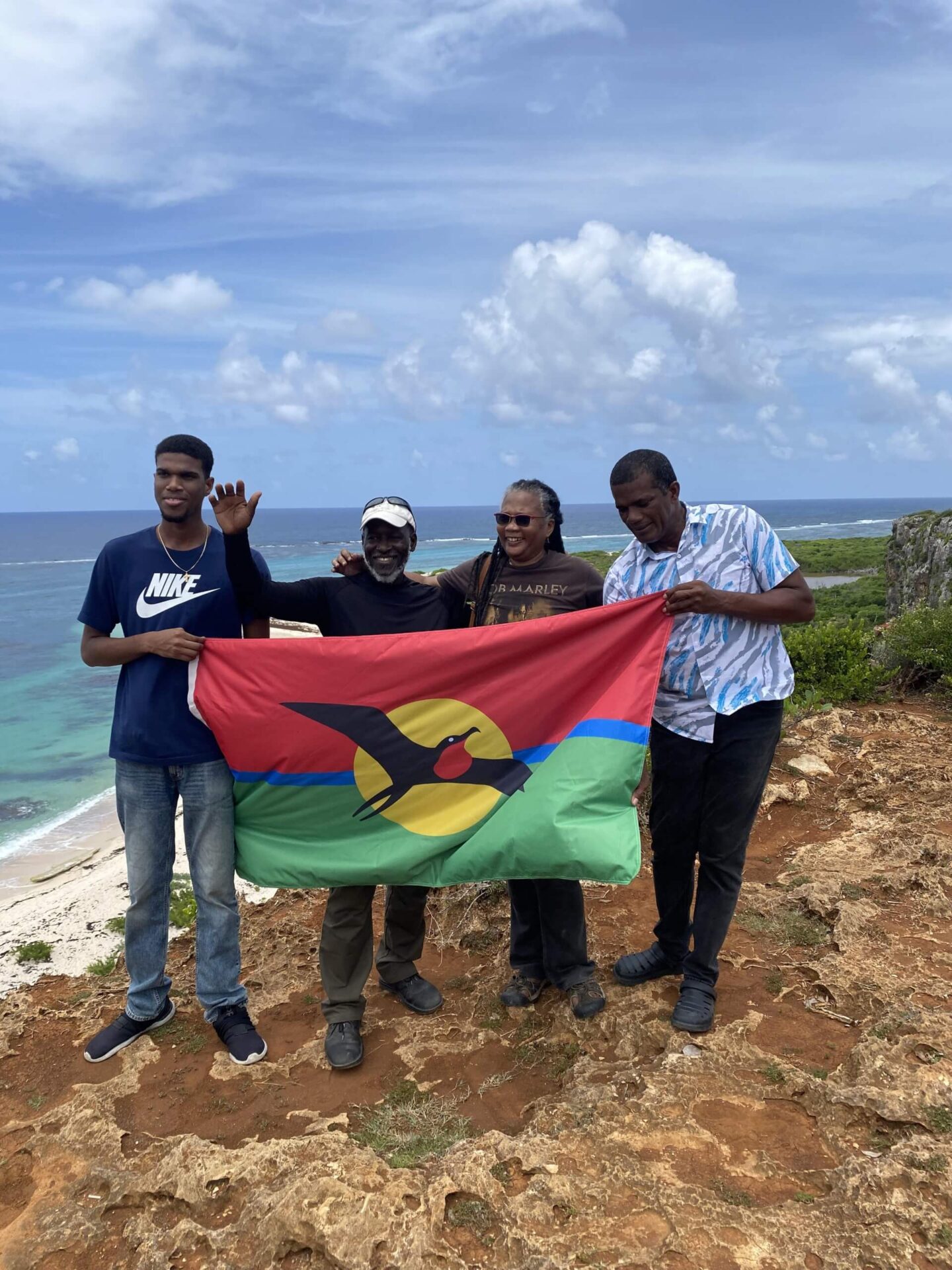
Climate mobility hierarchies, which occur when climate mobilities exacerbate existing or create new inequities, privilege some groups at the expense of others. These are emerging along axes such as ability, age, economic status and ethnicity, sometimes produced by climate mobility policies themselves. In Fiji, minority ethnic groups are being excluded from government relocation programs and face increasing insecurity of tenure as a result of relocation of other communities. In Pakistan, there is a grassroots movement in Karachi seeking to protect the rights of those being forced to move from their homes, not by the massive floods experienced in 2022 but by the post-flood decisions of authorities. In Antigua and Barbuda, the island of Barbuda was declared uninhabitable by the central government following Hurricane Irma in 2017, after an enforced mandatory evacuation of the entire island. The opportunity was seized, while the island was declared ‘uninhabitable’, to replace the existing communal property system with one of private property rights, without any community consultation. The people of Barbuda were forcibly displaced by government policy, followed by a series of decisions that created the conditions whereby families faced challenges to return home, as private development commenced.
The power relations at work in such instances can enable climate vulnerabilities to be harnessed to make climate vulnerable people move on but do little to reduce vulnerability. There is an uncomfortable alignment emerging between the humanitarian impulse that has long shaped climate mobility research and policy – to move people out of climate harm’s way – and the capacity of states and private interests to justify moving people against their will in the name of climate adaptation or disaster response. This is one of the many reasons that the right to stay and the recognition of agency of communities are so profoundly important.
Mobility regimes, race and resistance
Such issues can be explored through the concept of ‘climate mobility regimes’, which are emergent assemblages of research, policy, decision-making and public debate on climate (im)mobility. Such regimes are important to understand because they shape what can and cannot be said about climate (im)mobility, what framings of climate (im)mobility are available, and which are not. They reveal who has the power to dictate mobility and immobility and how. The concept of climate mobility regimes can help shed light on how different relations of power are centrally implicated in attempts to govern mobility and immobility in a changing climate. Racial and gendered forms of power, geopolitical, neocolonial and capitalist forms of power – all can be culpable in the ways in which affected populations are prevented from exercising their rights and enacting their own climate (im)mobility futures. The concept of climate (im)mobility regimes also helps reveal how neither science, policy nor financing mechanisms relating to mobility and immobility in a changing climate are politically neutral, but rather can be themselves complicit in reproducing problematic power relations.
For example, one power relation which can operate in climate (im)mobility regimes is race. In his book The Other of Climate Change: Racial Futurism, Migration, Humanism, Andrew Baldwin makes the argument that:
the predominantly international discourse on climate change and migration is itself both a form of knowledge and an arrangement of institutions which together inscribe racial meaning onto groups of people through the category of the ‘climate change migrant’ [emphasis added]….[T]he discourse on climate change and migration is, in this sense a form of power that reproduces a social hierarchy between white humanism and what we might call the racial other of climate change, the figure purportedly displaced by climate.
Race can operate insidiously across different types of climate (im)mobility regimes, from right-wing attempts to securitize climate mobility to the most well-intentioned international humanitarian efforts to understand and protect those who might be displaced. Baldwin argues that the very category of the climate migrant is a way in which white humanism attempts to confront the threat which climate change presents to its own position in the racial hierarchy. These insights give rise to the consideration that the concept of climate mobility may be part of white humanism’s attempts to shore up its power base through the management of a racialized other.
Close scrutiny of the actions of mobility regimes can also reveal the sites and methods of resistance to mobility solutions by affected communities. In Tuvalu, in the face of risks to forced relocation, climate mobilities are being indigenised, redefined and reclaimed in ways that make sense culturally to those whose territory is threatened. Yumagulova and colleagues point out that ‘climate mobility justice for Indigenous peoples involves the decolonization of dominant climate displacement risk regime to one grounded on Indigenous relational mobility sovereignty’.
Climate mobility: The new power dynamic
It is widely accepted that ‘climate’ and ‘migration’ are two of the most politicized concepts, but it is also true that they do not work in isolation from other political flashpoints, such as economic growth, private property, and others. Climate change is revealing the fragility rather than the permanence of power relations; power relations are shifting, and new forms of power relations are emerging. There is power, for example, in including some communities in relocation programs but excluding others. All this means fertile ground for power to be exerted in unexpected ways. Arguably a research agenda is for climate mobility scholars to do more work on the kinds of power dynamics in which climate mobilities are entrenched, to better understand the structural, historical, economic and political forces that shape who has the power to represent and influence mobilities and immobilities in the climate emergency.
We are particularly concerned about the power of the idea of mobility itself. There is power in the way mobility away from sites of risk is often narrated to be the most desirable outcome for many vulnerable populations in a changing climate, even though resettlement programs are known to be hugely expensive and invariably detrimental to communities. There is power in the momentum towards relocation programs, since the science on uninhabitability is not yet well-developed and the experience of uninhabitability is culturally and socially experienced. Complex power relations are at work when the idea of very large numbers of people being displaced is constructed as an inevitability that must be managed. There is power at work when those who do not wish to move are seen as inconvenient disruptors to this management. Further, there is power at work when the political agency of climate exposed populations, whether moving or not moving, is treated dismissively, because providing evidence of the urgency of the climate emergency is seen to be more important than detailed debate about culture or place attachment. For such populations, climate change is often a manifestation of historical and ongoing political, economic and racial injustice, and it is little wonder that some postcolonial, non-white communities see attempts to govern their climate mobility from outside as yet another manifestation of colonialism, racial and economic injustice, and/or dispossession.
We are at an interesting juncture in climate (im)mobility in which research and policies typically formally recognize that agency and choice are crucial when efforts are made to facilitate movement of people out of harm’s way. It is also regularly articulated that mobility solutions should be worked out with extensive and meaningful community involvement to prevent increased vulnerability overall. Yet such insights are not necessarily being translated into rights to stay being protected in places like Pakistan and Barbuda, where vulnerable communities are now more vulnerable, fighting for their rights to stay and rebuild. In Fiji, grassroots civil society organisations were motivated to produce their own guide for engagement since they were tired of so many ‘consultations’ that did not take the time to fully understand the complexities of community climate challenges in their cultural context.
Given these concerns, it is useful to remember that climate mobility itself represents a new form of power that must not only be understood but used wisely. Ongoing and repeated focus on mobility in climate (im)mobility research and policy has elevated mobility to the position of ‘positive’ and ‘immobility’ to the position of ‘negative’, but not because to do so is serving the interests of the climate vulnerable. Rather, it seems that climate-related movement is often represented to be ‘positive’ because it reinforces the power of the category of climate mobility itself. And not surprisingly, climate mobility’s power is being readily appropriated to further elite economic and political interests.
Conclusion
Climate mobility policy and research need to confront the ways in which the category of ‘climate mobility’ is gaining institutionalized authority and possibly creating an enabling environment for new kinds of forced, unjust movement. The recent Pacific Framework on Climate Mobility, for example, even though it has a focus on respecting Pacific identities and well-being and articulates rights to stay, nevertheless maintains that “there may be occasions when people are forced to move when all the voluntary measures are exhausted”. This is problematic because it implies that external evaluations of habitability have authoritative power over local ones. And yet, if communities are meaningfully positioned as co-leaders in building long-term resilience against uninhabitability risk, habitability knowledges will be unified rather than divisive in the first place.
It is important to reiterate that no matter how urgent the solutions to climate change challenges, mobility solutions should not per se be justified in overriding the right of affected populations to the exercise of political agency – in non-tokenistic participatory ways – when solutions are devised. But there is much more to power relations in climate (im)mobility. Myriad questions need to be asked in each context, such as whose interests are served when forced mobility is considered a viable policy option? What is at stake for those who insist that populations are better off moving than staying? And, why is resistance to mobility solutions dismissed and by whom?
KEYWORDS: Displacement; mobility; immobility; justice; planned relocation
Carol Farbotko is a cultural geographer interested in place, culture, politics and mobility, examining how these are changing in a changing climate. She is an Australian Research Council Future Fellow at Griffith University, Australia.
Ingrid Boas is an associate professor at the Environmental Policy Group of Wageningen University. She conducts research on environmental change and human mobility, focusing on the everyday, trans-local and geopolitical realities characterizing this relation. Currently her focus is to further study concepts of borders, adaptation, and indigenous cultural heritage vis-à-vis climate mobilities through two research programmes funded through the Belmont Forum and the Netherlands Scientific Organisation.
Taukiei Kitara is from Tuvalu, and lives in Queensland, Australia. He completed his Masters of Global Development from Griffith University and is an Adjunct Research Fellow at the Griffith Centre for Social and Cultural Research, Griffith University, Australia. He was the President of the Brisbane Tuvalu Community from 2019-2022 and council member for the Pacific Island Council for Queensland (PICQ).
Ariadna Anisimov is a post-doctoral research fellow on climate change adaptation at the Institute of Development Policy of the University of Antwerp. She works at the science policy interface on adaptation policy and planning, structural vulnerability, climate justice and Loss and Damage, especially in the context of small islands. Before she worked at the Institute of Sustainable Development and International Relations (IDDRI) and the OECD.