
Resistance to climate mobility solutions – such as managed retreat and community relocation – is often conceived simply as an irrational response to risk. However, resistance to mobility among populations identified as candidates for relocation needs to be approached as a significant socio-political phenomenon to be understood, rather than merely a barrier to overcome, if just and equitable solutions are to be achieved. Indeed, local knowledge of habitability and resistance to climate mobility can be deeply intertwined. Resistance to climate mobility must be taken seriously if the voices of climate-impacted populations are to be genuinely heard.
Researchers have started to deploy terms such as environmental non-migration and voluntary immobility to describe populations in high-disaster areas that do not wish to move. Such work often focuses on the culturally and socially specific characteristics that shape a particular population’s ideas about place, and their perspectives on why potential mobility away from that place may be detrimental to culture, spirituality and identity. It has been shown that populations at risk of displacement prioritise their ontological security, possess important local knowledge of habitability, and have political agency – that is rarely acknowledged.
Some people in areas predicted to be heavily impacted by climate change are actively remaking and reclaiming their threatened places. In the low-lying island state of Tuvalu, people are affirming their preference for Tuvalu to remain habitable and inhabited in various ways. All Tuvaluan inhabitants are well aware of the narratives about sea level rise affecting their islands and are cognizant about future climate risk, but are they not moving out of the country en masse. Most do not desire to move internationally either. Most Tuvaluans do not feel trapped and there is little, if any, activism from Tuvaluan grassroots organisations on international migration as a climate adaptation need. This voluntary immobility in Tuvalu is far from passive. Rather, it is active, in the form of political and social choices grounded in place attachment and rights to self-determination. Successive Tuvalu government policies are congruent with voluntary immobility as well, including lobbying the international community for emissions reductions and prioritising adaptation in-situ and the maintenance of Tuvaluan sovereignty. International relocation and a virtual, digital Tuvalu are officially options of last resort, while major land reclamation projects are underway to enable staying in place.
Additionally, activists and scholars from Tuvalu and other atoll states such as Kiribati highlight the cultural risks of forced relocation and emphasise the existing circular mobilities of many island people (particularly for temporary employment abroad) and on-going strong connections to place that do not fit the dominant idea of an imminent one-way (national) exodus from small islands. Resistance to climate mobility is also visible in everyday life, as people engage in local, internal mobilities within Tuvalu that are perhaps unexpected, seem to be going in the ‘wrong direction’ towards places of environmental risk, and do not fit well with dominant, but not necessarily accurate, ideas about Tuvaluans as imminent international ‘climate refugees’. For example, both prior to and during the pandemic, urban-rural migration occurred in Tuvalu. Rural areas received an influx of internal migrants moving away from the capital, Funafuti – people who preferred to move to remote islands with little in the way of paid employment or formal services. They were in search of a revival of their Indigenous culture and health security as the pandemic took hold. Such internal mobilities of people in Tuvalu contribute to an overall position of resistance against the narrative of ‘inevitable uninhabitability’ that has been circulated about Tuvalu for three decades.
Thus in Tuvalu, climate mobilities are being indigenised, redefined and reclaimed in ways that make sense culturally and cosmologically to those whose territory is vulnerable. The people of Tuvalu are not suffering from a passive form of immobility in the face of climate risk, but are actively resisting uninhabitability in various ways. Introducing the term anti-displacement mobilities helps us understand voluntary immobility better, and can help to recentre climate mobility debates to more fully centralize the cosmology and culture of people such as those from Tuvalu. Use of anti-displacement mobilities can also help conceptualize important empirical facts that may not, at first glance, appear to support mainstream climate mobility solutions. In contrast to expectations of imminent migration away from Tuvalu that dominate much outside discourse on Tuvalu, anti-displacement immobility needs to be more visible in research and partnerships for in-situ adaptation.
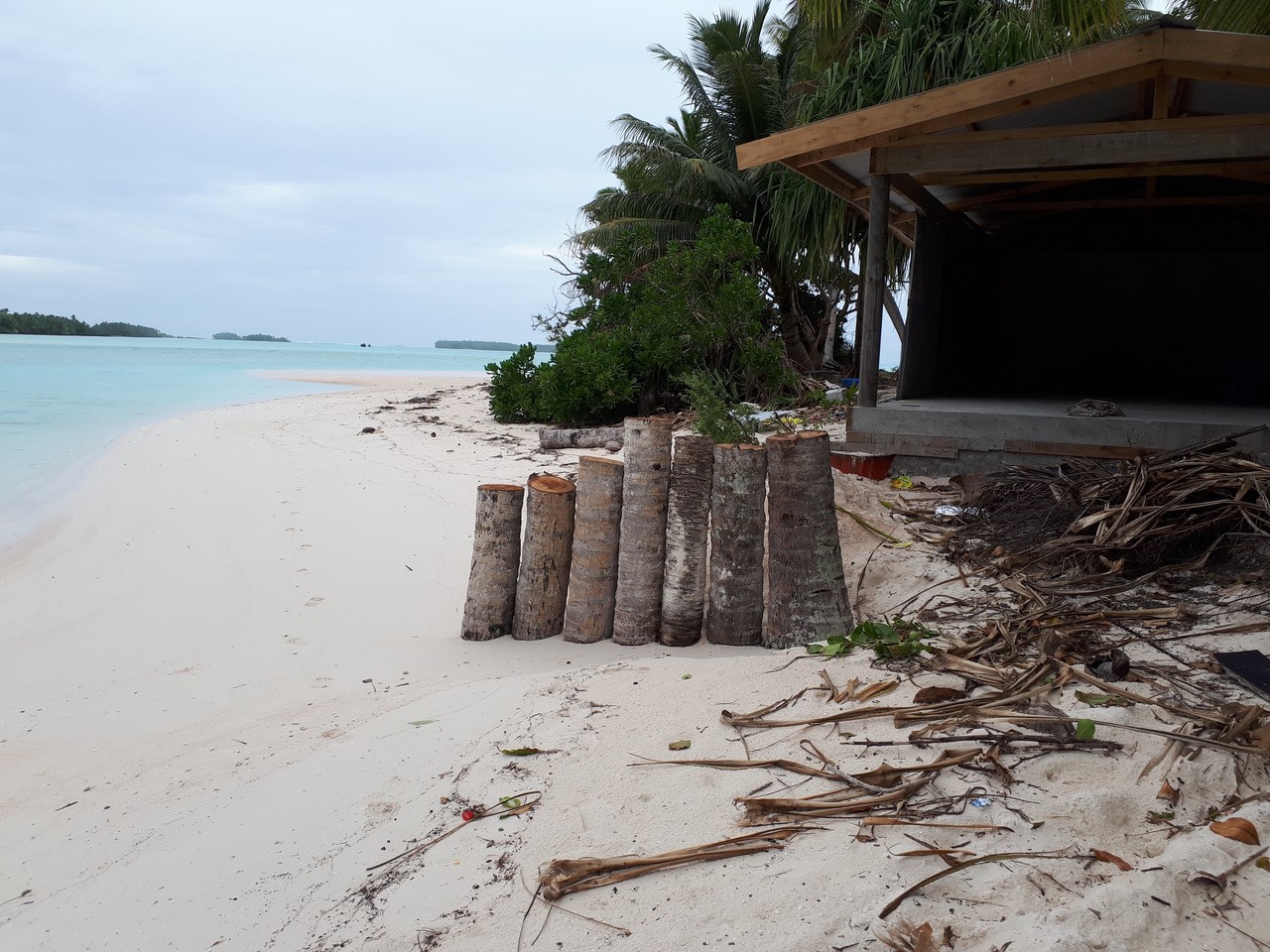
Re-emplacement is another useful conceptual tool in understanding voluntary immobility. Even before the pandemic in Tuvalu, some people were moving away from the capital to the small village of Funafala, which is only accessible by sea. Funafala, as with all of Tuvalu, is part of a low-lying atoll and experiences coastal erosion. With limited infrastructure, no schools or shops, and with no public ferry service to the nation’s capital, an hour away by small motorboat, it might be expected that this remote island community would be experiencing out-migration. In fact, the opposite is true. A study conducted in 2019 found that the ten households in Funafala were well aware of climate change risk, but nobody planned to leave. Indeed, the number of households was increasing.
To understand urban-rural migration in Tuvalu, Tuvaluan culture and relations with place are key. Funafala land is traditionally owned by the Indigenous people of Funafuti, the same Indigenous group who are landholders in Tuvalu’s capital. The Funafala village site has historically been an area of settlement for Funafuti people, but postcolonial changes such as increasing urbanisation in the capital have seen population numbers vary over time. The community members all valued the opportunity to live a more customary life in Funafala compared with life in the capital itself, and this was driving in-migration to the village. Fishing and household food cultivation provided at least partial subsistence livelihoods, and handicraft materials were easier to source. Most households supplemented their subsistence livelihoods with some paid employment in the capital.
Funafala residents were clear about the importance they attached to preserving their culture and health – priorities which they carefully balanced against the longer-term risks of climate change. Funafala people were well aware of debates about Tuvalu becoming uninhabitable at some point in the future, but were renewing their Indigenous connections to land, and looking forward cautiously to in-situ adaptation projects such as land reclamation. This urban-rural migration can be usefully understood as re-emplacement. Residents of Funafala were reclaiming, repossessing and revitalising the place in which they have long-standing legal and customary rights to land. A vibrant community with a strong sense of place – rather than one characterised chiefly by severe hardship due to climate impacts – to its residents, Funafala is not a place on the verge of extinction but is embarking on an exciting new chapter of Indigenous-centred sustainable development.
Because mobility contexts matter, it is important to pay more attention to the discourses and agency of people moving or living in climate vulnerable areas in order to ensure that justice is achieved and human rights are respected. Going forward, different types of resistance to climate mobility – for example, in policy, cultural practices and local mobilities – need to be taken seriously. The political agency and local knowledge that are often characteristics of voluntary immobility need to be empirically documented in research as well as theorised in order for potential climate mobility solutions to be advanced in equitable ways. The concepts of anti-displacement mobilities and re-emplacement can assist in this endeavour.
KEYWORDS: Climate mobilities, immobility, planned relocation, migration, climate change
Carol Farbotko is a cultural geographer with research interests in climate mobilities and the politics of climate risk, focusing on the Pacific Island region. She is an Australian Research Council Future Fellow at Griffith University.