
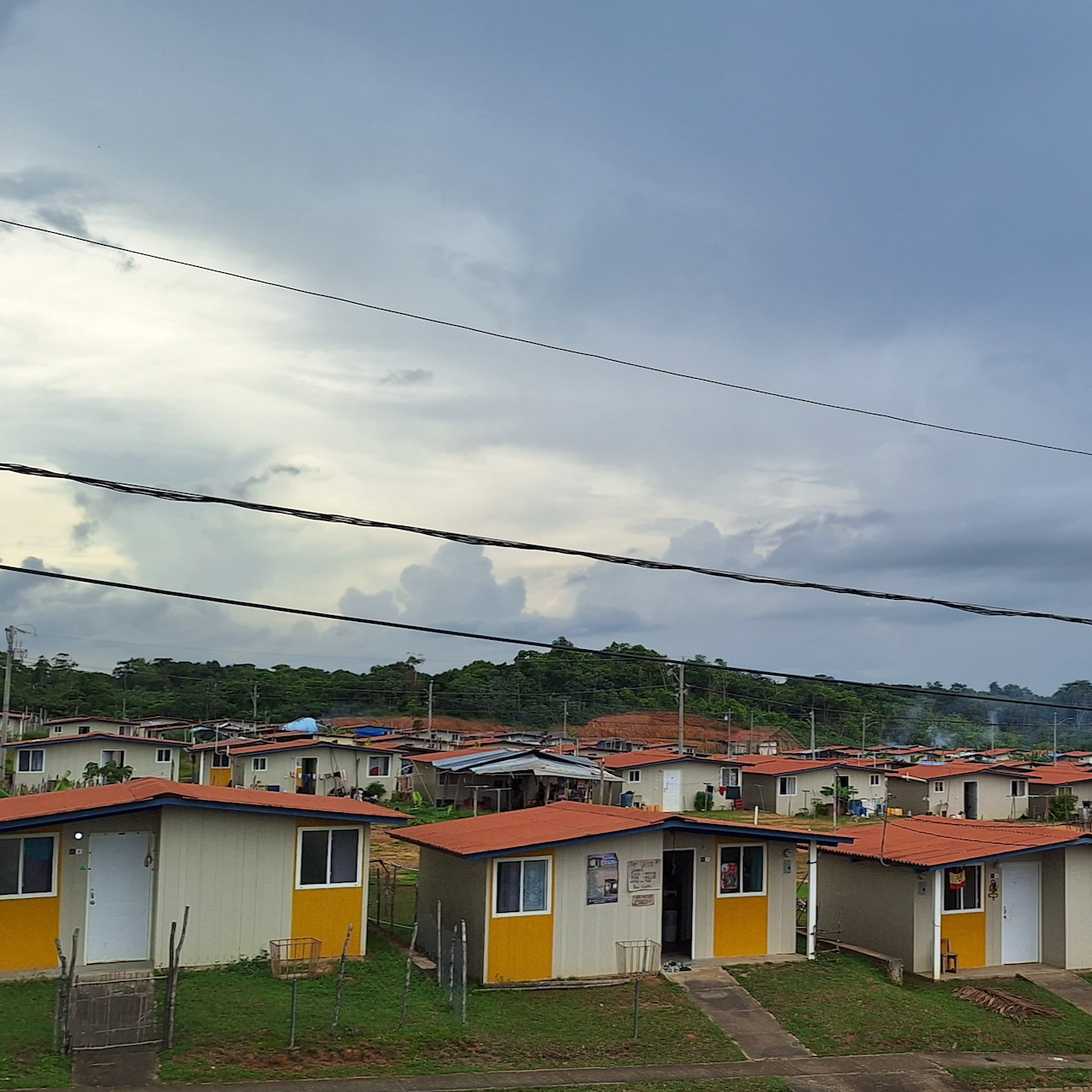
The planned relocation of my island community of Gardi Sugdub to the mainland, specifically to the coast of the Gardi sector in Guna Yala, which our elders named Isberyala, represents the vision of great thinkers within the community. The process began to take shape in 2010, although it had emerged much earlier: our leaders anticipated social changes (including overcrowding and a lack of space caused by population growth on the island) as well as environmental changes, including changes in wind patterns and climate more broadly.
The vision and planning of our elders offer a very important lesson for the Guna Yala region, and for Panama, since it is a comarca, an Indigenous territory with its own system of self-government. As our experience demonstrates, planned relocation is not simply about moving families from one place to another. From the perspective of those who agreed to relocate, I understand the move represented an opportunity to gain access to infrastructure that had previously been unavailable to them. At the same time, however, it involved changes that brought cultural, economic, social, and environmental challenges.
For this reason, planned relocation cannot be understood merely as the construction of negas (houses), much less as simply drafting a project's terms of reference from institutional offices. Planned relocation processes must allow families to have a voice in decision-making so that their customs and cultures can be preserved. In my own case, as a biologist from the community, I became involved in 2018 in order to serve as a mediator between the technical issues involved, and our community's worldview.
To better understand this experience, it is necessary to know the context of Guna Yala. The comarca, ourautonomous Guna Indigenous territory, is located in northeastern Panama and consists of 51 communities, 39 of which are low-lying islands, distributed across an area of 2,538.2 km². Gardi Sugdub Island is located at the western end of the comarca. According to information from the local health center, in 2018 the island had a population of more than 1,500 inhabitants.
Like most communities in Guna Yala, Gardi Sugdub faced a lack of space for further house construction due to population growth. This resulted in overcrowding on the island, as well as coastal erosion associated with rising sea levels. Against this backdrop, our leaders began organizing and discussing the possibility of moving to the mainland. In 2010, the community began pursuing this option more vigorously. It is important to emphasize that the idea originated with our own leaders, who subsequently influenced the wider community.
From the Onmmaggedd Nega (Congress House), and with the support of the women of the community, a commission was established. That commission then led the search for communal land on the mainland. Initially, another site had been selected, but it was not large enough for the entire community, so they opted for the land we now know as Isberyala.
Over the years, the commission became more consolidated, incorporating Guna professionals from the community so that the dream of planned relocation to the mainland could become a reality. In June 2024, the community finally moved to the new site, Isberyala.
This community leadership provides the first important lesson: communities have every right to be the central driving force behind a relocation process, and their knowledge should not be marginalized. Ultimately, communities are the ones who best understand their needs and the problems affecting their surroundings. This is particularly true for Indigenous peoples, because they possess a distinctive worldview, spirituality, and ancestral knowledge—dimensions that are difficult to replace with externally conducted technical studies.
In Gardi Sugdub, the patience and organizational practices of the Guna people greatly contributed to the idea of planned relocation and enabled the process to be sustained for more than a decade. Based on our community's experience, we learned that local government institutions, protocols, and legal instruments needed to engage with traditional governance systems and, first and foremost, to recognize the community's autonomy and identity and strengthen its decision-making capacity.
At the same time, this experience demonstrated that participation must be genuine, continuous, and inclusive of all sectors of a community or population. However, Human Rights Watch found that, despite the community's important role during the planning phase, the community commission was not included in the design of the Isberyala project. In addition, some community members viewed certain consultations associated with the environmental impact assessment as compliance-oriented and informational sessions rather than as genuine participatory processes. These forms of participation did not always provide fair and equitable representation of people who were not members of the committee.
Therefore, for future relocations, both in Guna Yala and around the world, it is essential first to map all stakeholders and families in order to ensure free, prior, and informed consent. This process should incorporate the different sectors of society. In the particular case of the Guna people, these include traditional authorities — namely the Sahilas (the highest authority at the community level), Argar (the advisor and interpreter of the Sahila), and Suaribed (the community spokesperson and guardian) — as well as women, youth, schools, vulnerable households, fishers, farmers, traditional medicine specialists, and other sectors that may be affected or benefit in one way or another.
The project inspired by the government's program Techos de Esperanza, initially known as Isberyala, began in 2019 and was completed in May 2024. The first families received their homes during the first week of June 2024. The relocation of the first families was carried out through an interinstitutional operation known as Dulub, which combined water and land transportation and involved local government authorities, the highest authority of the Guna General Congress, and Panama's civil protection agencies.
This institutional coordination represents a very valuable lesson that should be replicated, improved upon, and consolidated into a planned relocation protocol. A relocation requires the involvement of many areas beyond the construction of houses. It requires well-organized cooperation among local government institutions including the Ministry of Housing, Ministry of Health, Ministry of Environment, Ministry of Government, Ministry of Social Development, Ministry of Security, and civil protection authorities, among others, as well as local institutions and community commissions.
The Isberyala planned relocation project also offers lessons from institutions that operated in a fragmented manner. Specifically, in this case, there was insufficient follow-up during the construction phase, including by the Ministry of Health through its Guna Yala regional health office, among others.
Another lesson from Isberyala is that a planned relocation is not complete by constructing housing alone. Before moving families from one place to another, basic services must be guaranteed, including the most essential service, water.
In the particular case of Isberyala, when families moved, the community still lacked electricity and had only a partial water solution, which operated through four wells. Human Rights Watch emphasized that the new settlement required not only roofs over people's heads, but also adequate services, viable livelihoods, and conditions that would facilitate the preservation of cultural heritage and customs.
There is a basic principle here: the new site of a planned relocation must be properly prepared before families move there. At a minimum, it should provide access to drinking water, sanitation, electricity, educational facilities, a health center, connectivity, and a solid-waste management system. There should also be a follow-up program to guarantee the maintenance of infrastructure and compliance with relevant warranties.
Relocation involves families, identity, culture, and traditions, and adapting to a new environment takes time.
Another important element in the relocation of Indigenous peoples is the continuity of customs and traditions, which are part of culture. For the Guna people, the connection to territory represents a dimension of historical and symbolic identity that goes far beyond physical land.
For this reason, in 2015 the committee tirelessly negotiated for the inclusion and construction of the Onmagged Negga (local learning house) and the Inna house (a house used for rituals marking a girl's transition into puberty) in Isberyala, using locally sourced materials and architecture consistent with traditional Guna design. This type of infrastructure demonstrates the value of integrating the value of cultural identity into planning from the beginning, rather than adding it as a decorative afterthought, as occurred with Isberyala.
The period following the planned relocation teaches us that adaptation is a constant and ongoing process that continues long after the physical move. A recent presentation indicates that the relocation from Gardi Sugdub to the mainland has brought transformations in identity, ways of life, sources of income, and community governance. It also highlights the emergence of a translocal dynamic, as some people regularly travel between Isberyala and the island, where certain services and activities continue to operate. Some families have even chosen to remain in Gardi Sugdub.
All of this should be understood as a lesson rather than necessarily as a failure. A relocation does not always entail an immediate break with the place of origin. It may be more realistic to accept that, for an extended period, both settlements can coexist.
For this reason, planned relocation policy should anticipate a transition phase, guaranteeing transportation, services, and community ties between the two locations for as long as necessary.
Another lesson from the planned relocation of Gardi Sugdub concerns livelihoods, which must likewise be incorporated into the planning of housing projects. It is understood that all families have a right to adequate housing. However, if access to their normal economic activities is not possible in the new settlement, they may be exposed to a new, and potentially greater, form of vulnerability.
Therefore, planned relocation must incorporate productive activities, commerce, fishing, tourism, and other sources of community income before families move and continue supporting them afterward.
Another important issue is transparency and respect for agreed commitments. The relocation of Gardi Sugdub was not exempt from these challenges. Beneficiary families have not had access to warranties covering their homes or the basic services constructed as part of the project. The five-year project period was marked by a lack of information and participation in monitoring the works.
These factors, together with the three successive governments with which the community had to negotiate, weakened the confidence of the Gardi Sugdub community in the government in office during the 2018–2024 period. This led Gardi Sugdub and its committee to recognize the need to establish realistic deadlines and clear budgets before the National Assembly of Panama, as well as accountability mechanisms through the creation of a tripartite body consisting of a government representative, a representative of the selected construction company, and a community representative.
This experience points to a practice that should become a standard: every planned relocation should have a public agreement clearly defining the responsibilities of institutions, available funding, timelines, services that must be operational, and channels for filing complaints. The community must be able to monitor progress and participate in evaluating the results.
It is important to note that Panama still has not finalized its National Planned Relocation Protocol. At present, it is undergoing public consultation under the leadership of the Ministry of Environment. The protocol incorporates principles including respect for human rights and Indigenous peoples, effective citizen participation, gender inclusion and intersectionality, and transparency, among others. It also covers the process from the planning phase and identification of communities at risk through to monitoring.
However, in Guna Yala, the consultation process did not encompass the entire comarca, nor was sufficient time provided for discussion with the different stakeholders mentioned earlier in this article.
The main lesson from Gardi Sugdub and Isberyala is therefore that planned relocation must begin long before the physical move and continue long after the keys have been handed over to relocated families.
The initial phase should identify the risk profile of the original site and assess whether leaving that site is truly necessary. This should be followed by a participatory analysis of potential relocation sites, considering safety, services, culture, the environment, and economic opportunities.
Homes and common spaces should then be designed with community involvement. Before relocation, basic services must be secured. After relocation, families should receive social, economic, and cultural support.
Based on this experience, the following aspects should be taken into account in future relocations in Panama and elsewhere in the world:
- Community participation throughout the entire process.
- Recognition of the autonomy and collective rights of Indigenous peoples.
- Selection of the new territory through participatory processes and sound technical criteria.
- Culturally appropriate housing adapted to the climate and to families' needs.
- Essential services operational before relocation.
- Protection and restoration of productive activities and livelihoods.
- Safeguarding cultural identity and community institutions.
- Continuous support for several years after relocation.
- Clear mechanisms for monitoring, complaints, and oversight.
- Periodic evaluation to address difficulties that emerge throughout the process.
In summary, the world can learn important lessons from the experience of the Guna people of Gardi Sugdub.
The deepest lesson that should be considered when updating and improving planned-relocation policies is not simply that a community can move from a vulnerable island or coastal location to safer land. Rather, physical safety must be accompanied by social, economic, cultural, and political security.
A truly successful planned relocation should not be measured by the completion or delivery of houses, nor by the number of families moved, but by families' ability to adapt and live a dignified and sustainable life in their new home. Outcomes at the new site must also be evaluated over time and across generations.
The Guna experience demonstrates that communities have the capacity to lead complex processes when they receive recognition, resources, and technical assistance. The state's responsibility should be to fulfill its role in guaranteeing rights, providing resources, and accompanying the process — not to complicate it or become an obstacle.
In this way, Gardi Sugdub can transcend its status as a relocation site and become a pedagogical reference that contributes to shaping a Panamanian model of planned relocation that is participatory, respectful of culture, climate-resilient, and centered on people.
The challenge for future relocations in Panama and elsewhere will be to learn from what has happened: listen before deciding, plan before relocating, guarantee services before handing over homes, and accompany communities after the move.
These are among the most effective pathways for preventing a response to climate risk from generating new forms of vulnerability, and for ensuring that planned relocation becomes a genuine opportunity for adaptation, dignity, and community strengthening.
Elliot Brown Rivera is a biologist, indigenous leader and member of the community that relocated from Gardi Sugdub to Isberyala, in Guna Yala, Panama.
Sarah Koeltzow and Erica Bower, co-facilitators of the Coalition on Dignified Climate Relocation, are guest editors of this miniseries: Towards Dignified Climate Relocation: Community Perspectives from around the Globe. The series brings together the experiences of relocating community leaders, researchers, advocates and practitioners from across the Coalition to examine diverse case studies and identify lessons about what rights-respecting, community-led relocation looks like in practice and how national policy should enable it.
The Coalition on Dignified Climate Relocation was formed in 2025 to work towards two goals: foster knowledge and experience exchange across contexts, and advocate for countries to develop and implement rights-respecting policy frameworks on planned relocation that put communities at the center.
KEYWORDS: Planned relocation, climate change, human rights, displacement, Panama
Selected references
Arenas, C. (2014). Climate Change and Displacement in the Autonomous Region of Gunayala, Panama: Mission Report. Displacement Solutions.
Alfonso Morales, L., & Castillo Díaz, B. (2021). Population relocation of the community of Gardi Sugdub, Panama. Karakol, 1(1), 24–35. Retrieved from https://revistas.udelas.ac.pa/index.php/karakol/article/view/155
Arcia, D. E., Escalona, S., Ramos, H., & Yanisselly, L. (2024). Climate Adaptation and Socio-Environmental Resilience in Coastal Indigenous Communities: A Sustainable Relocation Model for Gardi Sugdub (Guna Yala, Panama).
National Academy of Sciences (2024). Community-Driven Relocation: Recommendations for the U.S. Gulf Coast Region and Beyond. Published January 2024.
Arenas, L. C., & Oliver-Smith, A. (2026). Cultural risks of climate displacement and resettlement for Guna Indigenous communities in Panama. In D. O. Jerez-Ramírez, C. De La Hoz del Real, & G. Wilches-Chaux (Eds.), Essays on Climate-Related Migration and Other Forms of Socio-Environmental Displacement: Contributions from Latin American Realities. Universidad Externado de Colombia.
Arenas, C. (2026). The Climate Crisis and the First Planned Relocation of an Indigenous Community in Latin America. LACIS Review.
Human Rights Watch. (2023). “The Sea Is Eating the Land Below Our Homes”: Indigenous Community Facing Lack of Space and Rising Seas Plans Relocation.
Ministry of Environment of Panama (2025). Panama Advances in the Development of the National Planned Relocation Protocol. Press release, published October 1, 2025.