
“Listen in discomfort, listen to understand.” — Miliana Iga, Pacific Youth Delegate, Pre-COP Stakeholder Plenary
“How the world sees the Pacific shapes how it listens to us, how it partners with us, and ultimately, whether it recognises our worth.” — Surangel S. Whipps Jr, President of Palau
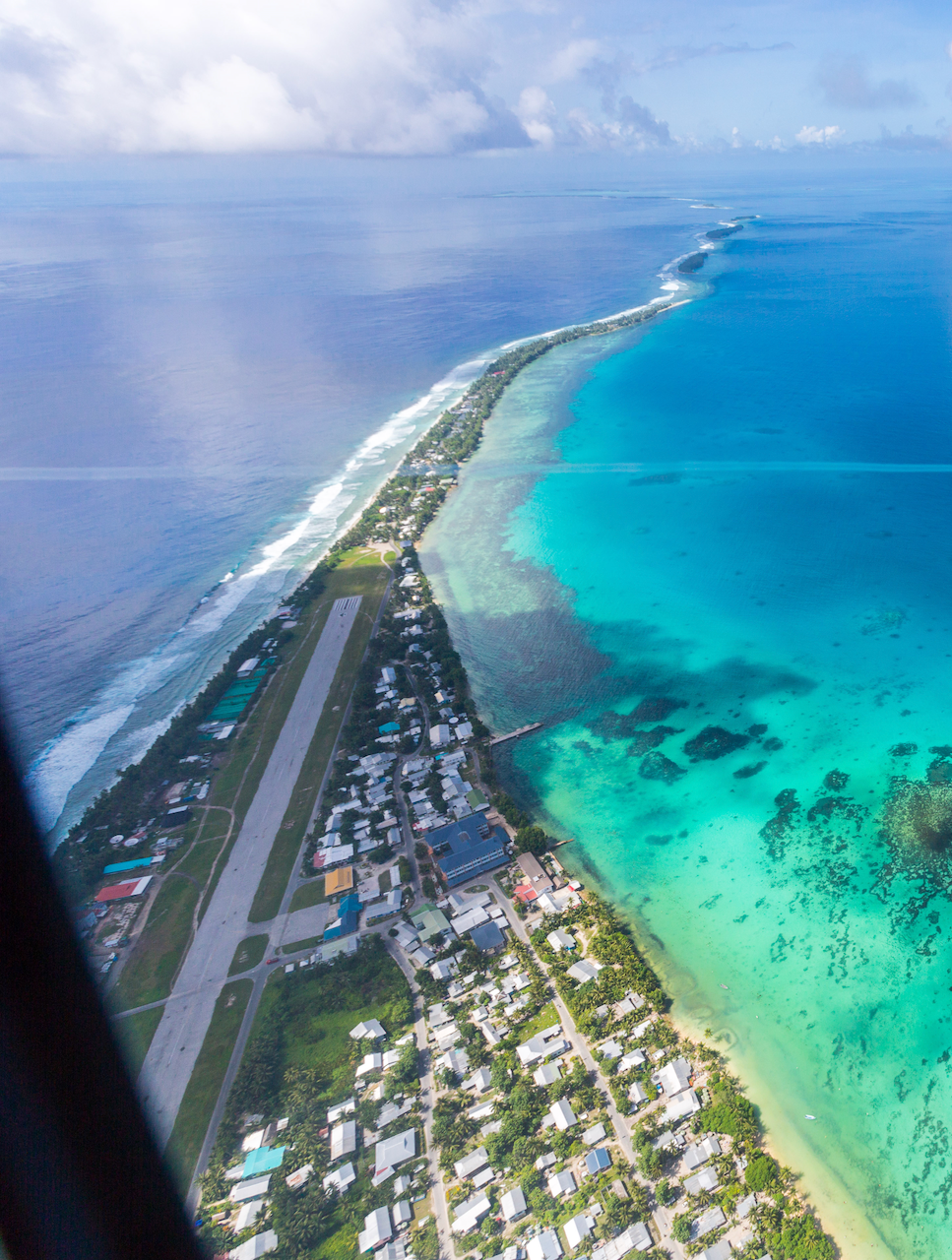
Taku Pakasoa is a Tuvaluan expression that conveys strength through unity and collective action. This was the rallying call of the Declaration adopted at the Pacific Pre-COP held in Fiji and Tuvalu from 5-8 October 2026. It reinforced the urgent need for unwavering commitment to climate action, united behind those on the frontlines.
A week later, President Surangel S. Whipps Jr. of Palau offered a powerful reminder to a packed room in Canberra. “How the world sees the Pacific shapes how it listens to us, how it partners with us, and ultimately, whether it recognises our worth.” He stressed that “confronting the climate crisis cannot only mean assembling the countries that have contributed most to the problem. It must also mean listening and learning from the countries who have spent generations protecting the solutions.” Referring to Australia in his address, he said, “What reaches our shores today, will also reach your shores …”.
As COP31 begins in Antalya on 9 November, and the latest round of climate diplomacy seeks to advance collective responses—including through a Presidency-led decision that aims to “send a signal, to follow the science, to keep 1.5 degrees within reach”—the messages from Pre-COP and Palau’s President deserve close attention. They also offer an important lens for policymakers, experts and advocates striving to shape effective approaches to climate-related mobility across negotiations and policy forums. Although climate-related mobility was not a standalone and central issue during Pre-COP, it was certainly integrated within wider conversations, as discussed further below.
In his address, President Whipps Jr. underscored the power of Pacific leadership and perspectives in addressing the climate crisis. He highlighted the oceans the Pacific safeguards, the critical biodiversity it protects, and the food it provides to the world. He pointed to the knowledge carried through Pacific cultures, the innovative solutions Pacific people have pioneered, and the influence Pacific nations have had on consequential global decisions. He spoke of building coalitions across continents to secure 1.5°C in the Paris Agreement, driving efforts that led to the International Court of Justice Advisory Opinion on the Obligations of States in Respect of Climate Change and sustained advocacy for the UN Declaration on Sea Level Rise.
These reflections on Pacific leadership, knowledge, innovation and efforts to charter solutions are equally salient for action on climate-related mobility. In 2023, the region endorsed the Pacific Regional Framework on Climate Mobility (PRFCM), the world’s first regional instrument with commitments specifically on the issue. It aims to guide governments, communities and other actors in “ensuring rights based and people-centred movement … through a proactive, inclusive and collaborative regional approach”, reflecting a commitment to strengthen resilience and be ‘future-ready’.
The Framework addresses human mobility in the context of climate change—staying in place, planned relocation, migration, displacement including evacuations and situations concerning stranded migrants. At its heart is a recognition of Pacific peoples’ desire to remain in their homes and communities, maintaining customary practices and traditions and their ancestral connections to land and sea. At the same time, the Framework, and a series of bilateral agreements adopted by Pacific countries in recent years, recognises that mobility can be a proactive strategy for adaptation and resilience, provided people’s dignity and rights are respected, and they have meaningful options and agency to shape their own futures.
Two years after the PRFCM was endorsed, the Pacific Regional Framework on Climate Mobility: Implementation Plan 2025-2030 was adopted to prioritise climate-related mobility commitments through a time-bound and action-orientated approach. A Technical Working Group on Human Mobility serves as the primary coordinating body supporting efforts under the Framework and the Implementation Plan. Five Priority Action Committees (PACs), each focused on a distinct dimension of climate-related mobility, have been established to advance this work.
The Pacific is also the first region to develop a dedicated instrument on planned relocation. Merewalesi Yee and Nacanieli Bolo explain that the Pacific Guidance on Internal Planned Relocation “connects international protection principles with regional priorities”, grounded in Pacific knowledge and community experience and shaped by “customary governance, Indigenous rights, histories of mobility and relationships to place.” The Guidelines are intended to serve as a foundational regional tool to support governments in developing national policies and operational procedures. It also provides a framework for peer-to-peer exchanges that support countries and communities to compare experience, share learning and adapt lessons.
Beyond the regional mechanisms, Pacific experiences of mobility in the context of climate change and national policy and practice offer insights for climate diplomacy and decision making. A recent typology identifies 12 distinct yet interlinked climate-related (im)mobility clusters across the region, demonstrating how policy approaches can be adapted to support agency. Further lessons can be drawn from national efforts and practice in Fiji, Tuvalu, Vanuatu, the Solomon Islands, the Republic of the Marshall Islands, Palau and elsewhere in the region on enabling people to remain in place, planning and undertaking relocation, addressing displacement and financing mobility in the context of climate change
These examples of Pacific leadership and action were evident when more than 4000 participants, including leaders and ministers from over 50 countries, gathered in Fiji and Tuvalu in early October for Pre-COP to inspire and inform discussions ahead of COP31. It was striking to observe how climate-related mobility—in particular, supporting people’s ability to remain in their homes and communities—intersected with the priorities that framed the Pre-COP agenda: keeping 1.5°C within reach; enhancing access to predictable climate finance, including for adaptation and loss and damage while limiting debt burdens; and elevating ocean-based climate action and sustainable ocean management. Underpinning these pillars was an overarching objective on amplifying Pacific leadership and voices and strengthening the region’s influence in COP processes and global climate diplomacy.
Throughout the Pacific Vale ni Vanua – Knowledge Exchange, decision makers, community representatives, experts and researchers spoke to different dimensions of mobility in the context of climate change, underscoring why human mobility considerations must inform negotiations and decisions on adaptation, loss and damage, climate finance, just transition, mitigation and other areas of climate action. Notably, the references to human mobility aligned with the pillars of the Pacific Regional Framework on Climate Mobility, reinforcing the importance of:
- Supporting people to remain safely in their homes and communities
- Planning and undertaking relocation, while recognising the profound losses it entails
- Strengthening preparedness and evacuations arrangements, including translating early warnings into early action that promotes recovery and solutions
- Enabling opportunities for migration with dignity
- Addressing the harms that arise when action is too late or when displacement becomes protracted and solutions programming is delayed
Several events, such as those on Accelerating Action on Climate Mobility: From Policy Commitments to Implementation, Amplifying (Women’s) Voices of Relocation, and Pacific Climate Mobility Literacy as Justice, among others, offered valuable takeaways. These include that:
- The Pacific has established a strong regional foundation for addressing climate-related mobility through a framework, implementation plan and cooperation mechanisms, including peer-to-peer exchanges and inclusive, open Talanoa dialogues.
- Implementing the Pacific agenda for climate-related mobility requires investment and support that recognises, respects and reinforces Pacific leadership, ownership and priorities, rather than bypassing them.
- Effective action addressing climate-related mobility challenges demands equitable, inclusive and accessible approaches to knowledge production and prioritisation, including valuing community and traditional knowledge, bridging diverse knowledge systems, and promoting collaborative learning and exchange.
- Women’s experience of planned relocation in the Pacific, and especially in Fiji, shows that people-centred, inclusive approaches that elevate women’s leadership and address the cultural, social, spiritual and livelihood dimensions of loss and damage have the potential to support more effective and sustainable outcomes.
- Proactive, rights-based and community-led approaches to climate-related mobility require advance planning, early financing and meaningful participation, ensuring that affected communities can inform exercises intended to generate foresight, preserve choices, define priorities and shape decisions from the outset, rather than have decisions made for them.
There was much more to learn from Pre-COP than these brief observations can convey. Since then, commentators have shared other perspectives on the meeting, such as what Pre-COP did and did not deliver. As senior leaders in the Pacific have argued, resilience and climate action are built through the daily work, leadership and agency of Pacific people, particularly women, and COP31 must deliver decisions and resources for them to continue charting their own futures.
Ultimately, the question is not simply who attended Pre-COP and what was discussed there, but who is listening and who is acting on the insights and learning from the Pacific, as discussions head to Antalya. As Pacific youth delegate, Miliana Iga put it, if need be, “listen in discomfort, listen to understand”.
In that sense, this is a call to pay attention: to engage meaningfully with what the Pacific is experiencing, what it has achieved, and the perspectives, priorities and innovations that the region continues to advance. These are not only relevant to Pacific countries; they offer lessons of global significance.
Advocates and experts working on climate-related mobility challenges have an important responsibility. Efforts to influence decision-making should not be driven solely or primarily by global conversations, pre-existing agendas or the mandates and priorities of institutions. They should also be informed by what is being experienced and implemented in the Pacific and elsewhere. Creating and strengthening connections between local, regional and global processes and dialogues can help shape the collective decisions that COP31 and the wider climate agenda deliver for those on the frontlines of climate change.
Sanjula Weerasinghe is a Senior Research and Policy Associate at the Evacuations Research Hub, Kaldor Centre for International Refugee Law, UNSW Sydney, and a member of the Pacific Technical Working Group on Human Mobility. After two decades working on displacement and forced migration in policy, practice and research roles across Asia, the United States and Switzerland, she is now based in Australia. Attending the Pacific Pre-COP, during her second visit to Fiji, provided an opportunity to listen to regional perspectives, learn from stakeholders, and reflect on how Pacific priorities and experiences can be more effectively connected to global policy discussions.
KEYWORDS: Climate change, mobility, COP 31, solutions, Pacific