Towards Dignified Climate Relocation: Community Perspectives from around the Globe

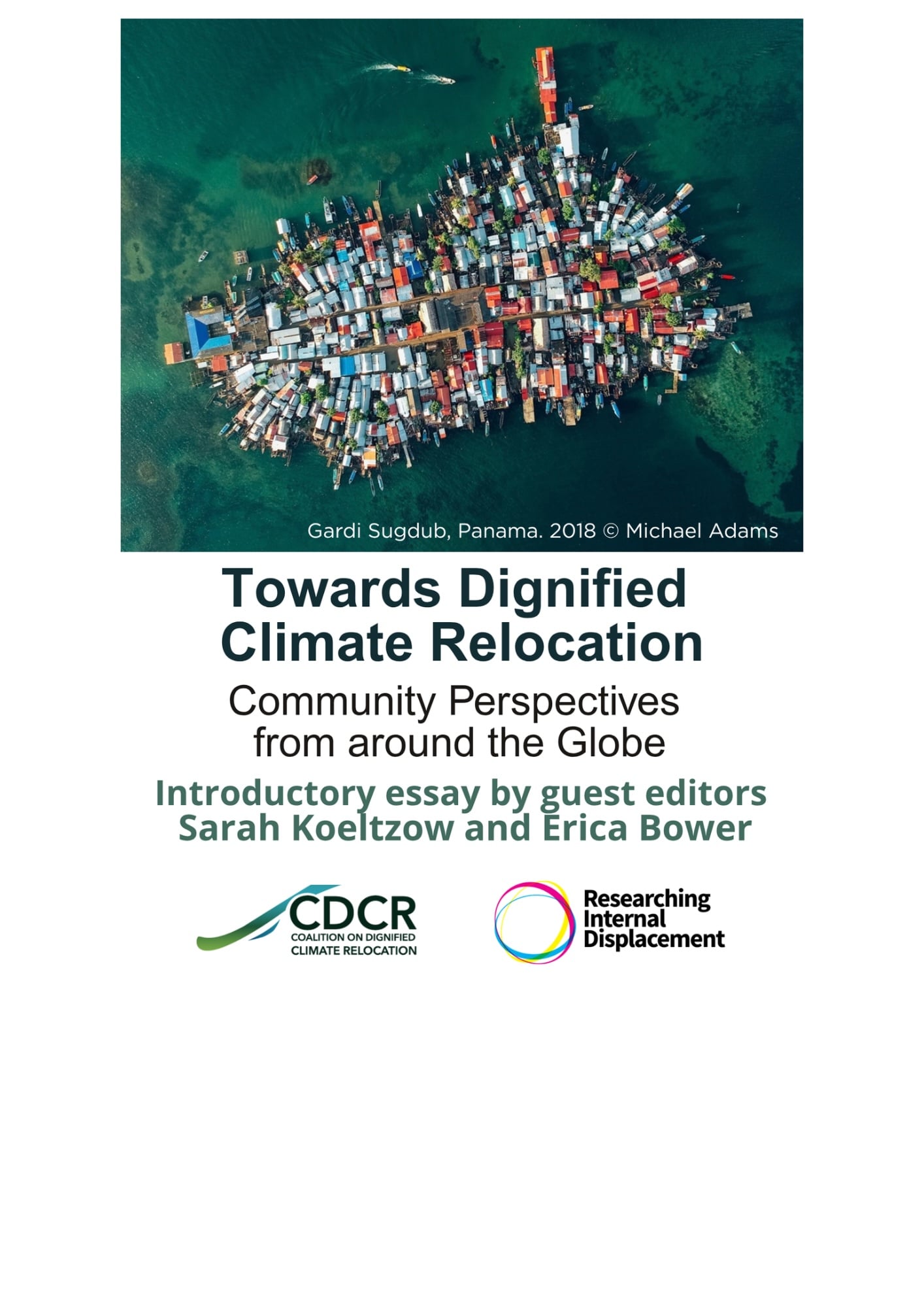
“Towards Dignified Climate Relocation: Community Perspectives from around the Globe” is a thematic miniseries guest-edited by Sarah Koeltzow and Erica Bower, co-facilitators of the Coalition on Dignified Climate Relocation (CDCR). It brings together relocating community leaders, researchers, advocates and practitioners from across the CDCR to examine diverse experiences of planned relocation and identify lessons about what rights-respecting, community-led relocation looks like in practice and how national policy should enable it. The series includes five ‘community perspective’ articles from the Americas, Asia and Africa, featuring the experiences and insights of coalition members from relocating communities and the organisations and researchers supporting them. An Introductory essay by the guest editors distils the experiences and lessons from the planned relocations spotlighted in the series. The essay and the other articles in the series demonstrate that planned relocation is much more than an infrastructure project; it is a multidimensional process of economic, social and cultural rebuilding.
Published on November 3, 2026
Sarah Koeltzow (ed.) and Erica Bower (ed.) | idrp, IDPs, Disaster, Climate, Solutions, International

DOWNLOAD THE FULL SERIES

KEYWORDS: Planned relocation, climate change, human rights, displacement, solutions

Articles in the miniseries

Essay: Sarah Koeltzow and Erica Bower. 2026. Climate Relocations Around the Globe: Community Perspectives on Common Challenges and Solutions.

El Bosque, Mexico: Cantú Bautista, Silvia, María Maldonado Antillón, Daniela Chapuz Osorio, and Juan Manuel Orozco Moreno. 2026. More than Just Housing: Human-rights-based Planned Relocation Lessons from El Bosque, Mexico.

Wayanad, India: Kunnummal, Rahmath Beevi, and Mohammed Firoz C. 2026. More Than a Roof: Promises, Practices, and the Realities of Project HARSHAM in Wayanad, India.

Gardi Sugdub, Panama: Brown Rivera, Elliot. 2026. From Our Home in Gardi Sugdub and Isberyala: A Community Perspective on Planned Relocation in Panama. Translated by Sarah Koeltzow.

Odisha, India: Panda, Ranjan, and Sankalpa Satapathy. 2026. Age and Justice Considerations: Insights from Planned Relocation in Odisha, India.

Lower Shire Valley, Malawi: Maloya, Gift Richard, Gertrude Masangwi, Beatrice Tholyna Mtika, Simeon Bondera Nyirenda, and Jocelyn Perry. 2026. Cash Assistance and Social Protection: Considerations for More Dignified Planned Relocation in Malawi.

The Coalition on Dignified Climate Relocation is a global community of practice founded in 2025 that brings together relocating community leaders, civil society advocates, researchers and members of international organisations committed to protecting the rights, autonomy and dignity of communities undergoing planned relocations after decades of exposure to sea level rise and other climate-related disasters.

CDCR works towards two goals: fostering knowledge and experience exchange across contexts, and advocating for countries to develop and implement rights-respecting policy frameworks on planned relocation that put communities at the center.

HOW TO CONTRIBUTE

Researching Internal Displacement publishes engaging and insightful short pieces of writing, artistic and research outputs, policy briefings and think pieces on internal displacement.

We welcome contributions from academics, practitioners, researchers, officials, artists, poets, writers, musicians, dancers, postgraduate students and people affected by internal displacement.

By Jasmin Lilian Diab | Nov 19, 2026
This thoughtful, moving article examines how internal displacement from South Lebanon unsettles men’s own understandings of masculine responsibility, particularly around provision, protection, authority, and care. Drawing on qualitative, trauma-informed interviews conducted between 2024 and 2026, it explores what happens when war removes the material and social conditions through which men have understood themselves as responsible fathers, husbands, providers, and protectors. Loss of land, livelihoods, income, and community position generated not only economic insecurity, but a disjuncture between what many participants believed was expected of them as men and what displacement actually allowed them to do. While some responded by holding more firmly to familiar forms of household authority, others began to broaden their understanding of responsibility through care, emotional presence, and shared household roles. The article argues that gender-responsive displacement policy must therefore engage men as gendered subjects in their own right, without treating masculine expectations as fixed or universal.
By Sanjula Weerasinghe | Nov 5, 2026
On the eve of COP 31, this thoughtful, reflective short article relays a simple but vital message from the recent Pacific Pre-COP meeting: the need to listen to Pacific voices. Policymakers, experts and advocates seeking to shape effective approaches to climate-related mobility can learn from Pacific leadership, knowledge and innovation. As observed at Pacific Pre-COP, Pacific approaches to climate-related mobility are deeply interwoven with the goals of keeping 1.5°C within reach, accessing predictable climate finance and elevating ocean-based climate action and sustainable ocean management. They also prioritise peoples’ ability to remain safely in their homes, acknowledge the need for well-supported alternatives, including rights-based relocation and migration with dignity, and recognise that such mobility pathways often entail profound loss, which must be addressed. Ultimately, learning from Pacific experiences benefits the entire world. As noted by Palau’s President, “What reaches our shores today, will also reach your shores…”. As COP 31 begins, negotiators and advocates should listen.
By Sarah Koeltzow and Erica Bower | Nov 2, 2026
This final article in the miniseries, Towards Dignified Climate Relocation: Community Perspectives from around the Globe, distils the experiences and lessons from planned relocations in Mexico, Panama, India and Malawi, as recounted in earlier articles of this series, co-produced by RID and the Coalition on Dignified Planned Relocation. The articles were authored by members of the Coalition, who accompanied or witnessed these relocations. This essay, by the series guest editors, highlights the importance of community leadership, the need for “all of community” consultation and engagement, the importance of cultural sensitivity and responding to experiences of loss and grief, and the need to monitor outcomes over time. Critically, planned relocation isn’t just an infrastructure project; it is a multidimensional process of economic, social and cultural rebuilding. Planned relocation is a unique form of climate mobility, and supporting the exchange of key insights from communities around the world is essential. That work is at the heart of the Coalition on Dignified Climate Relocation's mission.