
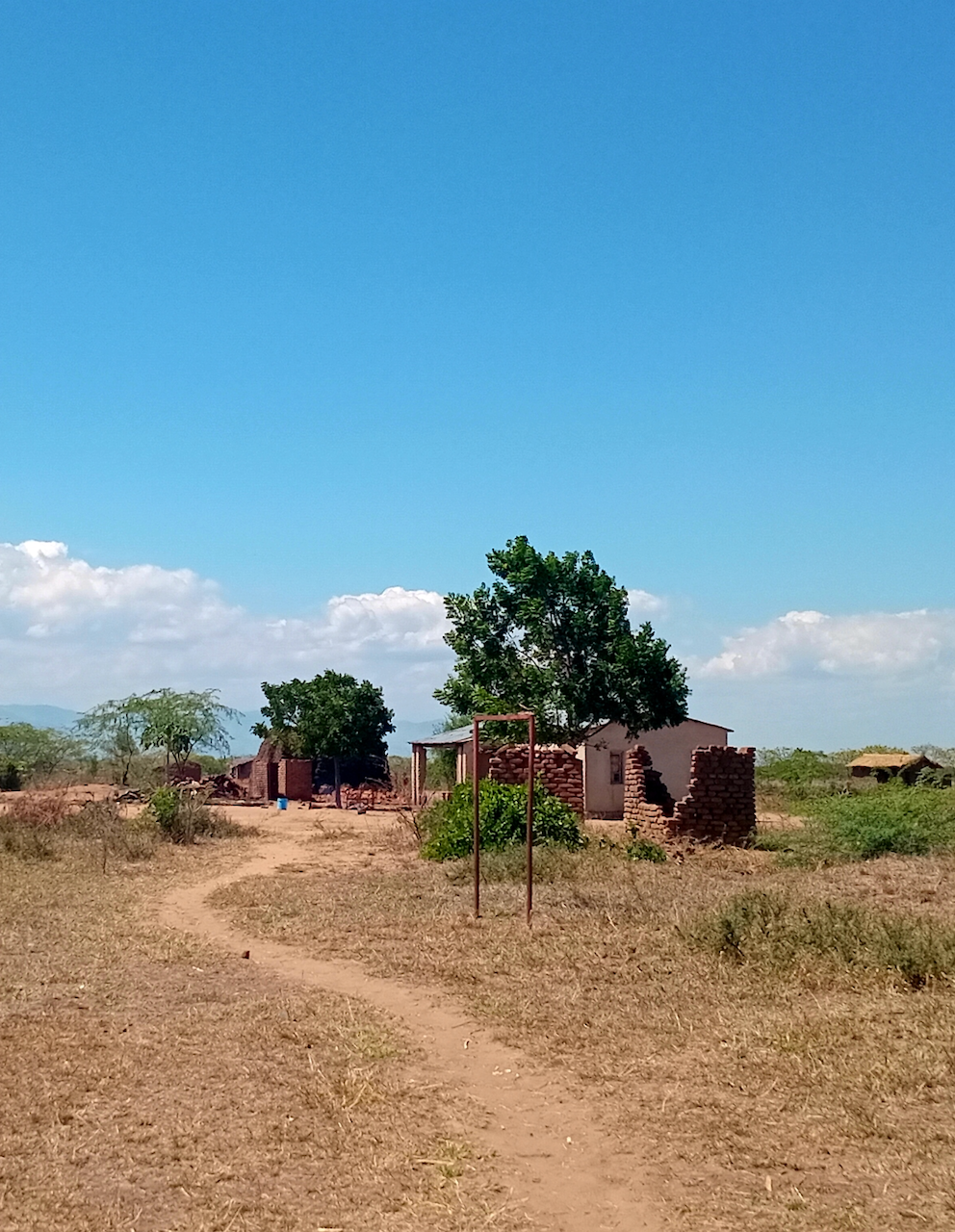
Malawi faces significant adverse impacts from climate change, disasters, and environmental degradation, internally displacing tens of thousands of Malawians each year. In response to this displacement, dozens of communities have undergone planned relocation to date. Yet these relocations remain largely ad-hoc, under-resourced, and disconnected from social protection systems, worsening some communities’ well-being after their relocation.
Most of Malawi's relocated communities live in the country’s southern Lower Shire Valley, through which the Shire and Ruo Rivers run. Malawian communities living along their banks have long depended on the rivers for their livelihoods and experienced the consequences of seasonal flooding. However, with less predictable weather, stronger storms, and increased riverine flooding due to climate change, many of these communities have now been permanently displaced. For dozens of communities, Cyclone Freddy served as an inflection point in March 2023. In its wake, many communities chose to relocate to new sites, with governmental and non-governmental support, including social protection and cash assistance.
This article is a collaboration between The Initiative for Climate Action and Development (ICAD), a Malawi-based civil society organisation led by Malawian researchers, and Refugees International, a US-based, nonprofit research and advocacy organisation. We conducted stakeholder meetings and semi-structured focus group discussions with 123 participants across three relocated communities, including community leaders, civil society organisations, and District Council members in Malawi’s two southernmost districts, Chikwawa and Nsanje. One community is in Matsukambiya, near Nchalo, Chikwawa District (hereafter referred to as the Chikwawa community). Two are in Nsanje District: one community relocated from Kalonga to Milton, in the Shire River’s West Bank, and another relocated from Kaimfa, Makhanga, to Makwalo, in the East Bank (hereafter referred to as the Milton and Makwalo communities, respectively).
Malawian team members with established relationships in Chikwawa and Nsanje led fieldwork alongside Refugees International. The authors are at the same time insider researchers with proximity to affected communities and district structures, and external analysts interpreting findings for national and international policy audiences. We engaged community participants as experts on their own relocation experiences, with informed consent and anonymisation.
We find that while communities demonstrated agency in deciding to relocate to new sites after living in IDP camps, they now face protracted challenges: loss of productive land and income, homes built with only two-to-three-year lifespans, and increased distances to schools and health clinics. Crucially, social protection systems failed to follow people during and after their displacement, deepening vulnerability for women, children, people with disabilities, and older adults. And whilst several of the communities have been touted as success stories for unrestricted cash transfers to support planned relocations, up to 75 percent of households reported being excluded from cash transfer lists due to their staggered movement from the IDP camps.
For planned relocations to be carried out with dignity, they must be rights-based and anticipatory—integrating continuity of cash assistance, expansion of services for both relocated and, where applicable, host communities, as well as district-level planning and budgeting. The experiences of these communities can provide lessons to improve Malawi's national and local capacity to support relocations and inform planned relocations in other countries.
Climate impacts in the Lower Shire Valley and Cyclone Freddy
Malawi’s Lower Shire Valley comprises the Shire River’s low-lying river basin—which has a history of extensive and long-duration floods—and the Shire’s many tributaries, which are dry for much of the year and then may change course and overflow their banks during the rainy season. These recurrent floods have displaced communities before, but in our interviews, residents shared that this seasonal flooding rarely reached much higher than knee-height and generally abated quickly. Tropical cyclones have been more frequent and brought greater rainfall in Malawi since the 2000s, worsened by the impacts of anthropogenic climate change.
Climate change has also brought less predictable growing seasons and severe drought. These have worsened livelihoods for communities which are largely dependent on subsistence farming—85 percent of Malawians engage in farming. Thus, relocating communities are starting with few to no assets, with limited economic opportunities when moving to less productive—though safer—land outside the floodplains.
In March 2023, Cyclone Freddy made landfall in Malawi. In just four days, its rainfall surpassed annual averages in some parts of the country, with flooding and attendant impacts damaging or destroying more than 260,000 homes and displacing at least 659,000 people.
In the communities we visited, Cyclone Freddy brought swift-moving flood waters as the river breached its banks in the middle of the night, waking people up and forcing immediate evacuation. Those with limited strength or mobility, including children and wheelchair users, could not easily move to higher ground and sometimes tied themselves onto taller trees until the floods receded so that they would not be washed away. Many were stuck for days without food until they could be rescued. Several children were killed, swept away by flood waters.
Due to the recurrent displacement in previous years, the District Councils in Chikwawa and Nsanje had raised the issue of planned relocation with some communities for the safety of the residents, to reduce the need for humanitarian assistance following near-annual flooding in the regions, and to limit the costs of repeatedly rehabilitating infrastructure and development projects. Most community members, though, shared that the prospect of relocation was not appealing, as they felt the flooding was not severe enough to affect them long-term—until the landfall of Cyclone Freddy.
Cyclone Freddy displaced communities across Malawi, forcing them to move to temporary shelters in nearby camps for internally displaced people (IDPs). The severity of the cyclone’s flooding washed away whole villages, including the original homes of those interviewed for this article. Months later, water remained high in many places, prompting communities to consider permanent relocation. Even today, water remains in some of these areas.
Planned relocation processes post-disaster
After living three-to-six months in the IDP camps, several communities decided to request to permanently relocate to new sites, as the water still had not receded from their original communities. In total, Malawi’s Department of Disaster Management Affairs (DoDMA) reported that 8,643 households relocated in Chikwawa and Nsanje following Cyclone Freddy.
These figures included the community in Chikwawa, which had left their original village following flooding in 2021 exacerbated by Tropical Storm Ana in 2022. They were severely affected by Cyclone Freddy while still living in an IDP camp in 2023, and moved to their current location in November 2023. Both Nsanje communities left their original villages following Cyclone Freddy in March 2023 and their permanent relocations began three-to-six months after the initial displacement, with most residents relocating by December 2023. In all cases, community members lived in temporary IDP camps before deciding on permanent relocation.
“The decision to relocate came from us,”was a common refrain shared by community members. When the District Councils had approached them before Cyclone Freddy due to recurrent seasonal flooding, residents had rejected the proposals to relocate to higher ground. However, as detailed above, Cyclone Freddy’s severe impacts were too consequential. When they realised that it would not be possible to return, communities first agreed among themselves to relocate and then village leaders approached the District Councils with their requests.
Upon receiving the requests, District Councils and the Ministry of Lands then supported finding—and in some cases, purchasing—land in a new location. Members of the District Councils consulted the Traditional Authority in the new locations, receiving their agreement. In at least one site, the village chief in the new area gave the land to the government for the new residents rather than selling it. Once the sites were agreed upon, traditional authorities from both the relocating community and the host community met, facilitated by the District Council and local extension officers, to finalise the land-sharing agreements and discuss resource sharing—including access to water, firewood, grazing land, and farmland—to try to prevent future conflict and ensure community cohesion. The District Councils supported development of the new sites, such as plot demarcation and basic infrastructure, with technical input from the Ministry of Lands.
Once land was secured, residents were responsible for organising the actual move from IDP camps to the new sites, which led to staggered movement over several months. Residents moved independently from the IDP camps to the new villages; most of them walked, carrying their remaining items with them. They recounted that the journey took anywhere from eight-to-twelve hours, traveling up to 30 kilometres from the IDP camps to the new locations. In most cases, residents did not have houses in their new locations upon arrival and were responsible for construction themselves, continuing to use the tarps and other materials from the IDP camps as shelter in the new locations while they were building their more permanent housing.
Once permanent relocation was decided, the government, UN agencies, as well as national and international NGOs provided cash assistance in varying amounts to communities to help them settle in and construct their new homes. GiveDirectly provided large cash transfers to residents of several Nsanje communities, including two referred to in this article. To determine the recipients of these transfers, the District Council provided information to GiveDirectly about which villages had relocated, while village chiefs compiled a list of residents who had moved and provided it to organisations that were providing services or cash transfers in the new sites. However, this process occurred before all of the residents had moved from the IDP camps, leaving significant gaps in the list of recipients—up to 75 percent in some communities.
Challenges for relocated communities in their new homes and lessons for the future
In our research, we found that relocated communities face challenges in establishing sustainable sources of income due to limited employment opportunities and productive land in the new sites. Households depend on irregular, unreliable and low-income activities, which impedes their ability to recover economically and increases vulnerability. Irregular and reduced income also affects every other aspect of residents’ lives, from securing housing and regular food supply to affording healthcare, clothing, and school fees for their children.
We also found that the failure to invest in essential services prior to the relocations created new challenges, replacing the risk from flooding in the original sites with service inaccessibility in the new sites. This risk transfer affects groups differently. In some cases, relocation has increased demand for existing services in host communities, while in others, communities have been moved to areas geographically distant from services, creating additional accessibility barriers.
Many residents shared that they do not have the capacity to construct adequate housing, something we witnessed firsthand walking through the villages. Some houses in the new sites were still nothing more than tarps draped over poles or constructed with straw and mud bricks—both easily destroyed during storms—while more sturdy houses were built fully out of burnt bricks or iron sheeting. In Chikwawa, a nonprofit organisation and a nearby private company had supported construction of some of the new houses for residents. However, these homes were built with low-quality materials and intended only to last two-to-three years, after which community members planned to build their own permanent homes. Many of the homes’ roof supports had been destroyed by termites, which often resulted in the roofs being blown off or incurring other damage during storms.
In Nsanje, some residents received cash assistance to support their relocation, and many used this to begin constructing their homes but shared that they did not have sufficient resources to finish building them. Residents and representatives of international organisations operating in Malawi shared that this was partly due to inflation of prices in the local market for bricks and roofing materials and transport of construction materials, caused in part by the large injection of cash into the local economy from the direct cash transfers. This local inflationary pressure happened alongside a period of high inflation for Malawi’s economy generally, with a devaluation of the Malawian kwacha in November 2023, the same time that many of the communities relocated. Consequently, the supportive impact of cash assistance was limited.
For actors supporting relocations, ensuring adequate housing ahead of a move—whether through government assistance or construction, private sector support, cash assistance, or other means—is critical, as safety is paramount for the mental and physical health of those who have lived through disasters that already destroyed their homes. A lack of investment in homes at the start can lead to higher costs for residents and those supporting the relocation over time, as evidenced by the damage to the low-quality or only partially completed housing that we observed in these communities. This can be a particular concern when relocation occurs after an initial disaster displacement, whereby communities are living in temporary housing, such as IDP camps.
“Before, we lived in the land of milk and honey. Now, we have nothing.” Residents in all three relocated communities shared that they had minimal access to livelihood opportunities in their new locations. “We used to grow crops in our gardens. Now, we don’t have gardens, we lost our livelihoods, our livestock.”
As the former village sites were located along a river valley and frequently flooded, the soil was fertile and fishing was abundant. In contrast, the relocated villages were all located on higher ground, providing safety for communities but on land that residents described as “a desert.”
The relocated villages we visited were anywhere from 10 to 30 kilometres away from communities’ previous locations. Yet some community members continue to return to their previous villages on a daily or weekly basis to continue farming and collecting firewood. For those in Makwalo, that includes a dangerous river crossing: residents shared that they must pay to take two boats each way across the river to access their previous village. The swift current often causes boats to capsize, and crocodiles haunt the river. Yet the new location provides few options for feeding their families otherwise.
Relocated residents also shared that though they retained land rights to their former communities, they were concerned others might encroach on their land and visited frequently to protect against unauthorised use. One nongovernmental organisation shared that large corporations are also attempting to induce relocation among communities along the fertile riverbanks to use the land for large-scale, industrial agriculture.
Where agriculture is not sustainable in these new areas, residents requested government support to learn alternate trades and start-up funds to invest in new small businesses. To support relocated communities’ livelihoods, relocation planning should also be integrated into national and district-level development planning and budgets.
Relocated communities must also receive assurance of their land tenure rights upon moving, particularly if they plan to continue accessing the land for farming and other livelihood activities. Confirmed legal assurance of these rights, while difficult in many contexts given communal land ownership or other barriers, may be an essential step to convincing wary communities of their continued land access even after moving.
Across all three relocated communities, residents shared that they are finding it more difficult to access essential services, including education and healthcare. The planned relocations of Nsanje communities were undertaken in areas where host communities were already living. The increased demand on existing local health centres, schools, and water points without the provision of additional resources to support the relocated families has led to overcrowding and longer wait times, affecting both hosts and relocated residents.
On education, residents expressed concern as to how long it takes their children to travel to school. For example, children in Milton now have to walk six kilometres to reach the upper junior primary school and ten kilometres to reach the closest secondary school. Residents shared that children are susceptible to road traffic accidents, violence, harassment, exploitation, and gender-based violence while traveling so far. During the rainy season, small tributaries flood, and children are unable to cross them or risk being swept away by the fast-moving water. Children with disabilities are also less likely to continue attending school, as the schools are not accessible for them.
Community members also emphasized their difficulties in accessing health services after relocation. In Chikwawa, three years after the communities’ relocation, the health centre was still under construction and not yet open. Residents continue traveling to the private clinic in Nchalo that they had used before relocating, now even further away. In Nsanje, residents travel over 15 kilometres to the nearest health centre. Likewise, they must walk long distances to reach boreholes to fetch water.
Relations with host communities
Residents of relocated communities shared that they had generally good relationships with the residents of the host communities in the two locations where there was a large existing population; the Chikwawa community had moved to a site without previous residents.
In one case, tensions had initially arisen because the District Councils consulted with traditional authorities to secure the land access but had not consulted with all residents of the host community nor compensated them for the land. Village chiefs and traditional authorities mediated whenever challenges or tensions arose between community members over land or other resource disputes, such as access to water.
In the villages where relocated residents received large amounts of direct cash assistance, host community members often resented that they were not included in the cash payments as well. As prices rose, the host communities’ residents found it more difficult to buy essential goods.
However, in Milton, host community members highlighted that they felt that the relocations had brought positive change as well. Due to the relocation, new boreholes had been constructed, improving water access for everyone, and the new community was bringing in businesses. For example, residents shared that they were pleased that an out-of-business maize mill had been restored because of increased usage from the new residents.
These challenges underscore why relocation planners should consider minimising distance to essential services, such as health clinics and schools in selecting locations for relocating communities, and the need for investment in these services in newly relocated communities. By providing or expanding services that support both host communities and new residents equally, investments can ease tensions that might otherwise arise due to the relocation and its pressure on limited resources. For planned relocations to be sustainable and prevent resource-related tensions, district plans must expand services to support both communities.
When relocations happen in the aftermath of disasters, there is often pressure for communities to move quickly away from unsustainable and inhospitable temporary conditions, such as IDP camps. To ensure that this pressure does not impede the availability of sufficient communal infrastructure, governments should pre-identify sites for future relocations and invest in their infrastructure even before a relocation. In choosing locations for sites, planners must consider whether a region can support additional residents without straining its natural resources or local infrastructure.
The intersection of planned relocations, social protection, and the role of cash
Planned relocations intersect directly with social protection systems, as relocated households often lose access to the safety nets that previously supported them. In Chikwawa and Nsanje, relocated community members reported disruptions to Social Cash Transfer payments, school feeding programs, and access to health services during and after relocation, with new settlement sites frequently falling outside existing program catchment areas. For women, children, people with disabilities, and older adults, these gaps deepen existing vulnerabilities, particularly when relocation occurs without prior mapping of beneficiaries or coordination with the Ministry of Gender, Children, Disability and Social Welfare. Governments must ensure that social cash transfers, a form of social security payment to the most vulnerable within communities, are able to move with recipients, to ensure continuity of support. For relocations that follow disasters, emergency cash transfers and other forms of humanitarian support should be coordinated with longer-term livelihood support and development planning, at both national and district levels.
Cash assistance can play a critical role in supporting dignity and choice during planned relocations, and to address many of the challenges identified above. In Chikwawa and Nsanje, households that received humanitarian cash or Social Cash Transfer payments were better able to meet immediate needs for food, shelter materials, and transport to new sites.
Several organisations distributed smaller amounts of cash in the immediate aftermath of Cyclone Freddy, which were often used for immediate needs such as food, cooking utensils, clothing, and soap. Once residents began relocating, larger cash transfers allowed families to build new homes, invest in livestock or other business assets, and pay for ongoing needs such as healthcare and school costs.
Yet the delivery of cash assistance in these relocations was inconsistent and fragmented and often did not meet the full needs of relocated communities. Many relocated families experienced delays or exclusion from beneficiary lists. The cash programs in these communities used a list of residents developed by village chiefs based on the first set of community members to relocate. However, many residents moved in subsequent waves, and so did not receive any payments. In our focus group discussions, this was up to 75 percent of respondents. GiveDirectly acknowledged this as ongoing “fluidity in the community,” meaning not all of the residents had relocated from IDP camps yet when cash transfers were delivered.
Many of the cash transfer programs provided unconditional cash transfers that residents could use freely. Interviewees widely praised this model and the timing of the transfers. However, the cash transfers did cause an increase in prices for basic goods and services—such as the purchase and delivery of bricks to build homes. And when residents tried to withdraw funds from their mobile money accounts at local shops, they were often coerced into making non-essential purchases, as the merchants knew that they had received a cash transfer.
For relocation to be dignified, cash must be predictable, portable, and coordinated across humanitarian actors and government systems. This means pre-registering at-risk households, ensuring transfers follow people to new districts, and linking short-term emergency cash with longer-term livelihood and social protection support so families can rebuild rather than just cope. Mitigating tensions between those who received the funds and those who did not, particularly host communities, is important to foster social cohesion and positive relationships. And cash assistance is far from a silver bullet; recipients could not cover all of the costs of their relocation including constructing new homes, even those who received quite large payments. Livelihood development is essential to long-term stability and well-being, as is the provision of infrastructure and essential services, including roads, schools, healthcare facilities, and access to clean water.
Recommendations for planned relocations in Malawi and other contexts
“But here we can stay forever, as flooding can’t reach us here.” Overall, communities shared with us that they would make the choice to relocate again, as their safety and that of their children outweighed any other challenges they were facing. But for planned relocations to be dignified, safe, and sustainable, governments must move from ad-hoc responses to proactive, rights-based planning. To do so, the government of Malawi and relevant District Councils must invest in infrastructure, the development of livelihood opportunities, and basic services for relocated communities to ensure they can thrive in their new environments.
To avoid some of the challenges these communities faced, local and national governments should plan for relocations ahead of disasters so that decisions and preparation of infrastructure are not rushed and communities have access to all necessary services upon their arrival. These efforts should be part of both national and local development planning processes rather than siloed within disaster management agencies. Concurrently, social welfare programs must follow community members without gaps in delivery, to ensure the most vulnerable among those relocating are not left worse off than before the relocation.
Following international best practices for social cohesion in refugee and IDP settlements, governments should expand infrastructure and social services for both relocated and host populations to minimise competition over scarce resources. When resources are provided solely to relocating residents, the reasons for this (such as their need to construct new houses) should be made clear to all recipients and non-recipients of the support. When cash assistance is provided, organisations should try to mitigate inflationary pressures. For staggered relocations, organisations and government officials must endeavour to include all residents, not just those who move first. Many relocated residents also requested ongoing training and livelihood development programs, such as small business loans, such that they could build their own enterprises in their new locations.
We also recommend strengthening national policies and legal frameworks, such as the draft National Relocation Guidelines in Malawi, ensuring that they clearly define roles, standards for safety, land allocation, and protection of vulnerable groups. National governments must invest in national and local data systems, to prepare for future climate and environmental risks. Site selection should also involve extensive consultation with all relocating and host community members, to ensure it reflects all community needs and priorities. Governments must also invest in processes at the community level to mediate land-sharing agreements and access to resources between host and relocated communities.
Relocations can support an improvement in the quality of life for all residents, if accompanied by planning, timely construction, sufficient resources, and responsible site selection. While these lessons are informed by the experiences of three communities in Malawi, many may apply to support people considering planned relocation around the world.
Gift Richard Maloya (Research Lead), Gertrude Masangwi, Beatrice Tholyna Mtika, Simeon Bondera Nyirenda and Clara Store Chitani are researchers at The Initiative for Climate Action and Development (ICAD), a Malawian think tank and civil society organisation working on the intersection of climate, energy, water, agriculture, health, migration and SDGs. The ICAD Climate Mobility Program undertakes evidence-based research and policy analysis on human mobility, planned relocation, disaster risk reduction and adaptation strategies. ICAD conducted field research documenting community experiences of planned relocation in Nsanje and Chikwawa to inform dignified, rights-based, durable solutions.
Jocelyn Perry is the senior advocate and program manager of the Climate Displacement Program at Refugees International, a US-based nonprofit research and advocacy organisation. She began working in Malawi in 2017 and conducted the research in Chikwawa and Nsanje alongside the ICAD team. Refugees International advocates for lifesaving assistance, human rights, and protection for displaced people and promotes solutions to displacement crises. This research is part of the “Let Them Work” initiative, a joint project between Refugees International and the Center for Global Development, funded by the IKEA Foundation and the Conrad N. Hilton Foundation.
Sarah Koeltzow and Erica Bower, co-facilitators of the Coalition on Dignified Climate Relocation, are guest editors of this miniseries: Towards Dignified Climate Relocation: Community Perspectives from around the Globe. The series brings together the experiences of relocating community leaders, researchers, advocates and practitioners from across the Coalition to examine diverse case studies and identify lessons about what rights-respecting, community-led relocation looks like in practice and how national policy should enable it.
The Coalition on Dignified Climate Relocation was formed in 2025 to work towards two goals: foster knowledge and experience exchange across contexts, and advocate for countries to develop and implement rights-respecting policy frameworks on planned relocation that put communities at the center.
KEYWORDS: Planned relocation, climate change, human rights, displacement, Malawi
Selected bibliography
The Brookings Institution, Georgetown University Institute for the Study of International Migration, and Office of the United Nations High Commissioner for Refugees. 2015. “Guidance on Protecting People from Disasters and Environmental Change through Planned Relocation.” https://www.brookings.edu/articles/guidance-on-protecting-people-from-disasters-and-environmental-change-through-planned-relocation/.
Government of Malawi. 2016. “Customary Land Act, 2016.” https://malawilii.org/akn/mw/act/2016/19/eng@2016-09-02.
Government of Malawi. 2023. “Disaster Risk Management Bill and National Relocation Guidelines – Draft.” https://www.srgdi.org/uploads/7/1/2/1/7121976/bill_no._9_of_2023_-_disaster_risk_management.pdf.
Government of Malawi. 2023. “Malawi 2023 Tropical Cyclone Freddy Post-Disaster Needs Assessment.” https://reliefweb.int/report/malawi/malawi-2023-tropical-cyclone-freddy-post-disaster-needs-assessment-april-2023.
Government of Malawi. 2016. “National Climate Change Management Policy.” https://faolex.fao.org/docs/pdf/mlw201716.pdf.
International Organization for Migration. 2022. “Planned Relocation for Communities in the Context of Environmental Change and Climate Change: A training manual for provincial and local authorities.” https://publications.iom.int/system/files/pdf/training_manual_on_planned_relocation_eng.pdf.
Platform on Disaster Displacement. 2022. “Words Into Action: Disaster Displacement – How to Reduce Risk, Address Impacts and Strengthen Resilience.” https://disasterdisplacement.org/resource/wiadd/