
Introducing Internal Displacement in the Global North
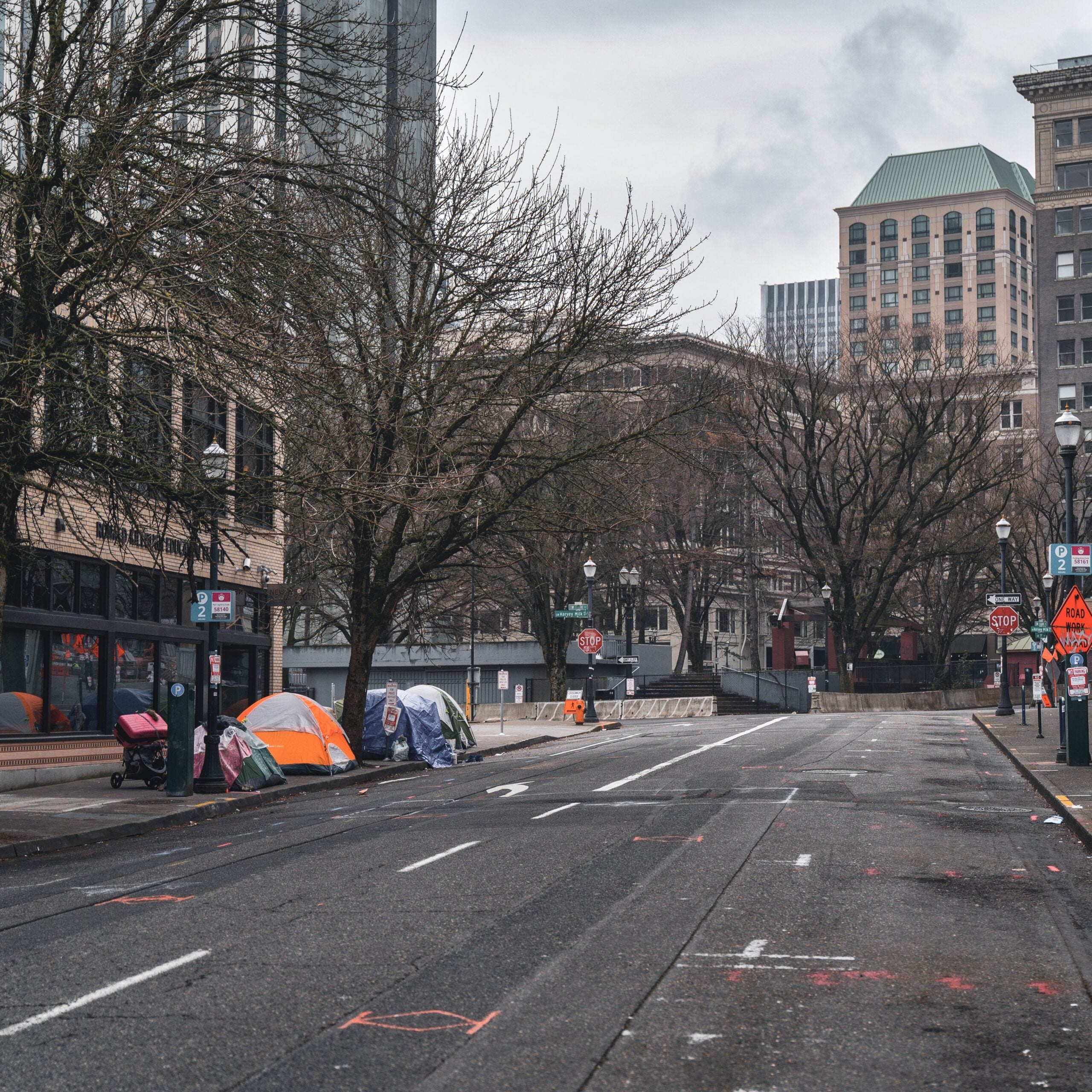
What do Paris Hilton, Anthony Hopkins, and Mel Gibson have in common with many of the Sámi peoples in Nordic countries; Toshima islanders in Japan; and the residents of Rathmines Women’s Refuge in Dublin? They have all been internally displaced in the Global North – forced to leave their homes for reasons such as conflict, disaster, and/or human rights violations, but remaining within their states.[1] Scholars and practitioners on this topic have traditionally focused on the Global South, as most internal displacement occurs there as a result of conflict and disaster. But the concept of Internally Displaced Person (IDP) is not limited to these contexts.
For example:
- The US experienced over 11 million internal displacements in 2024, amounting to almost 25% of global disaster-related internal displacement.
- Indigenous communities have been evicted from their lands for centuries in Finland, USA, Canada and elsewhere (Madokoro 2026).
- Tens of thousands of women and children have fled their homes in following gender-based violence in the search for protection elsewhere in the UK (Bowstead 2022).
- An estimated 1,000 people from low-income households were forcibly evicted from their homes as a result of development-initiatives relating to the 2012 London Olympics (Wherry 2015).
- Internal border closures during the Covid-19 pandemic left thousands of people stranded in Australia, some of which could not return to their homes for months (Ogg and Simić 2022).
Although there is some published scholarship on internal displacement in the Global North (e.g. Buxton 2024, Mohamed 2020, Koyama & Dunne 2011, Kromm & Sturgis 2008, Ober 2026, Ergun et al 2008, Charis et al 2020, Mortimer et al 2022, McAdam 2022, Mosneaga 2020, as well as the above cited scholarship), displacement in Global North states is usually not perceived as internal displacement.This gap in scholarship reinforces the idea that IDPs are exclusively a problem for poorer states, ignores Global North states’ obligations towards IDPs, and undermines the purported international nature of the IDP concept and of international law itself.
This short paper presents a question that I am grappling with as I embark on a new research project: what insights can be gained for scholars of internal displacement by turning our attention to the Global North? In my view, studying the Global North can potentially provide a new understandings of who is an IDP, and how to tackle internal displacement.
A better understanding who is an Internally Displaced Person?
The Guiding Principles on Internal Displacement (1998), which describe how international human rights law, humanitarian law, and international criminal law apply to displaced persons, defines IDPs as persons who have been forced to:
leave their homes or places of habitual residence, in particular as a result of or in order to avoid the effects of armed conflict, situations of generalised violence, violations of human rights or natural or human-made disasters, and who have not crossed an internationally recognised state border.
This description is overwhelmingly associated with people in the Global South fleeing conflict and disaster, but is not limited to these contexts. The IDP description makes no reference to geographic location, and the term ‘in particular’ makes it clear that list of circumstances in which people flee is not exhaustive. Rather, as noted by Draper, it is the criteria of involuntary movement and non-alienage that makes someone an IDP (Draper 2024). Someone could therefore be an IDP when they need to leave their homes for other reasons such as domestic violence, eviction, development projects (e.g. in the context of new roads, railway lines, airport runways), rejection by their families on account of their gender and/or sexual orientation and/or lack of conformity to the family’s religion. Such drivers of displacement have not received much attention in scholarship, although scholars have touched upon internal displacement’s relationship to: development projects (Wherry 2015, Kabra and Budhaditya Das 2026); other forms of violence outside of conflict (Knox 2026, Cantor and Miron (eds)(2025)); gender and sexuality (Zea et al 2013; Igonya et al 2025); forced eviction (Delaney 2004); sexual and gender-based violence (Bowstead 2015); gentrification (Elliott-Cooper et al 2020); expulsion from family groups experienced by LGBT youth (Ritholtz 2022); evacuations (McAdam 2022); and homelessness (Preece et al 2020). Relatively little is therefore known about whether someone who flees their home outside of the conflict/disaster scenario might be an IDP.These drivers of displacement exist all over the world, but in the Global North these drivers can often be studied in isolation from conflict-driven displacement. Studying IDPs in the Global North can thus help us better understand less visible contexts in which people flee their homes, and by extension, provide a deeper understanding of who is an IDP.
In addition, studying the Global North can help us understand the specific experiences of the displaced ‘elite’– people who are relatively well off but nonetheless may have needs that are different from (or the same as) other IDPs. Studying the Global North helps us understand whether a broader understanding of the IDP concept – to include, for example, Hollywood millionaires like Mel Gibson who were temporarily displaced by the California wildfires in 2024 – risks overinclusion beyond what its drafters intended, potentially exhausting relief programmes. It can also help us understand what makes IDP a helpful analytical category to begin with. Are or should there be other – implicit or explicit – standards involved in conceptualising IDPs? Does the hardship of displacement itself – regardless of its duration or of the resources of the person displaced – justify IDPs as a specific category of concern? Should there be a specific threshold of harm involved in determining who is an IDP, such as being displaced for a minimum time, or experiencing violations of specific human rights? Studying the ‘hard case’ of wealthy IDPs might help us have a better understanding of what justifies the study of IDPs in the first place.
Moreover, a better understanding of the IDP concept – informed by displacement in the Global North – might assist with more accurate data collection. There are concerns that our predominant understanding of what internal displacement is and where it occurs results in a gross underestimation of IDP figures (Buxton 2024). The current statistics and the way in which internal displacement is quantified gives rise to an implicit geography – displacement is a Global South issue in particular because reports are focused on particular drivers of displacement (Wherry 2015). Indeed, Ogg and Simić have argued that UNHCR’s 2020 statistics on internal displacement indicate that there are no IDPs in the Global North (Ogg and Simić 2022). Perhaps paying more attention to internal displacement in the Global North can help correct this misassumption, providing a more accurate picture of what displacement is and where it occurs.
A better understanding how to tackle internal displacement?
Studying the Global North may help us understand how the Guiding Principles on Internal Displacement might apply relatively free from challenges that exist in the Global South. Global North states tend to have less armed conflict, political instability, resource constraints, and barriers to accessing courts. Existing frameworks were not drafted with states with strong institutions in mind, and there are fewer (reported) IDPs in the Global North than in the Global South (IDMC 2025). In principle, therefore, the Global North should be better equipped to deal with internal displacement, and studying the Global North may reveal new understandings about why internal displacement occurs, how to protect IDPs, and how to resolve internal displacement.
Moreover, studying the Global North may help us understand in what situations the IDP label is not used. Governments have labelled IDPs in different ways such as climate migrants, climate refugees, evacuees, and homeless people (Alea 2020). In the context of Hurricane Katrina, the US ‘government officials settled on every possible description of those uprooted – except IDPs’ (Cohen 2008). Studying the Global North helps us understand the utility of the IDP label, when and why it is and is not used, and the consequences for its use and non-use.
In addition, applying the lens of internal displacement to the Global North means that people will be more likely to be labelled as IDPs where appropriate, even in the face of government reluctance to do so. It is important to recognise internal displacement when we see it. How we describe people and their situations can have a significant impact on their self-perception, public narratives, and the protections they receive (Zetter 1991). Recognising people as IDPs means the public awareness is drawn to their plight and the government may take their situation more seriously. They also change from passive recipients of humanitarian assistance to rights holders with legal entitlements (McAdam 2025), widening the focus beyond individualised welfare responses to putting state responsibility into the spotlight (Bowstead 2023).
Most importantly, the Guiding Principles become applicable, which offers a framework upon which IDPs can articulate their rights. Although the Guiding Principles themselves are not binding, the treaties upon which they are based are. Thus, the Guiding Principles tell us how existing rights are interpreted and applied according to displacement-related needs. They could be invoked by stakeholders when working with IDPs and/or holding governments to account, and form guidance for governments when adopting laws or policies. The Guiding Principles have been used in this regard countless times in the Global South (UNHCR 2025), but their potential application in the Global North has received scant analysis, despite their potential to provide protection to IDPs. For example, in the context of Hurricane Katerina, the Guiding Principles could have been invoked to challenge US law and policy in several ways, such as (Kromm & Sturgis 2008, Ober 2026):
- The applicable US law (Robert T. Stafford Disaster Relief and Emergency Assistance Act 1988) makes federal states responsible for responding in a disaster. This is contrary to Principles 3 and 5 of the Guiding Principles, which provides that the state is primarily responsible for IDPs. Applying the Guiding Principles could mean clearer federal accountability for outcomes, not just the administration of programmes, across the full life-cycle of displacement.
- In the aftermath of the hurricane, the US rejected offers of humanitarian assistance, even though it was unable to deal with the crises. Such refusals are likely contrary to Principles 3, 25, and 28 of the Guiding Principles.
- The Stafford Act provided that the provision of housing, education and healthcare was at the discretion of the federal government. This goes against numerous Guiding Principles (18,19, 23) which set out explicit rights in this respect.
The Guiding Principles could also have informed the Queensland government’s approach to internal border closures in Australia during Covid-19, where the government used public health objectives to forsake freedom of movement. Applying the Guiding Principles may have resulted in a more nuanced approach, as the Guiding Principles require that protections must be put in place to reduce the incidence, arbitrariness, and length of displacement, and special protections and processes should be put in place for children, indigenous persons, and those with significant healthcare needs (Ogg and Simić 2022). McAdam has also examined how the Guiding Principles might inform the Australian government’s response to evacuations in the context of wildfires (2022), and Mosneaga has presented key lessons that can be learned for IDP scholars following the 2011 Fukushima nuclear disaster in Japan (2020). Further studies like these on Global North states could provide additional valuable insights on how to understand, address, and resolve displacement.
Conclusion
Studying internal displacement from the perspective of the Global North responds to Wherry’s call for scholars to ‘invert the gaze’ – ‘to not only look at forced migration as it happens “out there” in the Global South but also within the centres of power from which they often write’ (Wherry 2015). Studying the Global North also responds to calls that academics must not simply allow international organisations and states to shape forced migration studies, but instead to be constantly 'self-conscious about the intimate relationship between knowledge and power’ (Chimni 2009, Wherry 2015). Perhaps most importantly, studying internal displacement in Global North states challenges the narrative of their governments who frame forced migration as occurring elsewhere, or as waves of people from the Global South flooding into the Global North (Mosneaga 2020). Studying the Global North can thus potentially provide us with a better understanding of what internal displacement is, where it happens, and how to address it.
Dr Bríd Ní Ghráinne is an Associate Professor at Maynooth University’s School of Law and Criminology, Senior Research Affiliate of the Refugee Law Initiative, Co-Convenor of the Working Group on Internal Displacement Law and Policy, and a member of the Editorial Board of the International Journal of Refugee Law. Details of her research on internal displacement and refugee law are available here.
KEYWORDS: Internal displacement, IDPs, Global North, research
References
Alea, M. (2020) ‘Climate Change-induced Internal Displacement in Canada: An Analysis,’ BCCIC Climate Change.
Bowstead, J. (2020) ‘IDPs in the Global North: Women’s Journeys to Escape Domestic Violence’, Researching Internal Displacement.
Bowstead, J.C. (2015) ‘Forced Migration in the United Kingdom: Women’s Journeys to Escape Domestic Violence,’ Transactions of the Institute of British Geographers, 40(3), pp. 307-320.
Buxton, R. (2024) ‘Internal Displacement in the Global North,’ in Draper, J. and Owen, D. (eds) The Political Philosophy of Internal Displacement. Oxford: Oxford University Press, pp. 160-176.
Cantor, D. and Miron, S (2025) (eds). ‘Internal Displacement in the Context of Organised Criminal Violence’, Researching Internal Displacement Thematic Collection and Series.
Charis, P. et al (2019), ‘Internally Displaced Persons and the Cyprus Peace Process’, International Political Science Review, 41(1), pp. 138-154.
Chimni, B.S. (2009), ‘The Birth of a “Discipline”: From Refugee to Forced Migration Studies’, Journal of Refugee Studies, 22(1), pp. 11-29.
Cohen, R. (2008) ‘For Disaster IDPs: An Institutional Gap,’ Brookings
Delaney, D. (2004) ‘Tracing Displacements: Or Evictions in the Nomosphere’, Environment and Planning D: Society and Space, 22 (6), pp. 847–60.
Draper, J. (2024) ‘Anticipatory and Reactive Displacement,’ in Draper, J. and Owen, D. (eds) The Political Philosophy of Internal Displacement. Oxford: Oxford University Press, pp. 73-92.
Elliott-Cooper, A. et al. (2020) ‘Moving beyond Marcuse: Gentrification, Displacement and the Violence of Un-homing’, Progress in Human Geography, 44 (3), pp. 492–509.
Ergun, D. et al (2008), ‘Comparing Psychological Reponses of Internally Displaced and Non-Displaced Turkish Cypriots,’ Torture, 18(1), pp. 20-8.
Igonya, E.K. et al 2025 ‘“Your behavior is not welcome here…”: Forced Internal Displacement of Sexual and Gender Minorities in Kenya,’ Frontiers in Sociology, 10, pp. 1-15.
Kabra, A and Das, B.(2026). ‘Development-Induced Displacement and Resettlement,’ in Cantor, D.J. et al (eds) Oxford Handbook on Internal Displacement. Oxford: Oxford University Press, pp 121-130.
Knox, V. (2026) ‘Internal Displacement Caused by other Forms of Violence outside Conflict,’ in Cantor, D.J. et al (eds) Oxford Handbook on Internal Displacement. Oxford: Oxford University Press, pp.97-108.
Koyama, D. and Dunn, P.A. (2011) ‘Internal Displacement: A Study of Homelessness in the City of Toronto,’ Journal of Internal Displacement, 1(2) pp. 59-80.
Kromm, C., and Sturgis, S. (2008) ‘Hurricane Katrina and the Guiding Principles on Internal Displacement’, Southern Exposure, 36 (1 and 2).
Madokoro, L. (2026) ‘Historical Approaches to “Internal” Displacement,’ in Cantor, D.J. et al (eds) Oxford Handbook on Internal Displacement. Oxford: Oxford University Press, pp. 35-46.
McAdam, J. (2025), ‘Evacuations as Displacement: Conceptual and Legal Challenges’, Refugee Survey Quarterly, 44(2), pp. 204-227.
McAdam, J. (2022) ‘Exploring the Legal Basis in Australia for Evacuations from Disasters: Avoiding Arbitrary Displacement,’ The University of New South Wales Law Journal, 45(4), pp. 1329-1366.
Mortimer, A. et al (2026) ‘How Lived Experiences of Disaster Displacement Reshape Place Attachment’, Journal of Environmental Psychology, 110, pp. 1-12.
Mosneaga, A. (2021) ‘Technological Disasters and Displacement in Developed World: What Should We Learn from Fukushima IDPs?’, Refugee Survey Quarterly, 39 (4) pp. 572–82.
Ober, K. (2026) ‘The United States has an Internal Displacement Problem,’ Carnegie Endowment for International Peace.
Ogg, K. and Simić, O. (2022) ‘Becoming an Internally Displaced person in Australia: State Border Closures During the COVID-19 Pandemic and the Role of International Law on Internal Displacement,’ Australian Journal of Human Rights, 28(1), pp. 95-117.
Preece, J. et al. (2020) ‘Living through Continuous Displacement: Resisting Homeless Identities and Remaking Precarious Lives’, Geoforum, 116, pp.140–8.
Rithotz, S. (2022), ‘Is Queer-and-Trans Youth Homelessness a Form of Displacement? A Queer Epistemological Review of Refugee Studies’ Theoretical Borders’, Ethnic and Racial Studies, 46(9), pp. 1854-1876.
Wherry, A. (2015) ‘Forced Migration in the “First World”: Questioning the Logics of a Humanitarian Concept’, RSC Working Papers, no. 110. Oxford: Refugee Studies Centre.
Zea, M.C. et al (2013) ‘Mixed Methods Research With Internally Displaced Colombian Gay and Bisexual Men and Transwomen’, Journal of Mixed Methods Research, 8(3), pp. 212-221.
Zetter, R (2007) ‘More Labels, Fewer Refugees: Remaking the Refugee Label in an Era of Globalization,’ Journal of Refugee Studies, 20(2), pp. 172-192.
Zetter, R. (1991) ‘Labelling Refugees: Forming and Transforming a Bureaucratic Identity,’ Journal of Refugee Studies, 4(1), pp. 39-62.
[1] I understand Global North to refer to the countries classified as high-income by the World Bank.