
Introduction
Based on the example of Ukraine, this piece aims to address the following question from the Special Rapporteur: Are adequate policies and laws in place for durable housing, land, and property solutions? How do these policies consider displacement-affected communities? How effective have these policies and laws been in restoring the property rights of IDPs in return areas and ensuring tenure security in the place of integration?
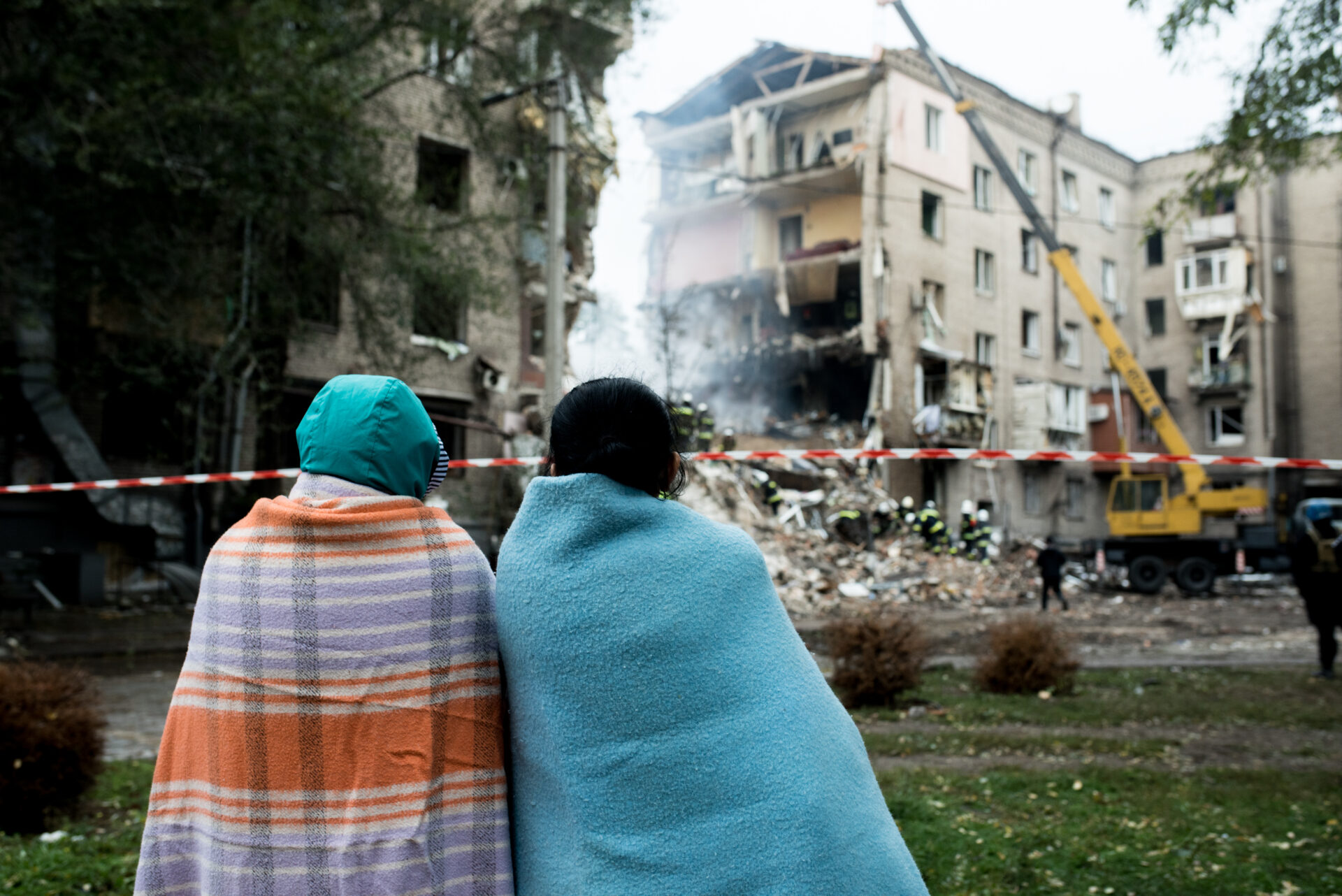
With official figures reaching almost 4.6 million IDPs as of May 2025 and over two million housing units destroyed by the Russian invasion, Ukraine poignantly illustrates a shift in the state approach to housing and property solutions for IDPs, especially considering that 54% of displaced persons reported that their own house/apartment had been damaged since February 2022 (compared to 9% among those not displaced). This short piece analyses the change from a temporary, rapid-response approach to current legal and practical initiatives for durable and affordable housing solutions. Even though the changes are promising, the initiatives also carry financial and social risks. The implementation of housing and property solutions for IDPs in Ukraine continue to depend predominantly on foreign donor support due to the lack of funding in state and local budgets. Moreover, if IDPs are not consulted about their housing needs and not included in the decision-making processes about affordable housing construction, allocation and management as well as property compensation (as is often the case), these housing initiatives risk repeating the mistakes made during the first wave of internal displacement (2014-2021).
The successes and failures of the Ukrainian example demonstrate that workable housing solutions for IDPs depend on a) coordination between international donors, national and local authorities, IDP organisations and civil society groups; b) addressing the gaps in law and practice in a timely manner; c) realistic evaluation of IDPs’ needs and socio-economic situations on the one hand, and state and local authorities’ capacities to respond to these needs and situations, on the other hand; d) creation of a multiplicity of housing solutions (to rent, to buy, to use for small fee) that could be utilized by different groups of IDPs depending on their needs and financial means; and, e) establishment of accountability mechanisms to monitor the provision of just compensation for IDPs for their lost/damaged housing or property.
Past housing and property policies for IDPs in Ukraine
Ukraine experienced two stages of internal displacement with various housing solutions for IDPs being tested since 2014, with greater or lesser success. According to an IOM survey conducted in 2020 during the first stage of internal displacement in Ukraine (2014-2021), only 11% of IDPs lived in their own housing, 17% stayed with a host family or relative, 60 % rented various types of accommodation, whereas 7% of IDPs lived in social housing (dormitories or collective centres for IDPs). The current housing situation is similar. As of July 2024, DTM monitoring shows that 59% of IDPs were renting accommodation, 31% were hosted for free by family or friends, 2% stayed in public housing, and only 7% were owners of their current accommodation. Thus, the challenge to find durable housing solutions for IDPs in Ukraine is enormous because most IDPs are in temporary accommodation. However, the housing policy has been chaotic, short-term, unsystematic, and often politicised.
In the first phase of displacement (2014-2021), the state introduced three strategies for the integration of IDPs – for the periods of 2016-2017, 2018-2020 and 2021-2024 respectively – all reiterating that housing is the main requirement for IDP integration. Despite the right of IDPs to receive social temporary accommodation from the state (Art.8-9 of the Law on rights and freedoms of IDPs in Ukraine), this right was not implemented due to the lack of such housing available at the state and community level.
According to the 2024 UN Habitat analysis, after the full-scale Russian invasion, the Ukrainian government finally realised that previous temporary rapid-response solutions (emergency shelters, modular housing, short-term rental subsidies and rehabilitation projects – mostly supported by UNHCR and Caritas, but also volunteers, private initiatives and charitable foundations) – could not provide housing solutions to the vast majority of IDPs in the foreseeable future. According to the analysis, the whole system needs to change starting with replacing the Soviet-era Housing Code of 1983 with a new legal framework that will prioritize “affordable rentals, expand social housing, and introduce financial compensation mechanisms for those struggling with housing costs.” The failure of the previous policy has been due to the gap between the Soviet-era idealistic – yet legally binding – goal of providing free housing for all and the practical need to prioritize certain groups (IDPs, war veterans, people with disabilities, vulnerable families, etc.), especially in a situation of limited state and communal budgets.
The Housing Institute analysis conducted in 2024 shows that a strong preference for homeownership among Ukrainians derives from a low trust in the state support system, where property ownership is a crucial source of intergenerational economic security, and from the limited awareness of alternative forms of tenure security, such as rent or social housing. With limited social housing stock and a poorly-regulated rental market (with unstable, often undocumented rental arrangements and arbitrary prices), home ownership is considered a stable and desirable housing solution.
Present housing and property solutions for IDPs in Ukraine
As of May 2025, the following options are available for IDPs in need of housing:
Compensation for damaged and destroyed housing
Apart from IDP-soldiers, for whom separate compensation programmes managed by the Ministry for Veterans exist, the majority of IDPs rely on the law on compensation introduced in February 2023 for damaged and destroyed property. The law established a comprehensive framework for compensation, detailing various mechanisms, defining eligible applicants, outlining the roles and responsibilities of authorities, and specifying required documentation to apply for compensation. Only documented property owners are eligible for compensation of properties located in governmentally-controlled areas, which leaves those whose ownership was not legalised, those whose proof of ownership documents were destroyed before being digitized, and renters without compensation. The programme is mostly funded by donors. Each property has to be assessed by the local commission and the funding is allocated for restoration or for the purchase of new housing in case of total destruction. IDPs need a valid IDP certificate to be able to benefit from the programme. However, not all registered IDPs can benefit from this eVidnovlennia (eRecovery) programme. According to the Displacement Tracking Matrix (DTM), key barriers for IDPs to apply for compensation include a) the property being in a location perceived as too close to the frontline (thus deemed not worthy of being repaired or too dangerous for to be inspected by the commission) or in temporarily occupied territories, b) a self-perceived ineligibility under current programme rules, c) the need for legal support when making the application, and d) a lack of legal or title documentation for the property. As of April 2025, 96,000 families reportedly received compensation for damaged or destroyed property. The analysis of judicial practices demonstrates numerous challenges in proper implementation of compensation mechanisms that require not only budgetary changes, but also political will and legislative changes. Moreover, cases of abuses in local commissions, such as the reporting of inexistent damaged and destroyed housing, also started to emerge in early 2025.
Since 2014, there is still no database of the lost and damaged properties in the temporarily occupied territories (TOT). Likewise, there is yet no mechanism for compensation of loss or damage of properties in the TOT for IDPs nor any legal ways to buy or sell property in the TOT. Simultaneously, the occupying forces started a large-scale confiscation of ‘abandoned’ properties from Ukrainian legal owners. In the absence of alternative housing options or compensation mechanisms, some IDPs from the occupied territories return to the TOT to re-register their property under Russian law.
Subsidized mortgages
During 2014-2021, due to the absence of municipal and social housing stock in Ukraine, the Ukrainian state offered several subsidized mortgage programmes for registered IDPs with various eligibility conditions, depending on the programme and region they resided in. Some examples include the ‘50/50’ affordable housing programme for IDPs and Anti-Terrorist Operation (2014-2021) veterans, a 3% interest rate mortgage program for IDPs and ATO veterans, a 3% interest rate mortgage program for IDPs (funded by the German bank KfW), and a 7% interest rate affordable mortgage programme for eligible applicants, irrespective of their displacement status. These programmes were often underfunded and had limited scope to make a difference for the vast number of IDPs in precarious financial situations. All state-subsidised programmes had restrictions on the size of houses that can be bought with a subsidy (the excess size is paid upfront by the applicant). Each programme had its own additional requirements about the maximum age of the building and whether it can be under construction or must be already available for residence when the mortgage contact is signed. In addition, there were also requirements about the age of the applicant, their official employment and wage, as well as restricted choice on the type and age of the housing. Therefore, the pool of IDPs who could potentially benefit from any state or commercial mortgage programmes was and remains very limited.
Among the currently available mortgage programmes, the 3% interest rate mortgage programme funded by the German bank KfW is the most successful, with more than 1050 families receiving their own housing during 2021-2025. The mortgage is allocated via a lottery among a pool of IDP-applicants who, if chosen, can take out a 3% yearly interest rate payment loan for 30 years with an initial payment of 6% of the value of the chosen property. Mortgages with similar conditions financed by the Council of Europe Development Bank in 2025 should allow additional 1100 IDP families to buy their housing.
Another programme – eOselia – provides doctors, teachers, veterans, and scientists with subsidized mortgages for 20 years, with 3% yearly payments and an initial payment of 20% of the value of property. This programme was criticised for favouring high-income state employees who already own property rather than IDPs, who apparently received only 389 out of almost 16,000 allocated mortgages.
Social housing
Social housing is purchased by the local authorities, or the local authorities renovate other available properties already in state or communal hands. These houses can be unfinished or old buildings, former student accommodations or retreat houses.
The pool of social housing in Ukraine is small. Before the full-scale invasion, around 100 apartments were allocated to social housing per year by state and local communities. During 2015-2021, due to foreign donors’ support for renovation, 700 accommodations for IDPs were provided. Social housing is allocated according to a complicated system of evaluation criteria, and people can be categorised in 48 different ways according to their needs. IDPs can rent state-provided social housing if they have been living in their new localities for at least one year, if there is such property available, and if they meet the necessary conditions. The rent contracts are signed for one year with a possibility of extension. This property cannot be privatised by the renters, including by IDPs.
IDPs have the right to enter the social housing ‘queue’ in their new localities (where they registered as IDPs) if a) this will be their only accommodation or they need to improve their current living conditions; b) the average monthly income for the previous year per each person is less that the average rent in their locality and less than the minimum living income; and c) they do not have other liveable housing in the government-controlled areas or their house was destroyed or made unliveable due to the war. Families with children, pregnant women, people who lost their ability to work, pensioners, and people with disabilities have priority access to social housing and move up in the ‘queue’ according to a point system. The social housing ‘queues’ should be publicly available for each region; however, it is not always easy to find the relevant information quickly and accessibly.
To increase the pool of available temporary housing for IDPs, the state is co-funding a programme to purchase existing houses and flats for IDPs. The national budget allocates 70% of the necessary budget, whereas the interested local communities contribute 30% of the final budget. One of the challenges in implementing a 70/30 program of IDP housing is the lack of funding for this purpose in local budgets. If IDP communities are actively involved in the decision-making on the local level – either through IDP councils, local councilors, or NGOs – the chances for local funding for IDP social housing programmes will be higher.
The Plan for the Ukraine Facility – the basis for the European Union’s financial support to Ukraine in the amount of EUR 50 billion over 2024-2027 – declares “[e]xpanding and creating new social housing programmes” as one of the aims in the area of human capital. This declaration was welcomed by civil society organisations as a recognition of the need to fundamentally transform Ukraine’s housing policy approach. The European Investment Bank is planning to allocate EUR 400m to the Ukrainian Ministry for Development of Communities and Territories for the construction of affordable social housing in Ukraine – fifty-two multi-storey apartment buildings under the ownership of local communities that will be rented to IDPs and other citizens in need. However, even at the planning stage, the project was already criticized for its lack of transparency on financial and economic calculations, a lack of competition, and a lack of consultations about the needs of IDPs in selected communities. Despite numerous concerns and implementation challenges, the paradigm of social housing remains one of the most advocated for changes by civil society in Ukraine as it is considered more sustainable for communities and affordable for IDPs who do not have the means for market-priced rent or mortgage.
Rental housing support
Renting accommodation is expensive for IDPs, considering that their financial situation is on average worse than the average Ukrainian household. In the July 2024 DTM monitoring report, IDPs reported a median monthly household income of 13,561 UAH (appr. EUR 285) and a median monthly housing expenditure of 8,500 UAH. Among IDPs, 38% were spending more than 70% of their household income on housing while 60% were spending more than half of their household income on housing. IDPs were also far more likely to be unemployed but seeking work (16%, compared with 6% of the non-displaced) and less likely to have a regular salary as a main source of income (37%, compared with 52% of the non-displaced). In the 2025 DTM monitoring report, 24% of IDPs reported their households had to move to poorer-quality housing, and 21% reported having to skip rent payments as part of their coping strategies. However, the Ukrainian state only recently started to look for ways to ease the rental burden on IDPs. Previously universal, though modest, IDP housing support payments (UAH 2000/adult/month and UAH 3000/child or a person with disabilities/month) were confined in 2024 to the most vulnerable groups of IDPs due to limited funding.
In March 2022, the government established a mechanism called Shelter («Прихисток») for compensating private landlords who provide free temporary accommodation for IDPs and a mechanism to compensate state and local authorities for hosting IDPs and to cover the utility bills. By October 2024, almost 1.2 million IDPs used the Shelter programme, with 65,000 households hosting and 160,000 IDPs being hosted at that time. The programme depends on the allocation of state funding, and the compensation is a mere 15 UAH per person per day (30 euro cents per day). As of May 2025, 70,000 IDPs were residing for free in 1519 collective sites in Ukraine. Their residents are often from vulnerable groups and require additional support and services, which cannot always be provided in collective temporary accommodations. In September 2023, the government finally formalised the status and operations of collective sites that were already in existence but without proper legal regulation. The government set minimum living standards and established procedures for the registration of collective sites, security of tenure for residents, monitoring, and accommodation processes. The question of relocation from temporary accommodation to more permanent, affordable, and accessible housing remains a challenge.
A new state support mechanism for IDPs was launched this year – a housing rental subsidy that aims to help IDPs by fully or partially compensating the cost of their official rent. The project is envisaged for two years and has other requirements for beneficiaries. These include no ownership of second homes, documentation of home damage or destruction, and rental spending of more than 20% of the total household income. Eligibility is not extended to people receiving IDP payments or participating in the Shelter programme. The rental contract should be legally formalised and taxes paid to the state. IDPs can only apply for six months’ support with a possibility of another six-month extension. Based on an allocated UAH 4 billion, the initial estimates project that approximately 55-70 thousand IDPs will be able to receive housing rental subsidies.
Future plans for housing and property policies for IDPs in Ukraine
The current State Strategy on Internal Displacement (2023-2025) indicates the need to develop a targeted programme to provide housing to IDPs that will include: the creation of a Unified Information Database on Housing Stock available for the temporary accommodation of IDPs; the establishment of a mechanism to regularly monitor the level of integration of IDPs into host communities; the formation of housing stock for temporarily accommodation of IDPs in each local community; providing IDPs with affordable housing appropriate to their needs and vulnerabilities; broadening the number of mortgage and investment mechanisms supported by donors to provide housing for IDPs; and rebuilding destroyed and repairing damaged housing and other immovable property or introducing compensation mechanisms for such destroyed or damaged property.
Valeriya Vershynina from the NGO Stabilization Support Services Ukraine – one of the key experts on IDPs’ issues in Ukraine – noted four main challenges local municipalities face when trying to find accommodation for IDPs: lack of data on their housing needs, lack of available housing stock, insufficient local accessible housing policies, and insufficient awareness among IDPs about existing housing programmes. Vershynina’s view is supported by studies of local communities already hosting IDPs and communities trying to find social housing solutions for them. The situation is of course exacerbated by insecurity and widespread destructions in rural communities close to the frontline.
The draft law “On the Fundamental Principles of Housing Policy” – under consideration by the Ukrainian Parliament – envisages updating the housing policy of Ukraine to reflect the current situation and challenges. First, it proposes the creation of a Unified Information and Analytical Housing System, a platform designed to track available housing stock, social housing needs, and financial assistance programmes for citizens. It should also merge existing and future databases on the housing needs of citizens and log their participation in different housing or property compensation programmes to avoid misallocation of funds. Second, the law proposes the development of national and regional housing strategies and recovery programmes, the establishment of a housing fund system to provide affordable accommodation, the promotion of a competitive rental housing market, the engagement of the public in shaping housing policy, the provision of temporary housing for IDPs, and the restoration and/or compensation for damaged/destroyed housing. Thus, in principle, the law follows the recommendations of the current State Strategy on Internal Displacement (2023-2025).
According to the UN4UkrainianCities analysis, when implemented, the law should address four areas. First, it will catalogue existing available housing stock in state and communal ownership and evaluate the missing needs for specific housing in different localities. Second, the law promotes the digitalization of all processes related to housing by the creation of an open electronic system with data on all available state and community housing stocks – to rent, lease, buy or for temporary stay, including financial and credit conditions, availability, and information about how to apply. It will also provide the possibility for citizens, through a personal electronic account, to explore personalized housing options and select the most suitable one depending on individual needs and finances.
Third, the law should preserve state and community housing stocks from privatization or subleasing to ensure low-income citizens have access to social rental schemes or rental subsidies and that some groups have access to temporary housing (e.g. IDPs) free of charge with tenants covering utility costs. Considering the lack of state and communal social housing stock, the law allows for the possibility to provide social housing for individuals by rental agreements with private landlords, where the state will partially cover the rents. For citizens with high incomes, mortgages, leasing, housing cooperatives, and private rental schemes will be proposed, with preferential long-term loans for new construction, reconstruction, or acquisition of housing with state support or a payment of a portion of the housing cost.
Fourth, the law should ensure the protection of the right to housing. The Law introduces the term “affordable housing”: housing where the right of ownership or use is acquired by individuals with the support of the state or local governments, considering participants’ income and property status. Affordable housing can be social housing on a rental basis or the use of financial and credit mechanisms to support the construction or purchase of housing. The state should support “affordable housing operators” through the creation of cost-reducing measures for land acquisition, regulation of long-term preferential loans, and grants and compensation from the state and local budgets.
Two big questions remain: 1) how to fund the implementation of this law, considering multiple competing priorities in a country at war; and 2) how to ensure IDPs are consulted about their housing needs and that their views are taken into account in the decision-making process. The answer to the first question largely depends on the support from partners. However, the answer to the second one is a national responsibility. Considered a key milestone for the protection of IDP rights and their involvement in decision-making processes, the creation of the legal framework for IDP Councils in August 2023 gives hope that displaced persons will be consulted on all levels of governance, including on housing policies measures. These Councils are established as consultative bodies for local and regional executive authorities with coordinating efforts on the national level. As of December 2024, there were more than 800 IDP Councils in Ukraine, with some promising examples of local involvement in the decision-making processes that will need to be scaled up.
Recommendations for policymakers and practitioners
- Advocate for a mindset change from IDPs being seen as a burden on the state or regional budget to IDPs being considered as valuable and rightful citizens of their localities.
- Collect disaggregated data on IDPs’ housing needs, their socio-economic status, their interest in state housing programmes, and ways to improve the accessibility of permanent and temporary housing solutions.
- State funding for existing temporary and permanent housing programmes for IDPs should be predictable and long-term so that IDPs can plan their future.
- Encourage local authorities to co-fund housing options for IDPs and develop social infrastructure.
- Diversify housing solutions and support mechanisms for different groups of IDPs, especially for those who currently do not qualify for either social housing or mortgage programmes. Long-term, predictable lease contracts might be more viable than mortgage programmes for the majority of IDPs who are still renting from private owners.
- Consult and inform IDPs about a variety of solutions at regional and local level. Create a simple one-window option for each person to check the best matching housing solution for their family size, income, age, and region. Make the lists of available social housing in each region and locality easy to find in official resources.
- Simplify IDPs’ initiatives for independent home building cooperatives. Support beneficial partnerships between regional/local authorities and the private sector in co-funding housing solutions for IDPs.
- Ensure that state bureaucracy does not slow down the distribution of foreign funding for IDP housing but facilitates it through transparent and clear mechanisms.
- Ensure that IDP rights are not constrained by the type of housing they own or rent. For instance, IDPs with housing in the temporarily occupied territories that cannot be accessed should not be prevented from participating in state housing support programmes.
- Establish a working and realistic mechanism for the compensation of lost or damaged property in the temporarily occupied territories or allow IDPs to use the value of that property as part of their investment in existing housing solutions, such as subsidized mortgages.
- Establish legal procedures that would regulate private property operations in the temporarily occupied territories so that the property rights of Ukrainian citizens are protected.
The political will of states – who are primarily responsible for their IDP in their country – is essential in implementing solutions for IDPs. Internal displacement is squeezed between other competing agendas, but the Ukrainian example demonstrates that inaction during the first stage of internal displacement (2014-2021) did not solve the problem. Indeed, it had far-reaching adverse consequences – the return of IDPs to unsafe areas in the TOT, precarious accommodation choices, and the frustration of IDPs with protracted housing uncertainty. These mistakes can and should be avoided, considering the scale and urgency of IDPs’ needs.
Lidia Kuzemska is 2023-2025 Prisma Ukraїna Fellow at the Forum Transregionale Studien in Berlin.
KEYWORDS: Internal Displacement, IDPs, Conflict, Urban, Integration, DRC
Selected bibliography
Bobrova, A., Lazarenko, V., Verbytsky, I., & Khassai, Y. (2022) 37 theses about the current state , challenges and principles of new housing policy. CEDOS think tank. https://cedos.org.ua/wp-content/uploads/37_theses-1.pdf
DTM Ukraine (2024) Ukraine Housing Brief: Living conditions, rental costs and mobility factors. https://dtm.iom.int/sites/g/files/tmzbdl1461/files/reports/IOM_UKR_%20Ukraine_Housing_brief_Living%20conditions%2C%20rental%20costs%20and%20mobility%20factors_July%202024.pdf?utm_source=chatgpt.com
DTM Ukraine (2025) Housing, Land and Propery in Ukraine. Residential Damage, Property Rights and the eRecovery Programme. (February 2025). https://dtm.iom.int/reports/ukraine-housing-land-and-property-ukraine-residential-damage-property-rights-and-erecovery
Eastern Human Rights Group (2024) Confiscation of property in the occupied territory of Ukraine. https://drive.google.com/file/d/15hEuHXDKtMMGzV_qrW6cno_RCdRFoBVE/view?fbclid=IwY2xjawHSRapleHRuA2FlbQIxMAABHfiEv-ySndarh-3_RdYnOhxj9kZlr5JRBu8xVvOFGMNPEOaHYfDrN_8nOA_aem_ppSK7U1oOorOcP0k9awVWA
Harris-Bandts, S. (2024) Rapid response housing for internally displaced persons (IDPs) in Ukraine. Canadian Foreign Policy Journal, 30(1), 44-51.
Komnatnyi, S., & Korotchenko, N. (2025) From the Draft Law of Ukraine on the Fundamental
Principles of Housing Policy to the Strategy of Housing Policy of Ukraine, UN4UkrainianCities project. https://static1.squarespace.com/static/663c40569e600454b3322ccf/t/6797c611f7ea4f1d088c29a2/1737999896458/Housing+Draft+Law+of+Ukraine.pdf
Moskalenko, A., Robinson, I., Sukhonos, Y., Kalinin, R., Hretchenko, L., Malniev, B., Oliinyk, K., & Lysheniuk, V. (2024). Municipal Housing Stock in Ukraine. Challenges & Opportunities.Housing Institute. https://scioteca.caf.com/bitstream/handle/123456789/1091/RED2017-Eng-8ene.pdf?sequence=12&isAllowed=y%0Ahttps://dx.doi.org/10.1016/j.regsciurbeco.2008.06.005%0Ahttps://www.researchgate.net/publication/305320484_SISTEM_PEMBETUNGAN_TERPUSAT_STRATEGI_MELESTARI
Sukhomud, G., & Shnaider, V. (2023). Continuity and change : wartime housing politics in Ukraine. International Journal of Housing Policy, 0(0), 1–24.
UN Habitat (2025) Building Homes and Hope: Three Years of Resilience in Ukraine. Current housing crisis in Ukraine. https://www.habitat.org/emea/newsroom/2025/building-homes-and-hope-three-years-resilience-ukraine
Verbytskyi, I., Fedorova, L., Budz, O., Khurtsydze, T., & Dzhurliak, U. (2024) From Temporary Housing to Sustainable Solutions: the Role of Humanitarian Organizations in the Development of Local Housing Programs. CEDOS think tank. https://cedos.org.ua/wp-content/uploads/doslidzhennya-druk-eng.pdf