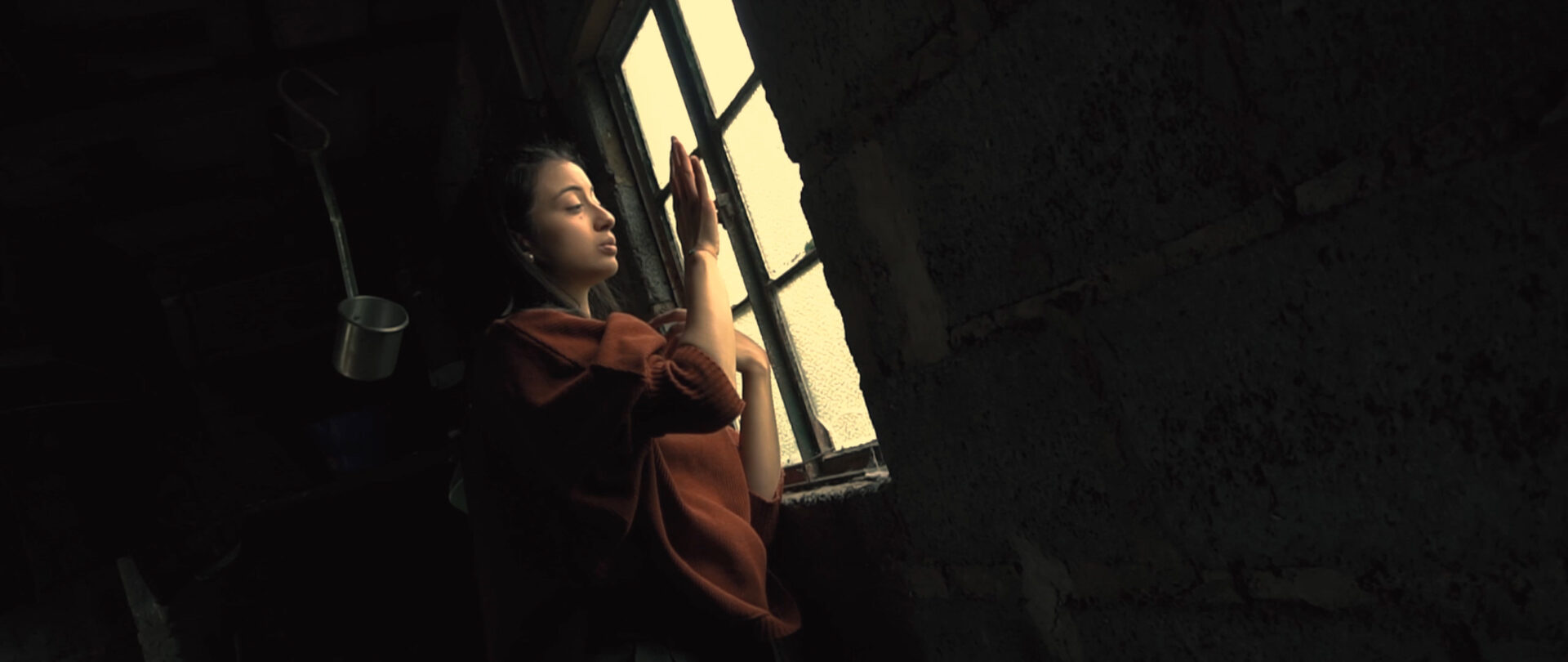
VIDEO-DANZA: La vida para defenderla (ESP)

Es una vídeo-danza donde convergen la danza contemporánea, el vídeo y el audio como memoria y homenaje poético a la historia de mis abuelos quienes fueron desplazados de su lugar de origen y por casualidades cósmicas de la vida terminaron radicándose en Bogotá, ciudad donde nací, crecí y vivo actualmente
Published on October 17, 2021
Ana María Oviedo Cifuentes | lanid, Arts, Americas (inc Caribbean)

La vida para defenderla. Ana María Oviedo Cifuentes

VER EL VIDEO AQUI

LEER EL ARTICULO AQUI

Es una vídeo-danza donde convergen la danza contemporánea, el vídeo y el audio como memoria y homenaje poético a la historia de mis abuelos quienes fueron desplazados de su lugar de origen y por casualidades cósmicas de la vida terminaron radicándose en Bogotá, ciudad donde nací, crecí y vivo actualmente. También está nutrida por la reflexión personal alrededor del concepto de ser desplazada ancestralmente, lo que significa para mí y la sensibilización frente a quienes hoy en día se enfrentan a este fenómeno haciendo un llamado a defender la vida y nuestra condición de humanidad. Finalmente, también lo nutre fragmentos de tres textos del sociólogo, periodista y escritor Colombiano Alfredo Molano: Desterrados – crónicas del desarraigo; Ahí les dejo los fierros y Cartas a Antonia donde da voz a diferentes testimonios de desarraigo y violencia a lo largo y ancho de Colombia.

Ana Maria Oviedo Cifuentes es Artista escénica de la Pontificia Universidad Javeriana con énfasis en danza y somática. Ha bailado desde hace 10 años en diferentes escenarios y diferentes formatos de creación artística en Colombia. Como ejecutante – creadora, ha desarrollado una capacidad de auto-observación y auto-conocimiento, que le ha servido para apreciar el movimiento como cuestión vital y de bien-estar. Busca transformar los microuniversos de quien participa de un evento escénico, en busca de un mismo fin: conmover.

Esta obra fue lleavada a cabo por la autora durante su Summer Fellowship on Internal Displacement (Beca de Verano sobre Desplazamiento Interno) en el Internal Displacement at the Internal Displacement Research Programme de la Refugee Law Initiative. La beca fue apoyada por el Arts and Humanities Research Council, en nombre del UKRI Global Challenge Research Fund, como parte del proyecto financiado “Interdisciplinary Network on Internal Displacement, Conflict and Protection” (AH/T005351/1).

HOW TO CONTRIBUTE

Researching Internal Displacement publishes engaging and insightful short pieces of writing, artistic and research outputs, policy briefings and think pieces on internal displacement.

We welcome contributions from academics, practitioners, researchers, officials, artists, poets, writers, musicians, dancers, postgraduate students and people affected by internal displacement.

By Nishara Fernando | Dec 4, 2025
This policy brief examines the forced and mostly failed relocation of members of coastal Sri Lankan communities following the 2004 tsunami that devastated parts of the country. In the aftermath of the tsunami, the Sri Lankan government decided to enforce a coastal buffer zone law that banned housing within proximity to the coastline, requiring residents in the buffer zone to vacate and move to poorly planned and constructed housing in ill-conceived relocation sites. As government and civil society organisations involved in the relocation gradually disengaged from the project, community members were left to fend for themselves amidst growing economic and social challenges associated with the relocation. As such, many families eventually returned to the buffer zone, exposing themselves to both legal and coastal hazard risks. This blog highlights how failure to involve communities in the planning and development of the relocation project has led to a second disaster for tsunami-affected communities – that of a poorly implemented planned relocation.
By Assma Jihad Awkal and Jasmin Lilian Diab | Nov 20, 2025
This short article spotlights what the authors introduce as “the feminization of recovery” of internally displaced communities in Lebanon's southern border with Israel, where women’s unpaid and unrecognized efforts sustain reconstruction in the absence of formal systems following the ceasefire between Israel and Hezbollah one year ago. The October 2023 conflict along Lebanon’s southern border displaced thousands, with female-headed households (FHHs) among the most affected. Returning after the ‘ceasefire,’ many women faced destroyed homes, scarce livelihoods, and gender norms privileging male breadwinners, all compounded by Lebanon’s refusal to recognize internally displaced persons (IDPs). Without legal acknowledgement or state support, women relied on informal networks, care work, and community solidarity to rebuild. Drawing on qualitative research (2023-2025), this commentary examines how FHHs transform survival into agency, turning daily labor and mutual support into the backbone of recovery. Recognizing their roles demands a policy shift from short-term aid to gender-sensitive livelihoods, housing repair, psychosocial support, and municipal funding that affirms women not as victims of war, but as architects of post-conflict renewal.
By Guled Ali | Nov 13, 2025
The Somali Region of Ethiopia has shifted toward local integration as a preferred solution for over one million internally displaced persons (IDPs). This piece examines how the Somali Region's policy blueprint provides a valuable model for integrating displacement responses into development strategies. The blueprint features evidence-based policy, institutional coordination, and community incentives, including plans to transform Qoloji, the region’s largest IDP site, into a city-level administrative or district hub. By placing IDPs at the center of decision-making and adapting to specific social and economic contexts, the Region advances durable, equitable, and development-oriented solutions that offer lessons for Ethiopia and beyond.