
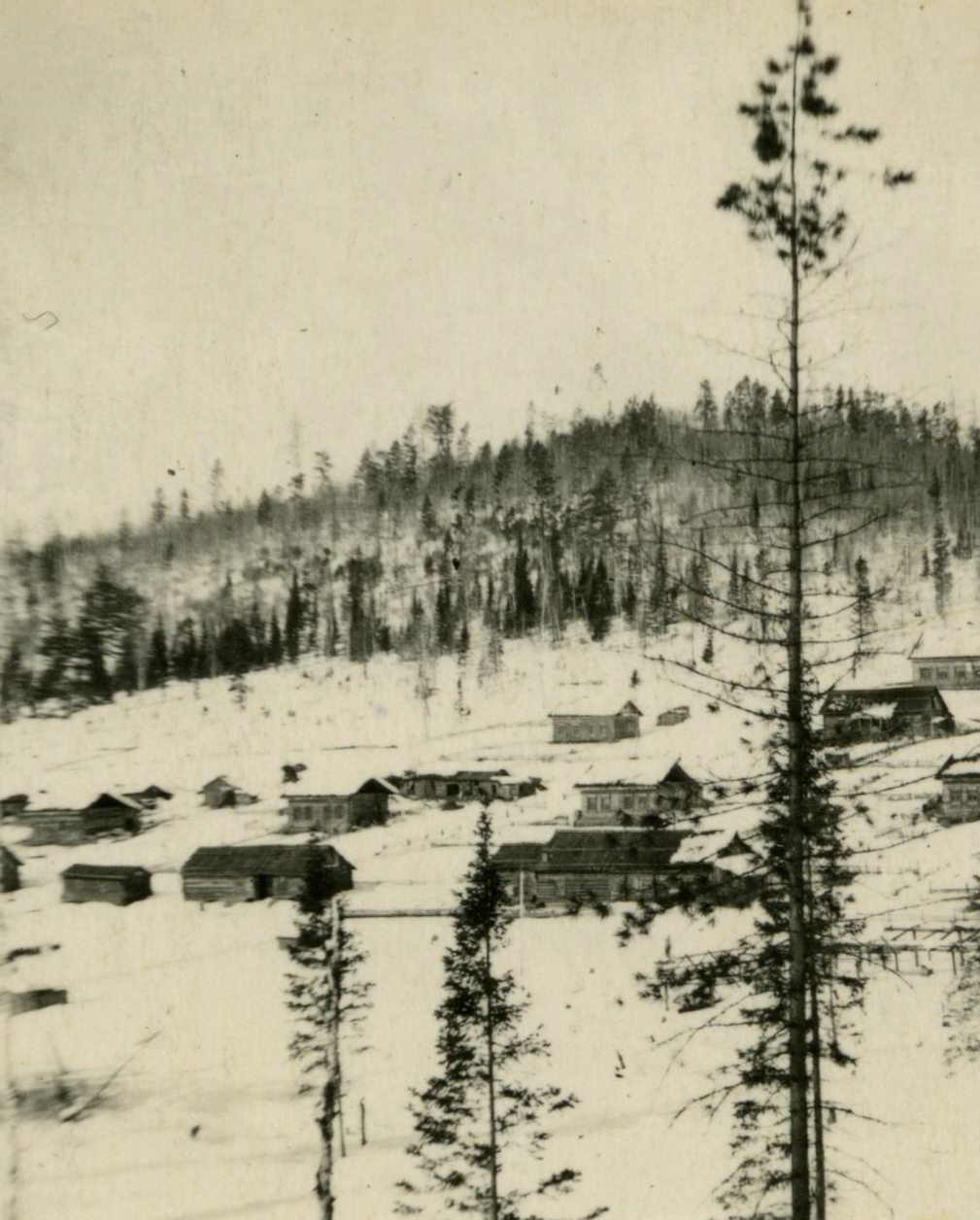
The mass deportations carried out by the Soviet regime constituted one of the principal instruments of political repression during the two periods of Soviet occupation of Lithuania: first from 1940 to 1941, and again from 1944 into the early 1950s. These deportations formed part of a broader Sovietization strategy applied across the territories annexed by the Soviet Union as a consequence of the Molotov–Ribbentrop Pact of 23 August 1939, including the Baltic States, eastern Poland, Moldova, and Northern Bukovina. In Lithuania, the human costs were immense: current research estimates that approximately 130,000 Lithuanian inhabitants (about 4.5 percent of the country’s population) were deported between 1940 and 1958, of whom roughly 20,000 perished in exile (Anušauskas, 2012, p. 279; p. 268).
The deportations of June 1941, conducted during the final days of the first Soviet occupation, were designed to dismantle the political, administrative, and social foundations of the former independent Lithuanian state. By eliminating political elites, officers, priests, wealthier farmers, and other groups identified as “anti-Soviet elements,” the Soviet authorities sought to pre-empt potential resistance and accelerate the imposition of Soviet rule. The June 1941 operation, which unfolded between 14 and 19 June, resulted in the deportation of approximately 17,500 individuals from Lithuania. Preparations for this action were extensive: the NKVD (НКВД), the Soviet ministry responsible for state security, law enforcement, and the corrective slave-labour camps, compiled detailed lists and quotas and implemented a coordinated roundup across the country. Most deportees were sent to remote regions of Siberia and northern Russia; men were frequently separated from their families and dispatched to Gulag camps. Parallel operations were simultaneously also carried out in Latvia, Estonia, eastern Poland, Moldova and Northern Bukovina. The Nazi invasion of the Soviet Union on 22 June 1941 halted further deportations.
Following the Soviet re-occupation of Lithuania in 1944, deportations resumed with renewed intensity. They formed part of a dual strategy: to eradicate the civilian support base of the anti-Soviet partisan movement (the “Forest Brothers”) and to prepare the countryside for collectivization. Soviet authorities also aimed to secure a supply of inexpensive labour for logging, mining, and industrial projects across northern Russia, Siberia, and the Arctic. Deportations during this second occupation occurred in several large waves. There were 34 separate deportations in Lithuania between 1945 and 1953, with major operations in 1945–47 and, most notably, in 1948–49, when kulaks (wealthier or socially prominent peasants and families who resisted collectivization), suspected nationalists, and families of partisans were targeted. Additional campaigns took place in 1951–52. Historians estimate that these post-1944 deportations affected roughly 112,000 people.
The targets of Soviet deportations in Lithuania formed a broad cross-section of society, though the majority of victims were ethnic Lithuanians. Although some scholars have described the operations as bearing features of ethnic cleansing—or even genocide—the deportation categories were officially defined in political and socio-economic rather than ethnic terms. There were at least four major categories of victims. First of all, the Soviets tried to remove political, administrative and cultural elites (former politicians, policemen, members of pre-Soviet administrations, intelligentsia, teachers, and clergy were prime targets in 1940–41). The second group were kulaks, who were targeted especially in 1948-49). The third group were anti-Soviet partisan supporters and their families (after 1944, many deportations aimed to destroy the social networks that could shelter or assist the armed resistance). The fourth group consisted of ethnic minorities, including Jews, Poles, and Russians, also subject to deportation when deemed “politically unreliable.” Overall, they appear to have been affected roughly proportionally to their demographic share. Among the deported in 1941, about 70 percent were Lithuanians, 18 percent were Poles, 9 percent were Jews, and 2 percent were Russians (Davoliūtė, 2015, p. 134). Social groups targeted most severely were farmers (29 percent), former state officials (17 percent), workers (14 percent), housewives (11 percent), and teachers (9 percent) (Burauskaitė (ed.), 1992, pp. 782-784).
Soviet deportations removed not only individuals but entire families. Women, children, and elderly people were deported in very large numbers, creating communities in exile in which vulnerable age groups were overrepresented. There were about 30,700 children under the age of eighteen among the deportees (Zemskov, 1991, pp. 5-26; Kerulis, 1982, p. 518). Mortality was especially severe among those deported in 1941, driven by the conditions of transport, extreme climate, inadequate shelter and nutrition, gruelling labour, and disease. Post-war deportees also suffered high mortality, with scholars estimating that between 11,000 and 16,500 Lithuanian deportees died in exile between 1945 and 1952 (Anušauskas, 2012, p. 266). Death rates in Gulag camps were even higher. Most survivors returned to Lithuania only after Stalin’s death in 1953, with the majority repatriated during the Khrushchev era (1953-1964). Some were permitted to return only decades later during the late Soviet period (the 1980s).
The deportations profoundly transformed Lithuanian society. They destroyed a significant part of the pre-war political, cultural, and social elite, weakened traditional rural structures, and inflicted deep psychological and demographic wounds. The dismantling of rural support networks helped suppress armed resistance and facilitated Soviet consolidation and collectivization. The experience of displacement of Lithuanian deportees only fully came to light during the period of political change in the late 1980s. The memory of deportations became a central element of post-war Lithuanian collective identity and played a key role in mobilizing society during the struggle for the re-establishment of independence. Today, Lithuanian archival institutions, museums, and research centers continue to document and analyze the deportations, highlighting their lasting significance for Lithuanian historical memory and national identity.
Dr. Tomas Balkelis is a senior researcher at the Lithuanian Institute of History in Vilnius. He focuses on researching the Lithuanian national movement, the First World War, the social history of war, paramilitarism, and forced migrations. He is the author of The Making of Modern Lithuania (Routledge, 2009) and War, Revolution and Nation-Making in Lithuania, 1914-1923 (Oxford, 2018). He was a co-editor of Population Displacement in Lithuania in the 20th Century (Brill, 2016), as well as multiple articles.
KEYWORDS: Lithuania, Exile, Deportation, Soviet Union, Displacement
Selected bibliography
Anušauskas, A. (2012) Teroras, 1940-1958. Vilnius: Versus Aureus
Burauskaitė, B.(ed.) (1992) Lietuvos Gyventojų Genocidas. Volume I.VilniusKerulis, L. (1981) A Registry of Deported Lithuanians. Chicago
Zemskov, V. N. (1991) “Masovoe osvobozhdenie spetsposelentsev i ssilnykh, 1954-1960” in Sociologicheskie issledovania, No. 1. Moscow