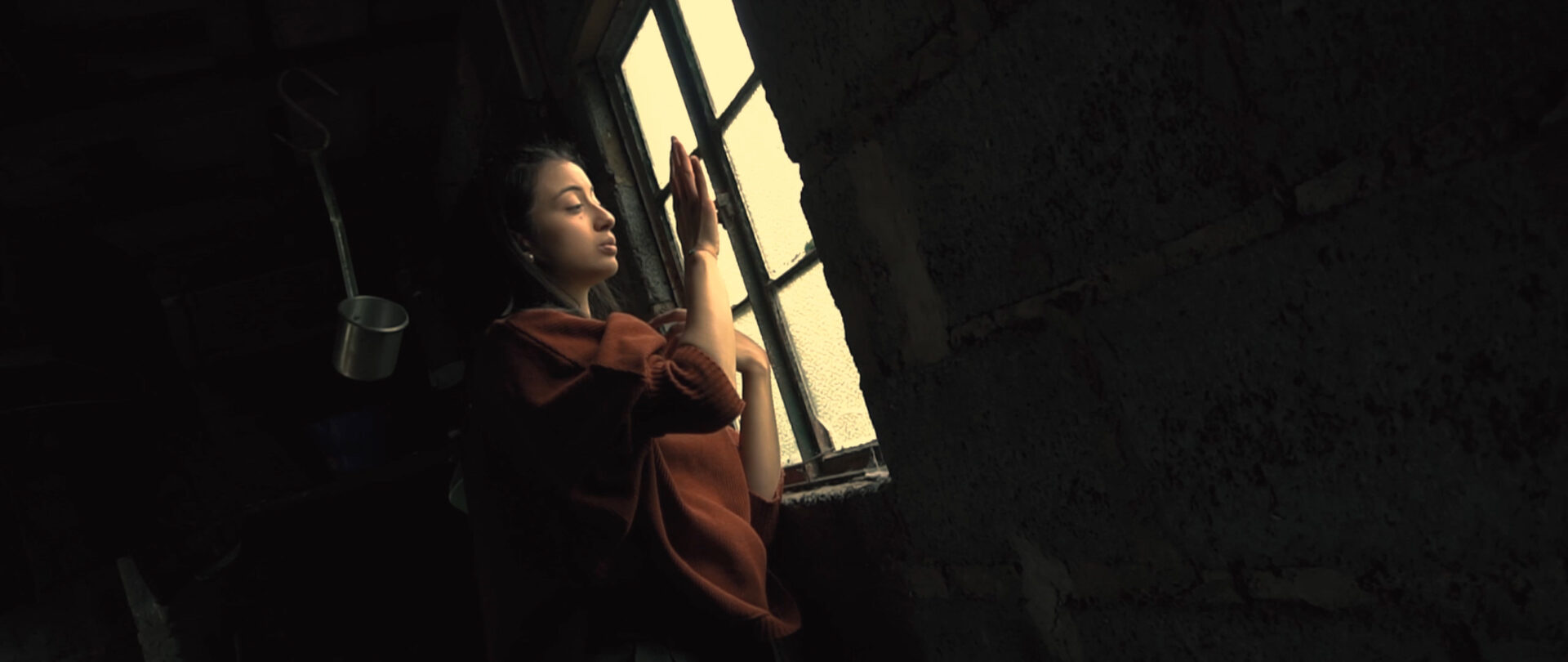
VIDEO-DANCE: Standing up for Life (ENG)

This video-dance combines contemporary dance, video and audio as memory and poetic tribute to the history of the artist's grandparents who were internally displaced from their place of origin in Colombia
Published on October 17, 2021
Ana María Oviedo Cifuentes | lanid, Arts, Americas (inc Caribbean)

La vida para defenderla. Ana María Oviedo Cifuentes

WATCH THE VIDEO HERE

READ THE PAPER HERE (in Spanish)

This is a work of video-dance where contemporary dance, video and audio converge as memory and poetic tribute to the history of my grandparents who were displaced from their place of origin and by cosmic coincidences of life ended up settling in Bogotá, the city where I was born, grew up and live today. It is also nourished by personal reflection around the concept of being displaced ancestrally, what it means for me and the awareness of those who today face this phenomenon calling to defend life and our condition of humanity. Finally, it is also nurtured by fragments of three texts by the Colombian sociologist, journalist and writer Alfredo Molano: Desterrados – crónicas del desarraigo; Ahí les dejo los fierros and Cartas a Antonia where he gives voice to different testimonies of uprooting and violence throughout Colombia.

Ana Maria Oviedo Cifuentes is a performing artist from the Pontificia Universidad Javeriana with an emphasis on dance and somatic arts. She has danced for 10 years in different scenarios and different formats of artistic creation in Colombia. As a performer – creator, she has developed a capacity for self-observation and self-knowledge, which has helped her to appreciate movement as a vital matter and one of well-being. She seeks to transform the micro-universes of those who participate in a staged event, always seeking the same goal: to move people.

This work was produced by the artist during her Summer Fellowship on Internal Displacement at the Internal Displacement Research Programme at the Refugee Law Initiative. The Fellowship was supported by the Arts and Humanities Research Council, on behalf of the UKRI Global Challenge Research Fund, as part of the funded project “Interdisciplinary Network on Internal Displacement, Conflict and Protection” (AH/T005351/1).

HOW TO CONTRIBUTE

Researching Internal Displacement publishes engaging and insightful short pieces of writing, artistic and research outputs, policy briefings and think pieces on internal displacement.

We welcome contributions from academics, practitioners, researchers, officials, artists, poets, writers, musicians, dancers, postgraduate students and people affected by internal displacement.

By Walter Kälin | Feb 12, 2026
This timely article by one of the world's leading experts on internal displacement highlights the growing crisis of climate-related internal displacement, which is unfolding against the backdrop of drastic funding cuts and humanity's apparent failure to adequately mitigate greenhouse gas emissions. Arguing that the world is ill-prepared to address the crisis, including the severe challenges faced by populations living in protracted displacement, the author outlines a bold strategy for change. The blog calls on all stakeholders to acknowledge the severity of loss and damage related to displacement and prioritise durable solutions programming. It also highlights the systemic and financial changes required, including the need to make the still-elusive 'humanitarian-development nexus' a reality. Ultimately, the author makes separate but related recommendations to the United Nations, country donors and affected countries on how, through collaborative multi-year programming, the process of loss associated with displacement can be reversed and deliver sustainable improvements for affected populations.
By Natasha Chávez | Feb 5, 2026
This article examines how large-scale mining and oil extraction in Ecuador's Amazon systematically displaces Indigenous communities through "dispossessive engineered migration." Analyzing displacement at the Mirador and San Carlos Panantza mines and in Yasuní National Park, the piece shows how over 1,200 Indigenous People have been removed from ancestral territories through militarised evictions, manipulated consultation processes, and environmental degradation that makes land uninhabitable. The article argues that displacement is not an unintended consequence, but a deliberate strategy driven by state and corporate interests, effectively treating Indigenous Territories as disposable assets. The piece calls for demilitarising development projects, enforcing Free, Prior and Informed Consent as binding law rather than bureaucratic formality, reforming compensation frameworks to account for cultural loss, and strengthening Indigenous leadership in development decisions.
By Thiruni Kelegama | Jan 29, 2026
This article examines the right to return for internally displaced persons within the context of post-war resettlement, focusing on Sri Lankan IDPs and the military-bureaucratic apparatus they must navigate to return home. It demonstrates how military interests and the political significance of contested territories continue to override humanitarian considerations in the Northern and Eastern provinces, producing ‘ethnocratic regimes’, or governance systems that privilege territorial control whilst marginalising ethnic minorities through spatial regulation. The author argues that land distribution continues to function as a tool of state-making and power consolidation, even as it appears to remedy decades of displacement. Ultimately, bureaucratic controls, militarised surveillance, and procedural barriers in accessing land serve to reinforce ethno-territorial politics, reframing religious and ethnic minority IDPs not as bearers of rights but as populations requiring management and control.