
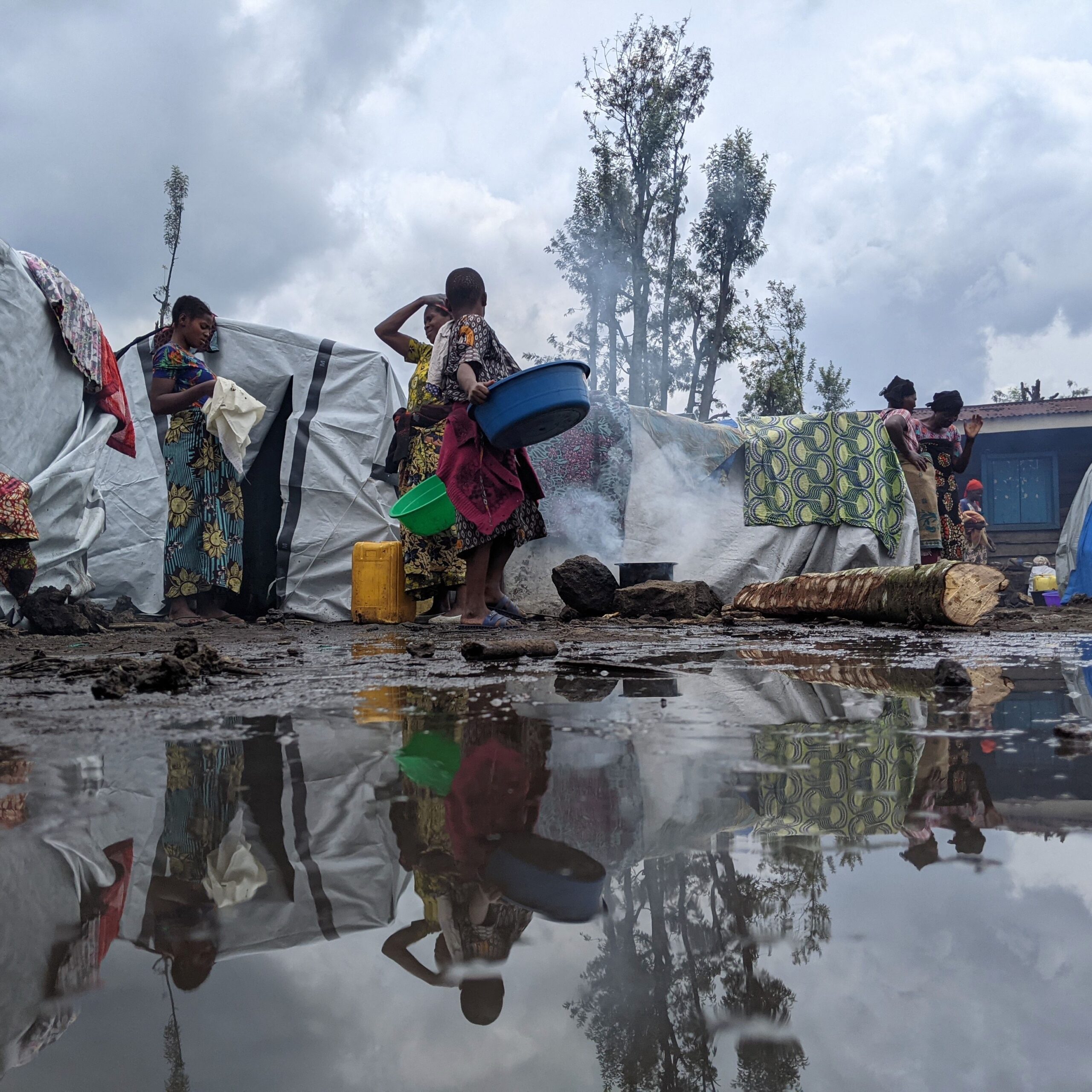
The eruption of the Bundibugyo strain of Ebola in eastern parts of the Democratic Republic of Congo (DRC) is a major crisis. Transmissions and deaths are skyrocketing; and no vaccine is currently available. But this virus is also notably prevalent in “IDP” settlements and communities. That was true too for the Mpox outbreak that started in DRC last year and then spread to the rest of the world. It disproportionately affected IDPs.
Disease transmission in marginalised IDP communities in the DRC is just one example of how IDPs are both vulnerable and deeply interconnected to society as a whole. But who are “IDPs” or “internally displaced persons”? And why does internal displacement make them so susceptible to these illnesses? Furthermore, what other impacts do IDPs tend to face as a result of their often vulnerable situation within wider society? Paradoxically, despite its significant role in shaping social trends in such countries, this issue of “internal displacement” remains generally quite poorly understood.
This may be about to change with the new Handbook of Internal Displacement. With expert input from over 70 researchers globally, its 45 thematic chapters offer a comprehensive central reference point for work across many different fields. It brings the topic to life for university teaching in disciplines such as geography, sociology, politics, economics, history and law and in fields like development, humanitarian, migration and conflict studies. For government policymakers and NGO workers, it opens up new ways of thinking and engaging with the consequences of internal displacement for IDPs and societies in Africa and beyond.
Global policy describes “IDPs” as people “who have been forced […] to flee or to leave their homes […] and who have not crossed an internationally recognized State border”. The term “IDP” is a convenient policy label to distinguish these people from cross-border refugees. But IDPs are really just “the displaced” within a society. What is more, internal displacement has wider impacts beyond just the IDPs that it creates. Whole societies can be transformed as a result of the changes that it brings for the communities in which IDPs are hosted, the places through which they transit and also the home communities to which some eventually return.
Internal displacement is a global challenge. During 2025, with new wars raging in the Middle East and large protracted ethno-political wars in African countries such as DRC and Sudan, an estimated 32.3 million new internal displacements occurred due to conflict and violence. This included some 10 million new internal displacements in Iran, 9.7 million in the DRC and 2.8 million in the Palestinian territories. By the end of the year, these dynamics combined with unresolved protracted displacement from previous years to leave around 68.6 million people living in situations of internal displacement in over 54 countries and territories.
Yet war is but one driver of displacement. In many regions, a multitude of climate-related hazards such as cyclones, flooding and drought generate cascading risks that, globally, in 2025 alone, pushed an additional 29.9 million internal displacements. Notably, disasters are a major driver of internal displacement not only in poorer countries. Countries in Asia, such as the Philippines (10.7 million in 2025), China (3.5 million) and Pakistan (3 million), are particularly affected due to their exposure and vulnerability to hazards such as tropical storms and flooding. But wealthier countries also report disaster-related internal displacement on a significant scale. For example, in 2024, hurricanes in the USA provoked over 11 million internal displacements.
Other prominent drivers of displacement include criminal, extremist and terrorist violence and large-scale development projects. Each of these drivers further degrades local coping capacities, as does the fact of displacement itself. In many nations, displacement drivers such as war and disasters are present simultaneously in the same country, and may even interact to intensify internal displacement dynamics.
Internal displacement can disrupt lives to a shocking extent. Unlike refugees, IDPs stay within their country and remain exposed to the dangers and devastation wrought by the conflicts and disasters that they flee. Although they may be citizens, they are often treated with suspicion and end up marginalised and hidden in local populations. Where they lose access to lands, housing, work and social and family support networks, they often experience high levels of poverty and inadequate living conditions. These accumulated disadvantages often make IDPs, such as those in the DRC, more vulnerable to illness and death than other war-affected populations (including refugees).
Particularly in Africa, governments have traditionally privileged IDP settlements and camps as a mode of humanitarian response. But, even there, internal displacement increasingly has an urban profile and feeds into wider trends towards urbanisation. As a result, in most regions of the world, cities and urban localities such as Bogotá and Medellín in Colombia now host the majority of IDPs. This brings to the fore a whole new set of development challenges. Not only do the losses entailed by displacement undermine development at a societal level, but governmental national development plans are sent awry if the people are not where the plans suppose (or want) them to be. In cities, heightened pressure on local services also generates a specific need for flexible and imaginative urban planning processes.
Global policy on internal displacement exists, and the standards that it sets out are often reflected in the IDP laws and policies that governments have adopted at the national and sub-national levels. In Africa, governments have also created regional legal treaties for protecting IDPs. But IDPs continue to attract relatively little political interest or funding from the wider international community.
Unlike refugees, IDPs are too often seen as a faraway problem confined to poorer parts of the world. This is wrong, since disasters create many millions of IDPs each year in countries such as the USA. And it has real-life consequences for IDPs. As a recent study found, between 2010 and 2019, per capita health aid to conflict-driven IDPs was barely even one-seventh that of refugees. Aid cuts by governments in the 2020s, and the resulting “hyper-prioritisation” by aid agencies since 2025, only exacerbate this problem.
Against this backdrop, the Handbook offers a crucial resource. It highlights the fact that IDPs, rather than refugees, make up the bulk of displacement globally. What is more, the volume spotlights the many far-reaching questions that the phenomenon of internal displacement poses for societies and for diverse academic disciplines and policy arenas. Pragmatically, it offers insight into how IDPs can be supported in resolving the problems arising from displacement.
Finally, the Handbook, which provides extensive regional analysis of displacement in Africa, the Americas, Asia, Europe and the Middle East, offers a distinctive global vision of “internal displacement” as an emerging field of research and practice. It has particular significance for societies, researchers and policymakers in not only in the DRC, but also in nations and regions as diverse as Sudan, Iran, Pakistan, China, the Philippines, the Palestinian territories, Colombia and the USA.
David Cantor is Professor and Director of the Refugee Law Initiative and its Internal Displacement Research Programme. Along with Megan Bradley, Winifred Ekezie, Utz Pape and Natalia Baal (and Melissa Weihmayer as project coordinator), he is co-editor of the Handbook of Internal Displacement, published by OUP in 2026. This short piece builds on an article published by him in The Conversation as “Millions of Africans are displaced without crossing a border – and their needs are often overlooked”.
KEYWORDS: IDPs, Displacement, DRC, Development, Protection
Selected bibliography
David Cantor et al, Oxford Handbook of Internal Displacement (OUP 2026) [see various chapters referred to within this short piece]
Majani Edward, ‘Mpox in conflict zones: Lessons from displaced populations in the Democratic Republic of Congo (DRC)’ (2025) 20(1) Global Public Health. 2551008. DOI: 10.1080/17441692.2025.2551008.
Internal Displacement Monitoring Centre, Global Report on Internal Displacement 2025 (2026) <https://www.internal-displacement.org/publications/2026-global-report-on-internal-displacement-grid/> accessed 28 August 2026.
Internal Displacement Monitoring Centre, Global Report on Internal Displacement 2024 (2025) <https://www.internal-displacement.org/publications/2025-global-report-on-internal-displacement-grid/> accessed 28 August 2026.
Ana Mosneaga, ‘Internal Displacement in the Context of Hyper Prioritisation’ (Researching Internal Displacement, 17 March 2026) <https://researchinginternaldisplacement.org/short_pieces/internal-displacement-in-the-context-of-hyper-prioritisation/> accessed 28 August 2026.
Bayard Roberts et al, ‘Analysis of health overseas development aid for internally displaced persons in low- and middle-income countries’ (2022) 5 Journal of Migration and Health. 100090. DOI: 10.1016/j.jmh.2022.100090.