
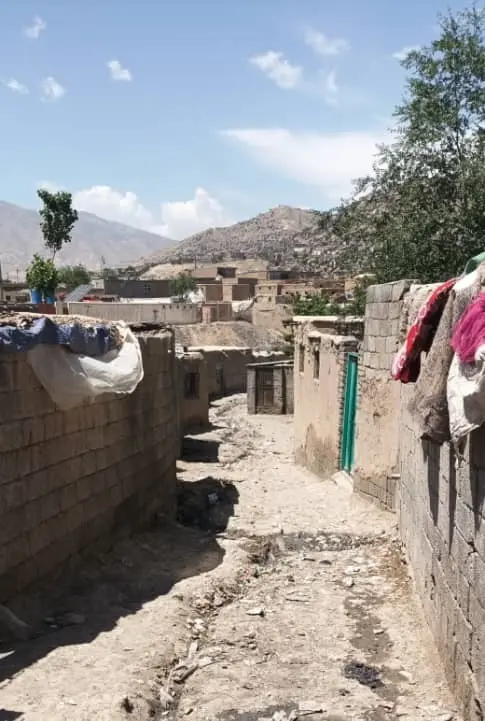
With an estimated 5.7 million internally displaced persons (IDPs) in 2023, Afghanistan has one of the highest numbers of IDPs in the world. This is the result of years of conflict, war, and the adverse effects of climate change within the country. While the Taliban’s control of Kabul since August 2021 has ended a direct twenty-year war and conflict in Afghanistan, many conflict-induced IDPs are still reluctant to return to their places of origin. While the war was the major push factor causing IDPs to leave their homes, we argue that the end of the war alone is not a pull factor to incline their voluntary return. Instead, the decision to return depends on several other factors such as access to financial assistance and sustainable employment, assurance of long-term security, access to housing and land, social support and networks, destruction of properties, and climate change impacts.
Among these, housing and land accessibility, along with financial assistance and sustainable employment, were the most frequently mentioned by IDPs during the focus group discussions (FGDs) we conducted for a research study between December 2023 and January 2024. The FGDs took place in five protracted IDP camps located in the western and northern areas of Kabul city. Each FGD involved 4-7 IDP participants, including the camp leaders or representatives. The discussions generally focused on the reasons for displacement; the economic and humanitarian situation in the IDP camps; and their willingness on the return following the Taliban takeover. This article, therefore, specifically examines the factors that have hindered the willingness and ability of IDPs to leave their camps and return to their places of origin or to other locations in Afghanistan.
Housing and land accessibility
In general, access to housing or land is deemed a key pull factor for IDPs and other migrants to return to their places of origin. However, in our research the lack of access to land and housing was cited by most IDPs as a significant reason behind their reluctance to return.
Protracted IDPs residing on government land in Kabul have been threatened with eviction by Taliban local authorities, who aim to expand the development of the city. However, some IDP representatives have promptly brought this issue to the attention of the Ministry of Refugees and Repatriation (MoRR) and other senior Taliban officials, highlighting their lack of alternatives for return or relocation. In response, IDPs residing in the camps that were interviewed in our research, mentioned that they had been granted temporary authorization to remain in their settlements until the relevant authorities could arrange a suitable return to their provinces of origin or relocate them elsewhere in Afghanistan. The temporary stay offers hope for IDPs amidst uncertainty, providing them with a brief respite from the threat of eviction. Moreover, IDPs emphasize that their presence in the informal settlements on government land does not mean that they have occupied the land, but they only reside there until the relevant authorities can find them a sustainable alternative. This demonstrates that IDPs sought to clarify their legal status, emphasizing their need for support, and urging the Taliban authorities to find them a sustainable solution for their displacement.
Additionally, IDPs emphasized that they have protected these high-value properties in Kabul city from land mafia or grabbers in Afghanistan. This led to IDP expectations that by protecting the land they are temporary residing on, they would be rewarded by authorities with land in Kabul or provinces that are economically more secure.
Financial assistance and sustainable employment
Another factor highlighted by IDPs in discussions was the urgent need for financial assistance and employment opportunities to facilitate their return to their places of origin. According to some of the FGD participants, there are IDPs who own land or property in their places of origin that is either fully or partially damaged due to conflict between the Taliban and the former Afghan National Security Forces/international forces. During our group discussions, IDPs expressed their inability to afford to rebuild their homes. They also indicated a lack of assets and employment prospects in their places of origin without support from the current authorities and other stakeholders. It was emphasized that with the provision of financial assistance and reintegration support, particularly through employment opportunities, they would be willing to leave the informal settlements in Kabul and return to their places of origin or to any location allocated for them by the current authorities. However, in practice, there have been no large-scale official programs in Afghanistan by the current authorities and stakeholders (e.g., UNHCR, NRC) to support the reconstruction of damaged homes for IDPs or to assist IDPs in finding employment in their places of origin as part of the effort to facilitate their return.
Unemployment and poverty remain major challenges for all Afghans, but these issues have exacerbated the socio-economic conditions of IDPs since the Taliban took control of Kabul in 2021. The economic collapse has continued and has plunged over 90 percent of Afghans into poverty. As a result, many IDPs are reluctant to consider returning to their places of origin without assurances of financial support and employment, which the de facto authorities are unable to provide. This underscores the complexity of the situation, highlighting the need for support mechanisms to address the multiple challenges such as housing and land access, eviction threats, limited financial aid, employment opportunities, and heightened poverty after the Taliban returned to power.
Conclusion
The scarcity of land and housing, exacerbated by decades of conflict-induced property destruction, renders the return infeasible for many IDPs. In addition, the urgent need for financial assistance and sustainable employment opportunities in IDPs hometowns further complicates the prospect of their return. The return of IDPs, supported and organized by the Taliban authorities without a proper plan, would exacerbate the situation of displaced persons in Afghanistan. This could lead to a further deterioration of the humanitarian crisis in the country and potentially render them homeless. The ongoing displacement due to climate change impacts, particularly flooding, and the forced return of (undocumented) Afghan refugees from neighbouring countries will exacerbate socio-economic challenges for IDPs to return home.
Thus, instead of prioritizing the eviction of IDPs from informal settlements from in major cities like Kabul, the current authorities should adopt rights-based and needs-based approaches and implement comprehensive programs for their return or relocation. These approaches should be done in collaboration with national and international stakeholders operating in Afghanistan, such as UNHCR, who has extensive experience in this area. For example, UNCHR has supported the reintegration and return of IDPs in several countries through cash assistance, in cooperation with local governments. In the Democratic Republic of Congo, UNHCR provided IDPs with cash for shelter, as well as tools and construction materials to rebuild their homes.
KEYWORDS: Displacement; IDPs, Afghanistan, Conflict, Return
Nasrat Sayed is a researcher studying migration and displacement issues in South Asia, with a particular focus on Afghanistan.
Hamayun Khan is an Afghan researcher based in Washington DC. He writes on Afghanistan’s socio-economic issues.
Mohammad Basit is a researcher and university lecturer based in Kabul.
Mansoor Sadat is an independent researcher and writer focusing on Afghanistan.