Aspiration and Access to Primary and Secondary Education for Internally Displaced Children in Pakistan

This paper analyses the impact of internal displacement on education among children from the Swat Valley, Pakistan
Published on April 1, 2022
Muhammad Saif Imtiaz | idrp, IDPs, Vulnerable persons, Conflict, Asia-Pacific
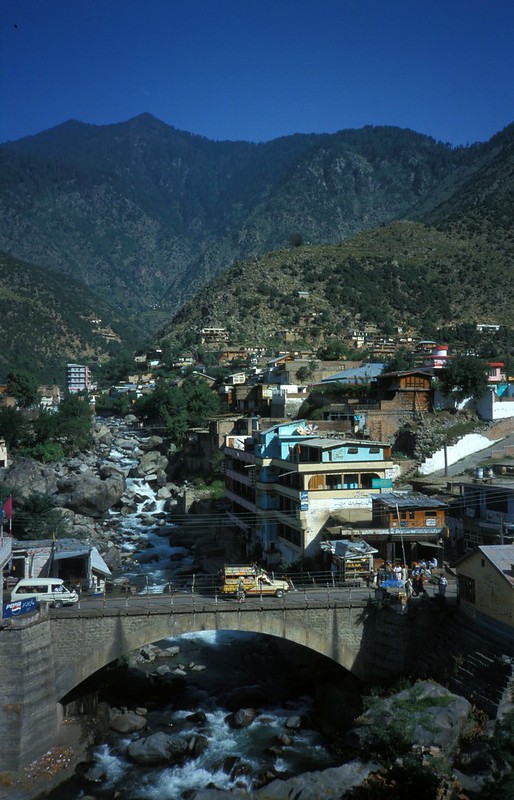
Pakistan. Swat Valley. 2001 © sabamonin

Pakistan. Swat Valley. 2001 © sabamonin

This qualitative investigation, by keeping the Swat Military Operation of 2009 at the center, seeks to examine how internally displaced children, negotiate their aspiration and access to primary and secondary education. ‘Internally displaced children’ in the context of this research will include unaccompanied minors and all other children attending primary and secondary educational institutions. The available scholarship on internal displacement has sought to examine the overlapping socio-political dimensions that lead to the displacement crisis in the first place. By acknowledging that Pakistan has rather been an under-researched region, this paper adds necessary academic value to the present literature through a comprehensive discussion on the access and aspiration to education for IDP children.

Two major questions contextualize the debate around the events of Swat Military Operation 2009. Firstly, how was learning negotiated at the time of displacement, followed by examining the efforts to re-institutionalize the educational system in Swat after the eventual return of the IDPs? Through a series of semi-structured interviews, the research gives conclusive evidence to argue that owing to ‘uncertainty’ of return, criticality of survival amidst the circumstances and a lack of a formal setup impeded the provision of education. Secondly, how can rehabilitation efforts help to re-institutionalize the education setup? Following the return to Swat, the rehabilitation efforts are noticeable examples of community building and collateral investment towards a unified cause. Thus, the analysis leaves important policy implication in re-imagining education during internal displacement, and ways to re-adapt post the crisis.

Muhammad Saif Imtiaz is an independent researcher based in Pakistan. He holds a BSc from Lahore University of Management Sciences with a double-major in Anthropology and Sociology. Currently, he is working as a Public Health Consultant for the Government of Punjab at the Primary and Secondary Healthcare Department, Punjab.

This paper was written by the author during his Summer Fellowship on Internal Displacement at the Internal Displacement Research Programme at the Refugee Law Initiative. The Fellowship was supported by the Arts and Humanities Research Council, on behalf of the UKRI Global Challenge Research Fund, as part of the funded project “Interdisciplinary Network on Internal Displacement, Conflict and Protection” (AH/T005351/1).

HOW TO CONTRIBUTE

Researching Internal Displacement publishes engaging and insightful short pieces of writing, artistic and research outputs, policy briefings and think pieces on internal displacement.

We welcome contributions from academics, practitioners, researchers, officials, artists, poets, writers, musicians, dancers, postgraduate students and people affected by internal displacement.

By Kadidjatou Sawadogo | Jun 30, 2026
The working paper examines the impact of humanitarian funding contractions on the realisation of economic and social rights of internally displaced persons (IDPs) in Haiti and South Sudan. Drawing on a human rights-based framework, documentary analysis, and key informant interviews, it analyses how reductions in humanitarian assistance affected access to adequate food and healthcare in contexts of protracted displacement, institutional fragility, and humanitarian dependence. The findings show that funding cuts reduced food assistance, disrupted health services, suspended mobile clinics, and weakened nutrition coverage for displaced populations. Humanitarian actors adopted hyper-prioritisation approaches that focused on life‑saving interventions but left significant protection and socio‑economic needs unaddressed.
By German Kim, Ekaterina Pesegova (transl.) | Jun 4, 2026
This working paper highlights the relatively unknown deportation of Soviet Koreans, the first of several state deportations based on ethnicity carried out by the Soviet Union. The forced displacement, mainly to Central Asian republics of the former Soviet Union, was highly classified during Soviet times, leading to misunderstandings and subsequent misrepresentations of the event by Western scholars and the creation of multiple inaccurate narratives, including that of ethnic cleansing. By conducting an interdisciplinary study, the author critically analyses widespread misconceptions about the deportation of the Soviet Koreans and provides objective data on the issue and its long-lasting effects on the Soviet Koreans who survived deportation and their descendants.
By Tomy Ncube and Una Murray | Mar 12, 2026
As climate impacts intensify, planned relocation is increasingly deployed as an adaptation strategy, yet outcomes for relocated communities remain consistently adverse. This paper argues that these failures stem from the treatment of planned relocation as a short-term, projectised disaster response rather than as a long-term developmental intervention. Drawing on social protection theory, this paper reconceptualises planned relocation as a form of social assistance, capable of delivering durable solutions. It demonstrates that planned relocation inherently performs preventive, protective, promotive, and potentially transformative social protection functions by minimising future climate risks, providing non-contributory transfers such as land and housing, and enabling livelihood reconstruction. However, when implemented outside formal social protection systems, these functions may collapse, often resulting in impoverishment and protracted displacement.