The Impact of Funding Cuts on the Human Rights of Internally Displaced Persons in Haiti and South Sudan

The working paper examines the impact of humanitarian funding contractions on the realisation of economic and social rights of internally displaced persons (IDPs) in Haiti and South Sudan. Drawing on a human rights-based framework, documentary analysis, and key informant interviews, it analyses how reductions in humanitarian assistance affected access to adequate food and healthcare in contexts of protracted displacement, institutional fragility, and humanitarian dependence. The findings show that funding cuts reduced food assistance, disrupted health services, suspended mobile clinics, and weakened nutrition coverage for displaced populations. Humanitarian actors adopted hyper-prioritisation approaches that focused on life‑saving interventions but left significant protection and socio‑economic needs unaddressed.
Published on June 30, 2026
Kadidjatou Sawadogo | idrp, IDPs, Protracted displacement, Disaster, Conflict, Development, Humanitarian, Law/Policy, Africa, Americas (inc Caribbean), Special Rapporteur, United Nations
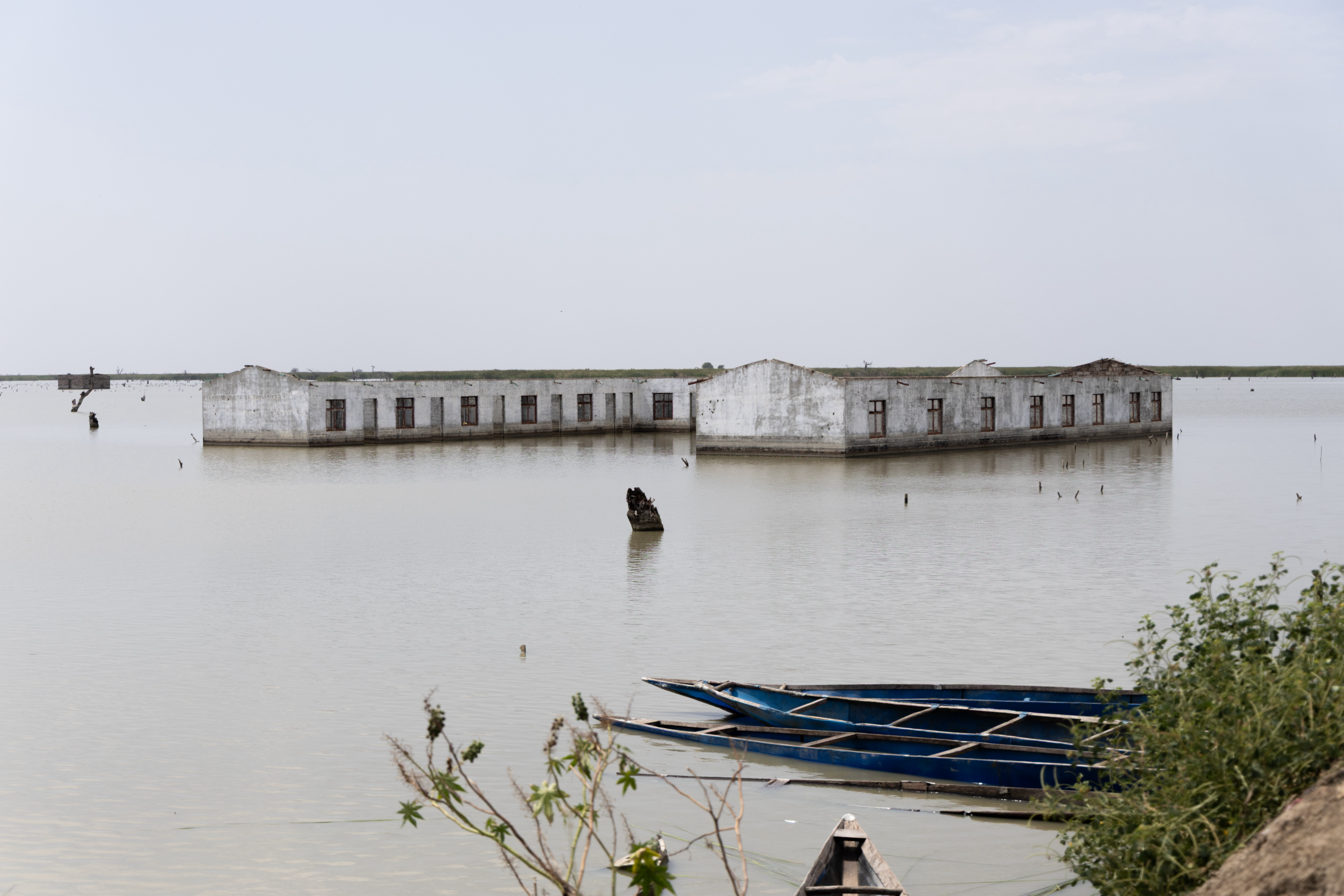
Flooded Condemned Buildings in Bentiu, South Sudan | Credit: © International Organization for Migration

Bentiu, South Sudan. Flooded Condemned Buildings. © International Organization for Migration

The paper argues that where humanitarian assistance constitutes the principal mechanism through which minimum core obligations are fulfilled, abrupt aid reductions constitute prima facie retrogressive measures incompatible with obligations under the International Covenant on Economic, Social, and Cultural Rights. Displaced households responded with harmful coping strategies, which deepened structural vulnerability.

This report concludes that the protection of IDPs must remain grounded in binding legal obligations and sustained through rights-consistent financing as a shared responsibility of States and the international community.

The research and analysis undertaken for this working paper provided the foundation for a short policy paper published by Researching Internal Displacement on 14 April 2026, Cutting Aid Means Cutting Rights: Who Decides Which Rights Matter for Internally Displaced Persons? by Kadidjatou Sawadogo. The conceptualization, substantive framing and messaging were shaped under the guidance of Paula Gaviria Betancur, UN Special Rapporteur on the human rights of IDPs, and Davina Saïd, Head of Forced Displacement at ICVA.

Kadidjatou Sawadogo is a human rights advocate and researcher with interests in transitional justice, internal displacement, and endogenous mechanisms of conflict prevention and resolution. She is committed to advancing inclusive peacebuilding and strengthening women’s meaningful participation in peace processes. She is currently completing a Master’s Degree in Gender, Peace and Security at the Kofi Annan International Peacekeeping Training Centre, Accra-Ghana. 

KEYWORDS: Internally displaced persons (IDPs), human rights, humanitarian finance, Haiti, South Sudan, funding cuts

Download the Working Paper

Download Working Paper No. 53

HOW TO CONTRIBUTE

Researching Internal Displacement publishes engaging and insightful short pieces of writing, artistic and research outputs, policy briefings and think pieces on internal displacement.

We welcome contributions from academics, practitioners, researchers, officials, artists, poets, writers, musicians, dancers, postgraduate students and people affected by internal displacement.

By German Kim, Ekaterina Pesegova (transl.) | Jun 4, 2026
This working paper highlights the relatively unknown deportation of Soviet Koreans, the first of several state deportations based on ethnicity carried out by the Soviet Union. The forced displacement, mainly to Central Asian republics of the former Soviet Union, was highly classified during Soviet times, leading to misunderstandings and subsequent misrepresentations of the event by Western scholars and the creation of multiple inaccurate narratives, including that of ethnic cleansing. By conducting an interdisciplinary study, the author critically analyses widespread misconceptions about the deportation of the Soviet Koreans and provides objective data on the issue and its long-lasting effects on the Soviet Koreans who survived deportation and their descendants.
By Tomy Ncube and Una Murray | Mar 12, 2026
As climate impacts intensify, planned relocation is increasingly deployed as an adaptation strategy, yet outcomes for relocated communities remain consistently adverse. This paper argues that these failures stem from the treatment of planned relocation as a short-term, projectised disaster response rather than as a long-term developmental intervention. Drawing on social protection theory, this paper reconceptualises planned relocation as a form of social assistance, capable of delivering durable solutions. It demonstrates that planned relocation inherently performs preventive, protective, promotive, and potentially transformative social protection functions by minimising future climate risks, providing non-contributory transfers such as land and housing, and enabling livelihood reconstruction. However, when implemented outside formal social protection systems, these functions may collapse, often resulting in impoverishment and protracted displacement.
By Steve Miron, Dyuti Tasnuva Rifat, Tanjib Islam | Feb 25, 2026
Researching Internal Displacement is pleased to make this case study available as a stand-alone publication. Excerpted from a recent research and advocacy report by the Refugee Law Initiative, this case study of an urban informal settlement in Tongi, Bangladesh, examines the lived experience of loss and damage among people displaced in the context of climate change and left behind in climate action. Encouragingly, the case study also highlights a promising 'good practice' development intervention by the SAJIDA Foundation. In the case study, programme participants describe how Sajida’s multifaceted approach, which empowers women and girls, encourages positive behaviour change and prioritises psychosocial wellbeing across multiple programme workstreams, has helped restore agency, self-sufficiency and hope. SAJIDA’s programme shows how protracted displacement and associated losses and damages can be addressed and are not inevitable.