Desplazamientos internos e internacionales en el marco de dinámicas globales

Haciendo un seguimiento a las cifras de desplazamiento forzado interno e internacional durante las últimas tres décadas, este escrito plantea unas hipótesis explicativas que vayan más allá, sin menospreciarlas, de las miradas internas.
Published on December 12, 2022
Fabio Lozano | lanid, IDPs, Refugees, International migration, Violence, Humanities, International, Americas (inc Caribbean)
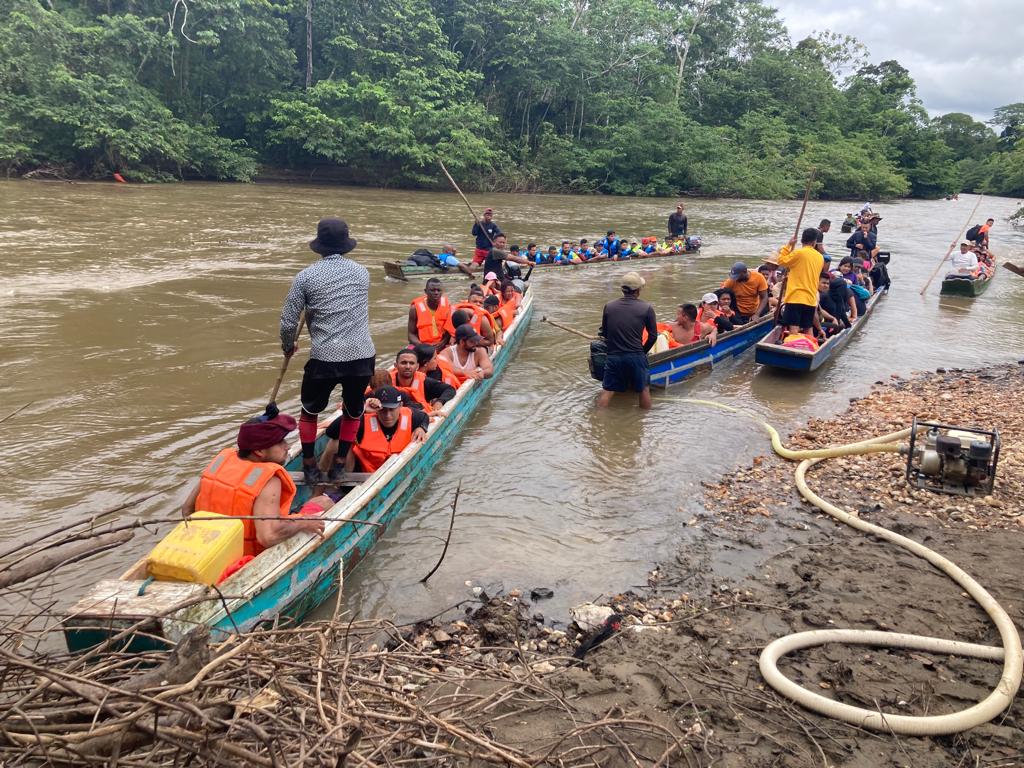
Panama. Refugees and migrants crossing the Darien Gap in search for safety, protection, and better opportunities. 2022 © UNHCR/Viola E. Bruttomesso

Panama. Refugees and migrants crossing the Darien Gap in search for safety, protection, and better opportunities. 2022 © UNHCR/Viola E. Bruttomesso

El escrito analiza las dinámicas globales que conducen a dicha migración forzada y cuestiona el alcance de las explicaciones basadas únicamente en aproximaciones locales que ligan dicha migración a disputas internas de carácter étnico, racial, económico, político o multifactorial que se utilizan hegemónicamente por parte de reconocidos autores e instituciones mundiales.

Se plantea, que la gran oleada de migración forzada nacional e internacional, corresponde a un violento ataque contra poblaciones desarmadas, instrumentalizado mediante ejércitos regulares e irregulares, locales o internacionales, y dirigido a la expulsión o sometimiento territorial en aras de saqueos extractivistas coloniales. Para el efecto se proponen categorías de comprensión y lineamientos de acción alternativos.

Fabio Lozano Velásquez es  filósofo, teólogo, máster en  desarrollo rural y doctor en estudios sobre América Latina. Es fundador de la Consultoría para los Derechos Humanos y el Desplazamiento (CODHES) y profesor en la Universidad San Buenaventura. Forma parte, además, de la Latin American Network on Internal Displacement (LANID).

LANID Special Issue: “Perspectivas críticas sobre el desplazamiento forzado”

La Red Latinoamericana de Desplazamiento Interno (LANID) reúne académicos, activistas, artistas y profesionales interesados en reflexionar sobre el desplazamiento interno. A través de esta colección de estudios se busca ampliar el conocimiento sobre este fenómeno, así como promover la discusión sobre el mismo. El carácter multidimensional de este tipo de movilidad humana, así como la complejidad de sus causas y la necesidad de buscar nuevos caminos para el logro de soluciones duraderas que permitan a las personas afectadas superar su condición de vulnerabilidad, constituyen el común denominador de estos trabajos.

HOW TO CONTRIBUTE

Researching Internal Displacement publishes engaging and insightful short pieces of writing, artistic and research outputs, policy briefings and think pieces on internal displacement.

We welcome contributions from academics, practitioners, researchers, officials, artists, poets, writers, musicians, dancers, postgraduate students and people affected by internal displacement.

By German Kim, Ekaterina Pesegova (transl.) | Jun 4, 2026
This working paper highlights the relatively unknown deportation of Soviet Koreans, the first of several state deportations based on ethnicity carried out by the Soviet Union. The forced displacement, mainly to Central Asian republics of the former Soviet Union, was highly classified during Soviet times, leading to misunderstandings and subsequent misrepresentations of the event by Western scholars and the creation of multiple inaccurate narratives, including that of ethnic cleansing. By conducting an interdisciplinary study, the author critically analyses widespread misconceptions about the deportation of the Soviet Koreans and provides objective data on the issue and its long-lasting effects on the Soviet Koreans who survived deportation and their descendants.
By Tomy Ncube and Una Murray | Mar 12, 2026
As climate impacts intensify, planned relocation is increasingly deployed as an adaptation strategy, yet outcomes for relocated communities remain consistently adverse. This paper argues that these failures stem from the treatment of planned relocation as a short-term, projectised disaster response rather than as a long-term developmental intervention. Drawing on social protection theory, this paper reconceptualises planned relocation as a form of social assistance, capable of delivering durable solutions. It demonstrates that planned relocation inherently performs preventive, protective, promotive, and potentially transformative social protection functions by minimising future climate risks, providing non-contributory transfers such as land and housing, and enabling livelihood reconstruction. However, when implemented outside formal social protection systems, these functions may collapse, often resulting in impoverishment and protracted displacement.
By Steve Miron, Dyuti Tasnuva Rifat, Tanjib Islam | Feb 25, 2026
Researching Internal Displacement is pleased to make this case study available as a stand-alone publication. Excerpted from a recent research and advocacy report by the Refugee Law Initiative, this case study of an urban informal settlement in Tongi, Bangladesh, examines the lived experience of loss and damage among people displaced in the context of climate change and left behind in climate action. Encouragingly, the case study also highlights a promising 'good practice' development intervention by the SAJIDA Foundation. In the case study, programme participants describe how Sajida’s multifaceted approach, which empowers women and girls, encourages positive behaviour change and prioritises psychosocial wellbeing across multiple programme workstreams, has helped restore agency, self-sufficiency and hope. SAJIDA’s programme shows how protracted displacement and associated losses and damages can be addressed and are not inevitable.