
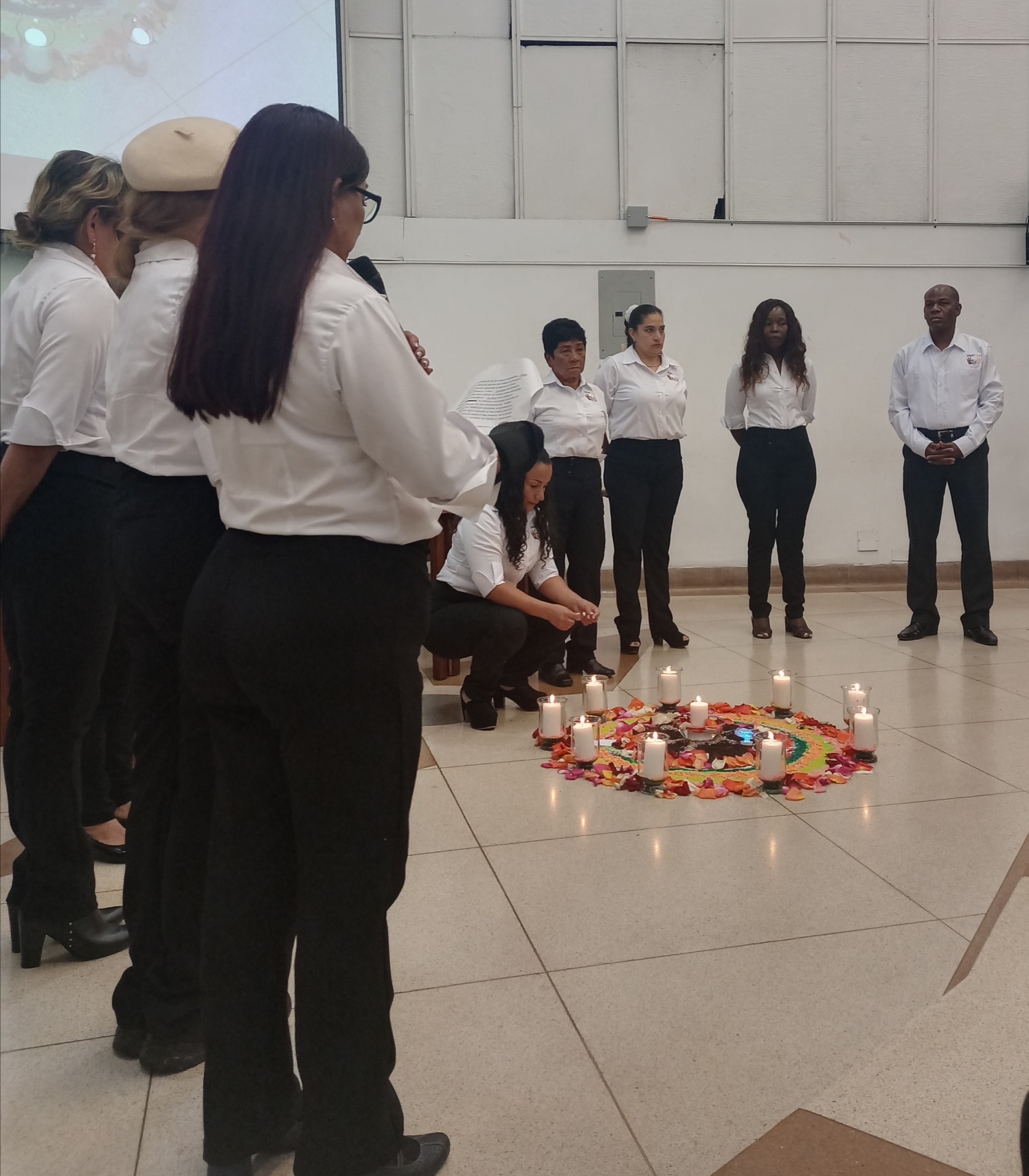
In Colombia, the State has recognized the phenomenon of forced displacement for more than 20 years. This recognition has been made in order to grant special protection to the victims and to undertake actions aimed at prevention, attention and overcoming the situation of victimization. Until today, in spite of advances in public policy and the broad scope of the constitutional jurisprudence, forced displacement is still one of the sources of the greatest victimization in the country.
In recent years, the phenomenon has taken a back seat in academic discussions and on the political agenda. However, amid discussions about the victimizing events that must be assessed by the Comprehensive System of Truth, Justice, Reparation and Non-Repetition, the need to turn our eyes to the events that led more than eight million Colombians to be displaced is beginning to resurface. In this context, the first announcements have appeared about the opening of a macro-case of forced displacement to be heard by the Justicia Especial para la Paz (JEP – Special Justice for Peace).
In this scenario, it is necessary to address which elements allow understanding the phenomenon, under the assumptions of the JEP, and which support the opening of a macro-case that guarantees investigation of the facts and prosecution of those responsible for this victimization. This paper aims to present some guidelines on the dynamics of forced displacement for the discussion on the prioritization of the case in this jurisdiction. It also aims to provide inputs to bring to the public sphere, understood in its broadest sense, the discussions on the persistence of the phenomenon in order to make it visible, and therefore shed light on the necessary actions to prevent and overcome it.
Clara Atehortúa-Arredondo is a lawyer, Master of Political Science and PhD in Law. She is Professor in the Area of Public Law, of the Context Axis, and a member of the Research Group in “International Studies: Law, Economics, Politics and International Relations”, at the Faculty of Law and Political Sciences, University of Antioquia in Medellin, Colombia, and a Member of the Latin American Network on Internal Displacement (LANID).
LANID Special Issue: “Critical Approaches to Internal Displacement”
The Latin America Network on Internal Displacement (LANID) brings together academics, activists, artists, and practitioners with the aim of reflecting critically on internal displacement. This LANID Special Issue aims to extend knowledge and promote debate on this phenomenon. Although each Paper has been written from a different perspective, they all share the key feature that they delve into the multidimensional nature, diverse causes and complex dynamics of this kind of forced migration, as well as into the search for new ways to achieve durable solutions that allow those affected by internal displacement to overcome their vulnerability.
This paper was written by the author in the framework of the “Interdisciplinary Network on Internal Displacement, Conflict and Protection” project (AH/T005351/1), supported by the Arts and Humanities Research Council, on behalf of the UKRI Global Challenge Research Fund.
