Social Identity Theory and Internal Displacement: A Longitudinal Case Study of Iraqi Christians in Kurdistan

This paper uses an empirical longitudinal study of Iraqi Christian IDPs to explore how internal displacement influences the construction of personal identity.
Published on October 12, 2023
Arianna Abdul-Nour | all, IDPs, Conflict, Social Science, Middle East
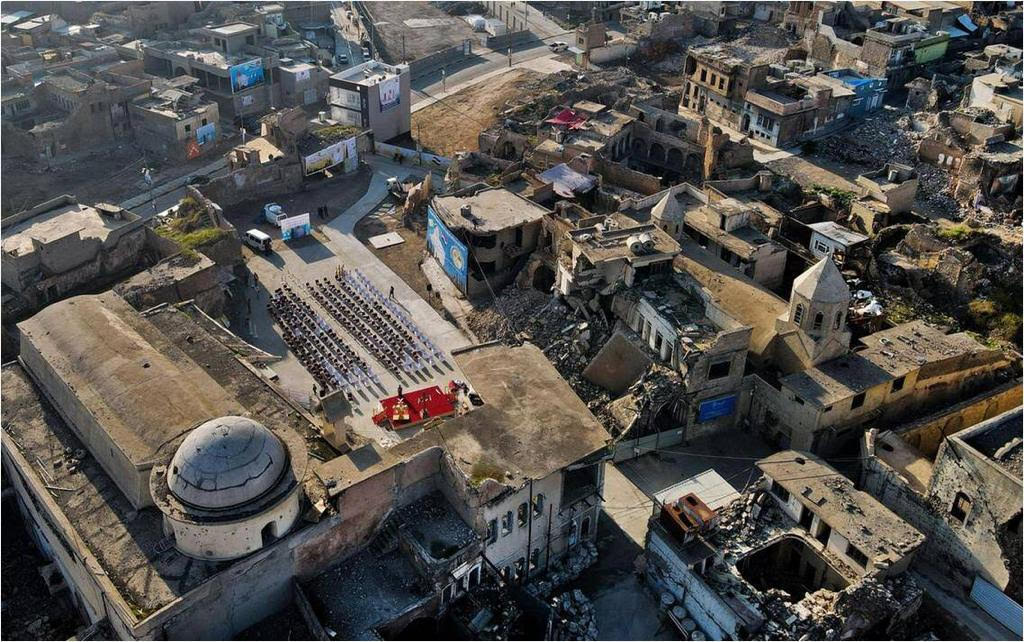
Iraq. Churches in Mosul after the conflict. 2022 © Arianna Abdul-Nour

Iraq. Churches in Mosul after the conflict. 2022 © Arianna Abdul-Nour

Unlike refugees who have crossed a border and are, therefore, protected under the 1951 Refugee Convention, internally displaced people do not have a dedicated international regime at the global level. The fact they remain within the geographical parameters of their country, alongside the international community’s inaction for fear of violating national sovereignty, means that no formal protection of, or accountability for, this group has been formulated. In the context of the unremitting crisis of internal displacement, this empirical longitudinal study draws attention to the critically inadequate responses to the problem of chronic displacement. Specifically, this study extends social identity theory (SIT) to look at first-hand accounts of the displacement in order to frame the effects of liminality in hyphenated spaces on the construction of personal identity. This thesis makes the case for comprehensive monitoring and assessment mechanisms that prudently oversee viable and durable solutions to displacement in order to foster positive identities.

KEYWORDS: Christianity; IDP; Iraq; persecution; protracted displacement; social identity theory; UNHCR

Arianna is a humanitarian professional pursuing a career in international development and human rights research. She has broad experience in NGO, legal and governmental sectors (in the UK and Canada) and studied International Relations in England, Norway and France. Arianna is co-head delegate to COP28 with the Future Leaders Network, as well as a volunteer teaching English to refugees in a camp in Azraq, Jordan. 

HOW TO CONTRIBUTE

Researching Internal Displacement publishes engaging and insightful short pieces of writing, artistic and research outputs, policy briefings and think pieces on internal displacement.

We welcome contributions from academics, practitioners, researchers, officials, artists, poets, writers, musicians, dancers, postgraduate students and people affected by internal displacement.

By Gabriela Malo | Jul 22, 2026
En el Ecuador ha aumentado en la década de 2020 la actividad de grupos criminales dedicados al narcotráfico transnacional, minería ilegal y actividades complementarias. Ante la ausencia de respuestas estatales a sus problemas, un número creciente de habitantes opta por escapar. En un contexto del que se tiene escasa información, este trabajo aporta a la comprensión de un fenómeno en el que las familias dependen de su propia iniciativa y capital social para decidir si desplazarse y a dónde ir. Se analizan las responsabilidades del Estado ante el desplazamiento interno, constatando que con pocas excepciones, no existe una respuesta nacional ante este fenómeno. También se describe uno de los pocos casos de desplazamiento masivo que han tenido visibilidad pública: el caso de los indígenas Chachi en la provincia de Esmeraldas.
By Kadidjatou Sawadogo | Jun 30, 2026
The working paper examines the impact of humanitarian funding contractions on the realisation of economic and social rights of internally displaced persons (IDPs) in Haiti and South Sudan. Drawing on a human rights-based framework, documentary analysis, and key informant interviews, it analyses how reductions in humanitarian assistance affected access to adequate food and healthcare in contexts of protracted displacement, institutional fragility, and humanitarian dependence. The findings show that funding cuts reduced food assistance, disrupted health services, suspended mobile clinics, and weakened nutrition coverage for displaced populations. Humanitarian actors adopted hyper-prioritisation approaches that focused on life‑saving interventions but left significant protection and socio‑economic needs unaddressed.
By German Kim, Ekaterina Pesegova (transl.) | Jun 4, 2026
This working paper highlights the relatively unknown deportation of Soviet Koreans, the first of several state deportations based on ethnicity carried out by the Soviet Union. The forced displacement, mainly to Central Asian republics of the former Soviet Union, was highly classified during Soviet times, leading to misunderstandings and subsequent misrepresentations of the event by Western scholars and the creation of multiple inaccurate narratives, including that of ethnic cleansing. By conducting an interdisciplinary study, the author critically analyses widespread misconceptions about the deportation of the Soviet Koreans and provides objective data on the issue and its long-lasting effects on the Soviet Koreans who survived deportation and their descendants.