
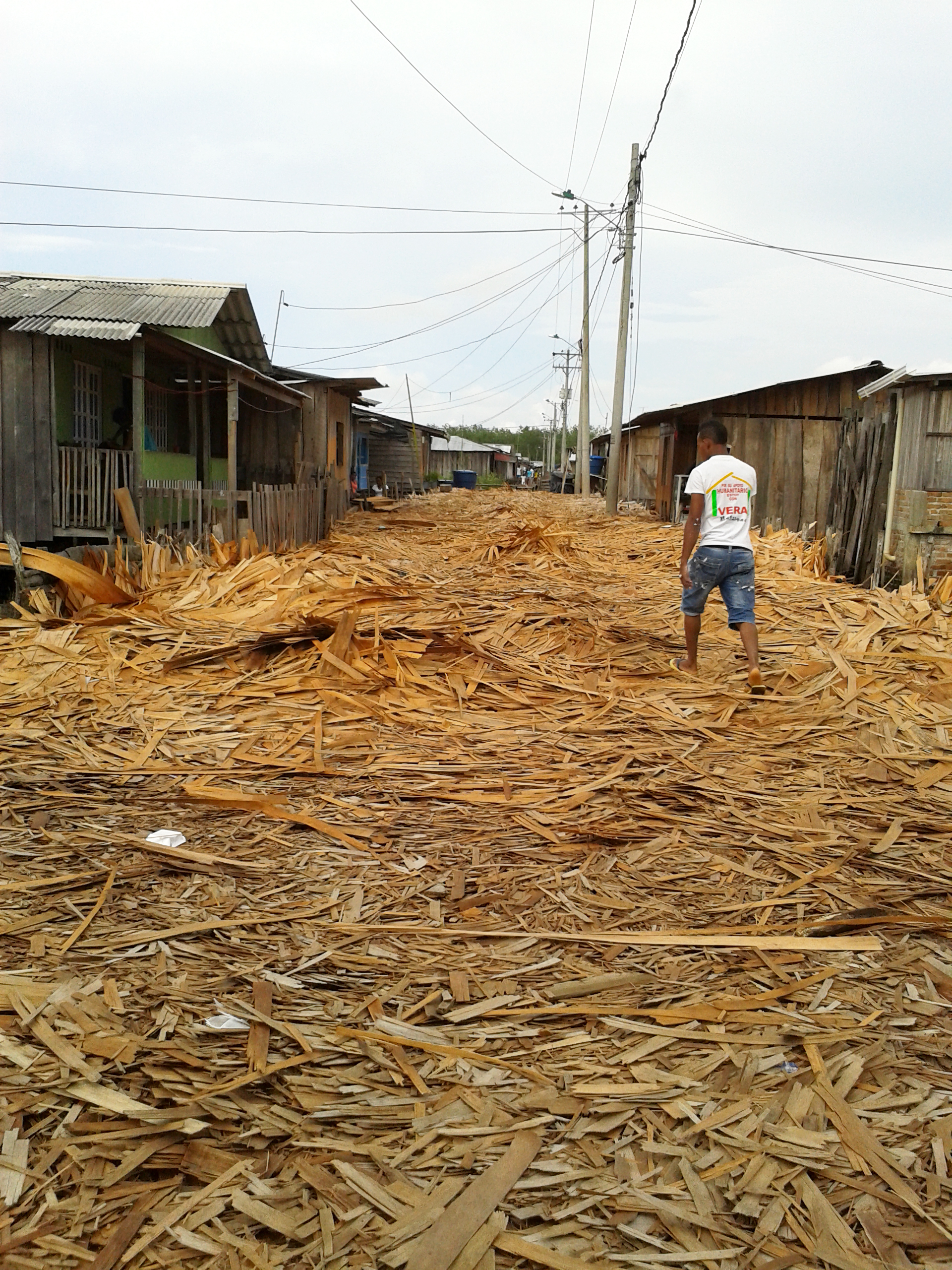
In 2024, 123.2 million people worldwide were forcibly displaced, of which nearly 73.5 million were classified as internally displaced persons (IDPs). According to UNHCR, Colombia is home to the world’s second-highest population of IDPs, with an estimated 6.8 million Colombian nationals displaced within its borders. Research shows that IDPs in Colombia fall into two distinct groups of forced displacement: those who flee from direct exposure to violence and those who preemptively migrate to avoid violence in the near future.
The massive internal displacement within Colombia is due to continued violence between armed groups in different parts of the country. These groups perpetuate many human rights violations, including forced confinement, “a widespread practice where armed groups lock down entire villages, warning residents not to leave the confines of their settlement under threat of death or other forms of retaliation.” Armed groups exercise extreme control over these communities, whether through the extortion of local businesses, their control over crop farming, or their influence on the resolution of interpersonal disputes between neighbors. In doing so, the armed groups cause instability on social, political, and financial levels within communities and hence cause forced displacement among Colombians.
Barriers to Health Care Services
IDPs face disproportionate health care inequities, as access is either nonexistent or extremely limited. IDPs are forced to disperse throughout the different regions of Colombia, with most residing “in impoverished metropolitan areas [that are] thoroughly intermingled with other types of victims or armed conflict.” Fearing further discrimination or persecution, many IDPs residing in urban communities disguise their IDP status. Andrés Quintero explains that while IDPs “are eligible for the national health system, [they] may not be aware of this, or of how to access it, or they may be afraid that the armed groups will discover them if they seek services.” In Bogotá, IDPs live in urban settings that are “characterized by widespread community violence at the hands of gangs, criminal bands, and urban-dwelling tentacles of the guerrilla and paramilitary groups whose rural counterparts perpetrated their displacement.” Therefore, guaranteeing the personal safety of IDPs is essential to the success of any healthcare intervention. The internally displaced need to be assured that they will not face further harm or persecution, simply for seeking medical care.
Further complicating the healthcare disparities is the fact that rural areas have a limited capacity to provide healthcare services due to a lack of adequate infrastructure, which ultimately reinforces the issue of accessibility— especially for marginalized communities. Quintero reports that “Afro-Colombians and indigenous Colombians comprise a disproportionate number of the displaced,” and “are almost entirely cut off from access to health services.” Therefore, the vulnerability of IDPs residing within these rural communities exponentially increases with the additional burdens of accessibility.
Humanitarian organizations, such as Project Hope, have stepped up to fill the void left by the government of Colombia’s failure to increase healthcare and protection services for displaced persons throughout Colombia. Project Hope helps IDPs in rural communities through temporary and mobile clinics that provide primary care, maternal and gynecological services, and mental health support. Like many other NGOs, Project Hope coordinates with “local health institutions… to deliver much-needed medicines, hygiene kits, and birthing kits for pregnant women.” Project Hope’s work at the community level increases trust in health services and enables a greater capacity to reach women and girls in rural communities.
Government Responsibility
The term “forcibly displaced people” is an umbrella term encompassing several legal statuses, each with its own set of protections and benefits. For example, refugees are provided explicit protections under international refugee law, such as non-refoulement afforded in the 1951 Refugee Convention. Unfortunately, this Convention does not extend to IDPs because their movement is limited within the borders of their country. Instead, the protection of IDPs “is the sole responsibility of national governments, which brings additional challenges because they are facing war, conflict or intense violence.” As such, the government of Colombia has a duty to protect the welfare and safety of its IDPs.
However, continued violence between armed groups complicates humanitarian interventions, especially those providing healthcare services to the dispersed IDP communities. For example, on January 16, 2025, violence between multiple armed groups broke out in the Catatumbo region, which forced “more than 50,000 people from their homes and trapped another 21,000 in their communities.” This resurgence of violence has left communities completely cut off from humanitarian assistance. Monica Hoyos reports, “families are unable to leave and cannot receive essential health services or basic necessities. Even medical missions are under attack: ambulances ambushed; health workers threatened.” Following the 2016 peace agreement between the Colombian government and the FARC guerrilla group, recent reports reveal “the number of members in armed groups has quadrupled… increasing from over 6,500 in 2017 to more than 25,000 in 2025.” Therefore, it is crucial for the government of Colombia to intervene to protect IDPs and guarantee their access to humanitarian aid.
While international humanitarian organizations’ health interventions within local communities are essential, for lasting change to exist, the government of Colombia needs to institute policies to combat the structural violence that initiated and perpetuates the internal displacement crisis. Implementing government-protected accessible health services throughout rural areas to the dispersed populations of IDPs is an important initial step. Moreover, in urban areas, government outreach and assurance of personal safety must be promoted to combat the discrimination and persecution IDPs face when seeking health services. That said, though Colombia is on the precipice of implementing a new peace agreement, Colombia will not have enduring peace until it addresses the disparities in healthcare accessibility for IDPs.
Charlotte DuBois is a graduate student at American University’s School of International Service, pursuing a Master of Arts in Ethics, Peace, and Human Rights. She conducts research and has worked in international community-led development, with a focus on gender-based and domestic violence interventions.
Christopher Belden is a graduate student at American University’s School of International Service, pursuing a Master of Arts in Ethics, Peace, and Human Rights with a certificate in Global Migration. His research focuses on LGBTQ+ justice in global migration and human rights practice.
Photo licensed under CC BY-NC-ND 2.0
KEYWORDS: Internal Displacement, IDPs, Conflict, Healthcare, Colombia
Selected Bibliography
Ibáñez, A. M., Moya, A., & Velásquez, A. (2022). Promoting recovery and resilience for internally displaced persons: Lessons from Colombia. Oxford Review of Economic Policy, 38(3), 595–624. https://doi.org/10.1093/oxrep/grac014.
Landis, M. (2025, March 12). On the ground: The world must not look away from Colombia: Project hope: Advancing global health & saving lives. Project HOPE | Advancing Global Health & Saving Lives. https://www.projecthope.org/news-stories/story/on-the-ground-the-world-must-not-look-away-from-colombia/
Norwegian Refugee Council. (2025, November 21). Colombia: Ongoing conflict stalls progress towards peace. NRC. https://www.nrc.no/news/2025/november/colombia-ongoing-conflict-stalls-progress-towards-peace.
Quintero, A. (2024, August 27). IDP Health in Colombia: Needs and challenges. Forced Migration Review. https://www.fmreview.org/quintero-culler/.
Shultz, J. M., García, N. M., Ceballos, Á. M., Florez, L. J., Araya, R., Verdeli, H., Espinel, Z., Bolivar, S. P., Neria, Y., & OSITA Outreach Team (2014). Outreach to internally displaced persons in Bogotá, Colombia: challenges and potential solutions. Disaster health, 2(2), 75–81. https://doi.org/10.4161/21665044.2014.954500 https://pmc.ncbi.nlm.nih.gov/articles/PMC5314910/
UNHCR. (2024, April 18). Colombia’s refugee crisis and Integration Approach explained. USA for UNHCR. https://www.unrefugees.org/news/colombia-s-refugee-crisis-and-integration-approach-explained/xxxBernal, Angélica María, and Joshua Holst. 2023. “Ecuador Votes to Keep Yasuní Oil in the Ground in Historic Referendum.” NACLA. August 23, 2023. https://nacla.org/ecuador-yasuni-oil-historic-referendum